Y.M.C.A. stands for "Young Men's Christian Association," commonly associated with the gyms that often provide temporary housing to men. The Village People sing about the YMCA as a place where you can hang out with all the boys. Many listeners interpreted this as a place to gather in-the-closet young gay men so they can leave their worries and troubles behind and let loose. Even though the lyrics don't contain any specific gay references, the song took hold in the gay community.
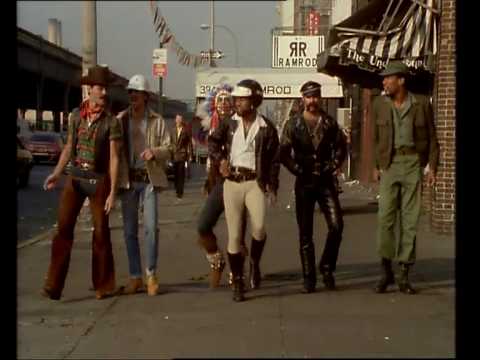
In 1977, producers Jacques Morali and Henri Belolo assembled a group designed to attract gay audiences while parodying (some claimed exploiting) that same constituency's stereotypes. Songwriters Phil Hurtt and Peter Whitehead were tapped to compose songs with gay underpinnings. Roles and costumes were carefully selected; among them were a cowboy, biker, soldier, policeman, and construction worker complete with hard hat.
The songwriting credit on "Y.M.C.A" goes to Morali, Belolo and Victor Willis, who was the policeman in the group.
A common misconception was that Village People were an all-gay troupe. Lead singer Victor Willis was not. In fact, from 1978-1982 he was married to Phylicia Ayers-Allen, who played Clair Huxtable on The Cosby Show and later married the sports announcer Ahmad Rashad. Henri Belolo was not gay, but Jacques Morali was, and the image conformed to his vision. The gay stereotype roles played well to the LGBT community associated with disco at the time, but looking back, it's kind of ridiculous to think that discos were "a gay thing" (nobody was having suspicions of, say, John Travolta). The disco scene, and the Village People, were welcoming to all.
This song has a dance associated with it where participants form the letters with their arms. It is commonly performed at weddings and other celebrations, and is extremely popular as it's very easy to do. The Village People popularized the dance moves when they performed the song; over the years they have sometimes given instructions on how to do it correctly. They say the most common mistakes are in the M and the C: the M is correctly made by touching your fingers in front of you, not by putting your fingers on your shoulders like you're calling a 20-second timeout. The C goes wrong when dancers make the gesture to the right, which to the audience looks flopped. The correct way to make the C is to the left, so it looks like a C to people facing you.
The song's co-writer, Victor Willis, insists this is not a "gay song," with the line "you can hang out with all the boys" inspired by his youth, when he would play basketball with his friends at the YMCA. "I wanted to write a song that could fit anyone's lifestyle," he
told News Corp Australia. "I'm happy the gay community adopted it as their anthem, I have no qualms with that."
The YMCA that inspired the song was the McBurney YMCA on West 23rd Street in New York City between 7th and 8th avenues (in 2002, it moved to 14th Street). That was the YMCA Jacques Morali saw, which gave him the idea. In the video, the group performs with the building as a backdrop.
Victor Willis relates the song to the YMCA on Buchanan Street in San Francisco, just blocks away from where he grew up.
The Village People made a video for this song, which was rare for American acts in 1978 because there was no MTV. In Europe, however, there were many more places to show videos, and that's where the Village People clip got the most views. When MTV launched in 1981, they played a lot of videos from British acts and a few they had from American acts like Devo, but the Village People apparently didn't fit their format.
In 2008, Spin magazine asked some of the Village People about this song. Here are some of the responses:
Randy Jones (cowboy): When I moved to New York in 1975, I joined the McBurney YMCA on 23rd Street. I took Jacques (Morali) there three or four times in 1977, and he loved it. He was fascinated by a place where a person could work out with weights, play basketball, swim, take classes, and get a room. Plus, with Jacques being gay, I had a lot of friends I worked out with who were in the adult-film industry, and he was impressed by meeting people he had seen in the videos and magazines. Those visits with me planted a seed in him, and that's how he got the idea for "Y.M.C.A." - by literally going to the YMCA.
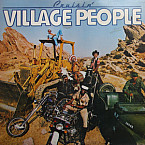
David Hodo (construction worker): We had finished our third album Cruisin', and we needed one more song as a filler. Jacques wrote "Y.M.C.A." in about 20 minutes - the melody, the chorus, the outline. Then he gave it to Victor Willis and said, "Fill in the rest." I was a bit skeptical about some of our hits, but the minute I heard "Y.M.C.A.," I knew we had something special. Because it sounded like a commercial. And everyone likes commercials. "Y.M.C.A." certainly has a gay origin. That's what Jacques was thinking when he wrote it, because our first album [1977's Village People] was possibly the gayest album ever. I mean, look at us. We were a gay group. So was the song written to celebrate gay men at the YMCA? Yes. Absolutely. And gay people love it."
The presentation has a lot to do with this song's success, but the horn lines are also a big factor. They were arranged by Horace Ott, who had worked on tracks for Aretha Franklin, Nat King Cole, Joe Cocker and Eartha Kitt. He also co-wrote the oft-covered "
Don't Let Me Be Misunderstood," originally recorded by Nina Simone.
On "Y.M.C.A.," Ott opened the song with a blast of horns that served as its clarion call. Leading up to the chorus, he added five stabs that mix with strings and percussion to create another very distinctive element within the song.
In America, "Y.M.C.A." stalled at #2, where it spent three weeks, first behind "
Le Freak" by Chic and then for two weeks behind another disco burner, "
Da Ya Think I'm Sexy?" by Rod Stewart.
In most other countries, it went to #1. It was especially popular in the UK, where it stayed at the top for three weeks, and in Australia, where it was #1 for five. Australia became a stronghold for The Village People.
The famous arm movements that go with this song originated when the group performed on American Bandstand in an episode aired January 6, 1979. It wasn't the band that came up with it - it was the audience.
When they got to the chorus, the group threw their hands in the air. The crowd followed suit, but continued with additional gestures for the remaining letters. It's not clear if the kids in the audience choreographed it beforehand, or if they made it up on the spot, but Bandstand host Dick Clark was very impressed with them. After the performance, he had the sound engineer re-cue the track and play it again so the group could watch them do it. As the Village People work out the gestures, Clark asks lead singer Victor Willis, "You think you can work that into your routine?" He replies, "I think we're going to have to."
"Y.M.C.A." is a very popular song at sporting events, especially baseball games where it is often played between innings. Since 1996, the song has played at Yankee Stadium when the grounds crew dredges the infield in the fifth inning. The crew stops to perform the arm gestures at the appropriate times as the crowd follows along.
This was a good year for the team: They won their first World Series since 1978 and enjoyed their first full season with shortstop Derek Jeter, who would become their captain.
The Village People saw this song as no more than an album filler, but Neil Bogart, the president of their record label, saw its potential and made the decision to push it.
The YMCA re-branded its name and logo to its popular nickname, "The Y" on July 11, 2010. The name switch came after research indicated many people didn't understand what the organization did. Village People fans breathed a sigh of relief when the lead singer of the original group, Victor Willis, released a statement to say the change won't affect the song. He added that the dance that goes along with it, in which participants use their arms to make the shape of each letter, is here to stay as well.
Structurally, "Y.M.C.A." is very similar to the first Village People single, "
San Francisco (You've Got Me)." Both songs build to a pronounced, four-syllable chant: Y-M-C-A, San-Fran-Cisc-O.
Jacques Morali wrote the music and produced both tracks, so this makes sense. The lyricists were different, however, as lead singer Victor Willis had replaced Phil Hurtt and Peter Whitehead in this role - something that earned him a great deal in royalties.
According to Hurtt, Willis threatened to quit if Phil was brought back to write lyrics. When Willis left the group, Hurtt was called back to write lyrics for the songs in the 1980 Village People movie
Can't Stop the Music.
Various versions of the song were used in a series of UK television adverts for British price comparison website Confused.com starting in 2010. The commercials used the music as a familiar tune to which several distinct new lyrics were added.
On December 31, 2008, Guinness World Records certified the Village People performance at halftime of the Sun Bowl between Oregon State and Pittsburgh in El Paso as the largest YMCA dance ever, with 40,148 fans doing the moves, minus a few guys who didn't feel comfortable making letter gestures in the beer line.
When Spin asked Y.M.C.A. media relations manager Leah Pouw about this song, she replied: "We at the Y.M.C.A. celebrate the song. It's a positive statement about the Y.M.C.A. and what we offer to people all around the world."
In 2017, Boy George released
an acoustic cover in partnership with YMCA Australia as part of the Why Not? campaign, and effort to connect with young people and let them know they are accepted no matter who they are.
which aims to shine a light on issues that are important to Australian young people: marriage equality, mental health and youth unemployment.
The disco hit was deemed historically important enough in 2020 to enter the National Recording Registry of the Library of Congress as a "culturally, historically, or aesthetically significant" work. When it was entered,
Victor Willis explained how he came up with the lyric.
The first verse ("Young man, there's no need to feel down...") begins a story about a guy who's down on his luck and looking for a place to stay.
The narrator is trying to cheer this guy up, telling him, "I was once in your shoes," and letting him know it's fun to stay at the YMCA.
Willis says it came from real-life experience. "I would go to the Y to pick myself up," he said. "I'd go back home and get ready to get back to my life."
The cast of The Office dances to this song in the season 5 episode "Cafe Disco."
President Donald Trump used this song to close out his rallies during his 2020 re-election campaign, despite representatives from The Village People repeatedly asking him not to. He lost that election to Joe Biden but returned in 2024 to run against Kamala Harris, and again he put "Y.M.C.A." in hot rotation on the campaign trail.
The Trump campaign had a Political Entities License, allowing them to use any song at rallies unless the rights holders formally objected. Victor Willis, the song's co-writer, could have legally stopped Trump from using it, but he didn't. Willis explained why in a
Facebook post a few weeks after Trump won the election. Willis said he received lots of complaints from fans when Trump used it in 2020, so he asked him to stop (but didn't legally compel him) because it was a nuisance. In 2024 he had a change of heart.
"I started noticing numerous artists withdrawing the President Elect's use of their material," he wrote. "I said to my wife one day, hey, 'Trump seems to genuinely like Y.M.C.A. and he's having a lot of fun with it. As such, I simply didn't have the heart to prevent his continued use of my song in the face of so many artists withdrawing his use of their material."
There was also a pecuniary motive.
"The financial benefits have been great as well as Y.M.C.A. is estimated to gross several million dollars since the President Elect's continued use of the song," Willis added. "Therefore, I'm glad I allowed the President Elect's continued use of Y.M.C.A. And I thank him for choosing to use my song."
Thanks to use of the song by the Trump campaign, "Y.M.C.A." topped Billboard's Dance/Electronic Digital Song Sales chart dated November 16, 2024, 11 days after he won the election. This was the first time the song went to #1 on a Billboard chart.
The Village People performed "Y.M.C.A." at various events during Donald Trump's inauguration in 2025, including a
victory rally with Trump on stage and two different inaugural balls. Explaining their reasoning on social media, the group stressed that they are not political, and they weren't endorsing Trump by performing. They pointed out that his opponent, Kamala Harris, was their choice, but if she had won they wouldn't have been invited ("She would have chosen the likes of John Legend and Beyonce").
They also hoped the song would bring some unity to a divided country: "Our song Y.M.C.A. is a global anthem that hopefully helps bring the country together after a tumultuous and divided campaign where our preferred candidate lost."
And to their LGBTQ and African American fans, they invoked the Janet Jackson clause:
"It wasn't the LGBTQ community that made Y.M.C.A. great again by pushing the song to #1... It wasn't the African American community that did that either. Janet Jackson has a song that says... I know you may have done some things for me in the past, but... "
what have you done for me lately?" Well, one man has done a lot for Village people lately. His name is Donald J. Trump. He has brought a lot of joy to the American people with his use of Y.M.C.A."
Donald Trump clearly loves "Y.M.C.A." but he doesn't do the signature dance associated with the song. Instead, he does some kind of dad dancing, moving his arms back and forth and sometimes pointing. We have to admit, the letter gestures aren't very presidential.
The Village People have had a number of lineups over the years, with many of the members from their '70s heyday sticking with the group for decades after. Victor Willis left the group in 1982 but in 2017, after a series of legal maneuvers, he took control of The Village People and brought in a whole new lineup. The longest-serving members of the group were Felipe Rose (the Indian), David Hodo (construction worker) and Ray Simpson. Rose was in every iteration until 2017; Hodo joined the group in 1977 and was with them for most of their tenure; Simpson played the cop when Willis wasn't in the lineup.