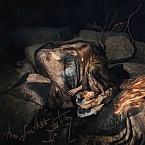
Album: Humanhood (2025)
Play Video

Songfacts®:

  • Some people, when faced with an existential crisis, take up meditation, move to a remote cabin, or spend an inordinate amount of time staring wistfully out of windows. Tamara Lindeman, frontwoman of The Weather Station, instead wrote an album titled Humankind. Its final track, "Sewing," stitches together the frayed edges of her psyche and, by extension, the human experience.
  • "Sewing" takes a domestic metaphor – quilting - and turns it into a philosophy of existence. The song is about the slow, deliberate work of assembling a life from a collection of disjointed scraps: "boredom, from love, from fear and magnolia petals on the ground," as Lindeman sings, before concluding that these scraps, whether "pride and shame, beauty and guilt," all eventually form something whole.
  • In the wake of 2021's Ignorance – The Weather Station's acclaimed pop-folk examination of the climate crisis - Lindeman battled chronic depersonalization, a mental condition that, in layman's terms, is like your brain packing up and moving to another zip code, leaving you behind to wonder who, exactly, you are. Humanhood chronicles the journey from that bewildering, fractured state to something resembling understanding.

    "It felt like a second adolescence, like puberty," Lindeman told Mojo magazine. "It's ugly. It's rotten. It's bad. It's yucky. You don't feel good. But you come through it."
  • Produced by Lindeman and Marcus Paquin, the song was recorded live at Toronto's Canterbury Studios, capturing the chemistry of a band that includes drummer Kieran Adams, keyboardist Ben Boye, percussionist Philippe Melanson, woodwind player Karen Ng, and bassist Ben Whiteley. Ng's clarinet solo gives the song an almost weightless sense of movement, as if the music itself is engaged in the delicate work of threading things back together.
  • "Sewing" is where Lindeman found the most profound expression of the ideas and emotions she sought to convey in Humanhood. "The course of making the record was this time of reintegrating for me," she told Uncut magazine. "So this was a very active part of finishing this record, and of this process of turning something that felt very amorphous and disparate into a thread. But the record is also about not doing that too."
  • To Lindeman, "Sewing" serves as Humanhood's mission statement. "This is what this record is saying - that the things that don't seem to fit together, you don't have to exclude them," she explained. "When I wrote the song, it was like saying, 'Here's a way out, here's a way of living, here's a way of integrating what's happening.' It's just interesting that I wrote that in a song before I could understand it in my life."

Comments

Be the first to comment...

Editor's Picks

Jon Anderson of Yes

Jon Anderson of YesSongwriter Interviews

From the lake in "Roundabout" to Sister Bluebird in "Starship Trooper," Jon Anderson talks about how nature and spirituality play into his lyrics for Yes.

David Sancious

David SanciousSongwriter Interviews

Keyboard great David Sancious talks about his work with Sting, Seal, Springsteen, Clapton and Aretha, and explains what quantum physics has to do with making music.

Billy Joe Shaver

Billy Joe ShaverSongwriter Interviews

The outlaw country icon talks about the spiritual element of his songwriting and his Bob Dylan mention.

Shaun Morgan of Seether

Shaun Morgan of SeetherSongwriter Interviews

Shaun breaks down the Seether songs, including the one about his brother, the one about Ozzy, and the one that may or may not be about his ex-girlfriend Amy Lee.

Justin Hayward of The Moody Blues

Justin Hayward of The Moody BluesSongwriter Interviews

Justin wrote the classic "Nights In White Satin," but his fondest musical memories are from a different decade.

Michael Glabicki of Rusted Root

Michael Glabicki of Rusted RootSongwriter Interviews

Michael tells the story of "Send Me On My Way," and explains why some of the words in the song don't have a literal meaning.