I Ain't Gonna Eat Out My Heart Anymore

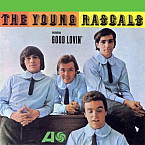
Album: The Young Rascals (1965)
Play Video

Songfacts®:

  • The Young Rascals' debut single finds Eddie Brigati in love with a beautiful woman who has eyes for another man. Torn up over her cheating, he gives her an ultimatum: "Choose. Is it him or me?"

    Eating out your heart is the painful act of longing for something unattainable - and Brigati ain't gonna do it anymore.
  • During the Rascals' early days, Brigati shared lead vocal duties with his bandmate Felix Cavaliere, who took over most of the singing once the group started hitting the charts. They were also songwriting partners on many of the band's hits - but this wasn't one of them.

    It was written by Lori Burton and Pam Sawyer, who also collaborated on tunes for Lulu ("Try To Understand") and Patti LaBelle And The Bluebelles ("All Or Nothing"). With "I Ain't Gonna Eat Out My Heart Anymore," they were hoping to capitalize on the British Invasion phenomenon by having a rock artist from across the pond cut the track, but they ended up with the up-and-coming New Jersey act instead. The first all-white group signed to Atlantic Records, the Young Rascals were readying their debut album when Burton and Sawyer pitched them the song. Cavaliere was dubious about meeting with outside songwriters, but even he was impressed by the love-me-or-leave-me rock number.

    "Initially when we were presented with 'Ain't Gonna Eat Out My Heart Anymore' I kind of had a crazy reaction to the songwriters coming in 'cause I wanted to write our own," he told Music Connection in 2022. "But we hadn't gotten to that point yet where we could start demanding stuff. They had a nice soulful thing and were Motown writers. 'Hey, I'm a kid. Let me learn here and take it to the next step.' I wanted to do our own thing and from the beginning that was my plan."

    The band recorded the track, along with another Burton/Sawyer collab, "Baby Let's Wait" at A&R Recording in New York City with Burton's future husband, Roy Cicala, as their recording engineer.
  • The Young Rascals were an American act but were heavily influenced by the popular bands coming out of Britain in the '60s, particularly The Beatles. Cavaliere had them in mind when he first put the Rascals together.

    "The first time I saw [The Beatles] early they were a band playing and singing live," he told Music Connection. "They had not really done what they did with George Martin. I know they had great singers and the players are OK. But they were starting to write their own songs. They had great songs. I thought. 'I can do this.' And I wanted to get the best guys I could find. The best singers and musicians. And it worked. From inception to record deal was six months."
  • Three members of the Young Rascals' original lineup - Felix Cavaliere, Eddie Brigati, and Gene Cornish - were members of the rock-and-roll band Joey Dee And The Starliters in the mid-'60s. Eddie briefly stepped in for his brother David Brigati, who sang lead vocals on the Starliters' 1962 hit single "Peppermint Twist," when David left the group in 1964. Cavaliere was already a member and Cornish joined up early in 1965. Shortly after, the trio made plans to break away and start their own band. Adding jazz drummer Dino Danelli to the mix, the Young Rascals were born. David Brigati was still doing his own thing, so he didn't officially join the Rascals, but he sang backup on some of their tunes.
  • The single helped put the band on the map, but it only managed to peak at #52 on the Billboard Hot 100. Rascals guitarist Gene Cornish chalked up the meager chart position to the song's slow introduction to radio. It started on the East Coast but didn't reach the West Coast until four weeks later, after they broke the attendance record at the West Hollywood hotspot Whisky a Go Go during their first Los Angeles tour.

    "So consequently, it never had concentrated airplay throughout the entire country all at one time," he noted.
  • The Rascals' version was used in the movies When Did You Last See Your Father? (2007) and Not Fade Away (2012).
  • The rock group the Divinyls had a Top 20 hit in their native Australia with their cover, which was used on the soundtrack to the 1992 horror comedy Buffy The Vampire Slayer. In the movie, it plays during a sequence where the cheerleader-turned-slayer trains to face off against vampires while trying to make time for her boyfriend who, unbeknownst of Buffy, is cheating on her.
  • The Jackson 5 recorded this in 1971 but it went unreleased until they included it on their 1979 compilation album, Boogie. It was also recorded by the glam-rock band Angel in 1978 and pop princess Tiffany in 1988.
  • Released in 1966, The Young Rascals' self-titled debut album was produced by Arif Mardin and engineered by Tom Dowd. Cavaliere credits the pair with reining in the youthful band's overzealous sound.

    "Between Arif and Tommy they calmed it down. I didn't have my recording chops together but Tom did. We overplayed, like all young kids and learned to chill," he told Music Connection. "At Atlantic studio everyone was jealous of us because we had eight-track. Can you imagine that? This is where you put the genius of Tommy Dowd. Forget it. They just knew and had tricks they had developed on the four-tracks that we kind of inherited and learned."

Comments

Be the first to comment...

Editor's Picks

Lecrae

LecraeSongwriter Interviews

The Christian rapper talks about where his trip to Haiti and his history of addiction fit into his songs.

Stephen Christian of Anberlin

Stephen Christian of AnberlinSongwriter Interviews

The lead singer/lyricist for Anberlin breaks down "Impossible" and covers some tracks from their 2012 album Vital.

Kevin Godley

Kevin GodleySongwriter Interviews

Kevin Godley talks about directing classic videos for The Police, U2 and Duran Duran, and discusses song and videos he made with 10cc and Godley & Creme.

Cy Curnin of The Fixx

Cy Curnin of The FixxSongwriter Interviews

The man who brought us "Red Skies" and "Saved By Zero" is now an organic farmer in France.

Facebook, Bromance and Email - The First Songs To Use New Words

Facebook, Bromance and Email - The First Songs To Use New WordsSong Writing

Where words like "email," "thirsty," "Twitter" and "gangsta" first showed up in songs, and which songs popularized them.

80s Video Director Jay Dubin

80s Video Director Jay DubinSong Writing

Billy Joel and Hall & Oates hated making videos, so they chose a director with similar contempt for the medium. That was Jay Dubin, and he has a lot to say on the subject.