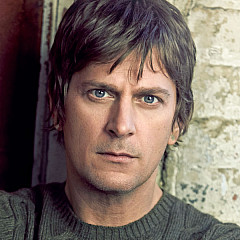
We don't often think of Tom Petty as a Southern rocker because he had such broad appeal and lived for many years in California, but he's from Gainesville, Florida, in the northern part of the state near Georgia. It's Southern, and folks there have Southern accents.
In this reflective, piano-based song, Petty sings about his Southern roots and wears his pride. In a 2002 interview with the Los Angeles Times, he explained: "That may be my favorite among my songs - just in terms of a piece of pure writing. I remember writing it very vividly. It was in the middle of the night and I was playing it on the piano at home in Encino. I was just singing into my cassette recorder and suddenly these words came out. I was at the point in my career where I was very much trying to find some new ground. I thought I had used up what I had started with and I wanted a new direction. We had lived in California for about 10 years at that point and I started thinking about growing up in northern Florida, which is a lot different from Miami Beach. It's close to Georgia and I came from a real Southern family, and I wanted to address that world. Once I came up with this song, I decided to write an entire album about the theme."
The
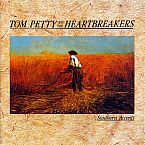
Southern Accents album was conceived as a back-to-basics Tom Petty solo album built around the theme of this song. He wrote other songs like "Rebels" and "Mary's New Car," but had trouble completing it. He ended up bringing in the band and making it a Tom Petty & the Heartbreakers album, and he changed the tone of it completely with three songs he wrote with Dave Stewart of Eurythmics, including the lead single, "
Don't Come Around Here No More." In October 1984, after working on the album for about two years, he got so frustrated during a mixing session that he slammed his hand into a wall and mangled it so badly that doctors told him he might not play guitar again. It was a tough time for Petty, both personally and professionally, but he started getting back on track after the album was released in 1985. A few years later, he formed the Traveling Wilburys with Bob Dylan, George Harrison, Jeff Lynne and Roy Orbison. In 1989 he released
Full Moon Fever as his first solo album.
Petty mentions his mother, Katherine, in the lines:
There's a dream I keep having
Where my mama comes to me
She died in 1980; Petty skipped the funeral because his presence in Gainesville would have raised a commotion, and he didn't want it to turn into a scene. Also, he hates funerals. "I made my own peace with my mother," he said.
Jack Nitzsche, famous for his work with the Rolling Stones, did the string arrangement on this song, marking the first time Tom Petty & the Heartbreakers used a string section.
Petty played piano on this track along with Heartbreakers keyboard specialist Benmont Tench. According to Petty, his part was used in the bridge and the rest is Benmont. The band's guitarist, Mike Campbell, played dobro.
Johnny Cash included this song on his 1996 album American II: Unchained, his second covers album produced by Rick Rubin. Petty was thrilled with this version.
Charles Kelley covered this for his debut solo album, The Driver, which was produced by Paul Worley. The Lady Antebellum member first performed the song with Trisha Yearwood back in 2013 at the Petty Fest in Nashville. "I'd always loved that song, and I always thought it would make a good country song, but I never thought about it necessarily as something Lady Antebellum would do," Kelley told Rolling Stone Country.
Kelley is joined by Stevie Nicks on his version. "It's really funny, when we first started the record, one of the things Paul and I talked about was trying not to maybe have a female harmony singer," he said. "[But Nicks] is the biggest Tom Petty fan. Paul kind of goes through the channels, and somehow it comes back that she wants to sing on it, so I was like, 'Of course. It's Stevie Nicks. Yes. She's going to sing on it.' So I already broke my rule of no females on the record."
Kelley told Radio.com that every time he hears the song, it reminds him of how his father grew up. "He was one of those guys that really did walk five miles to school, and had to work on the farm after school, and did things like that," he said. "So I always kind of picture him in my mind when I'm singing that song."