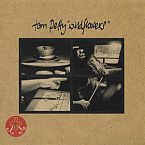
Wildflowers

Album: Wildflowers (1994)
Play Video

Songfacts®:

  • "Wildflowers," the opening track and title song of Tom Petty's 1994 solo album, stands as one of the most beloved and deeply personal compositions in his catalog. The tender acoustic ballad's message of finding freedom and belonging somewhere "close to me" resonates as both a love song and a song of self-acceptance.
  • On the surface, the song reads like a message to someone else, an encouragement to escape, to find a place "where you feel free." But as Warren Zanes recounts in Petty, The Biography, the real recipient turned out to be closer to home. When Petty played "Wildflowers" for his therapist, he was asked who it was about. Petty said he wasn't sure. The therapist replied, essentially, That's easy, it's you. Petty later admitted the realization "kind of knocked me back." As it turned out, he'd written himself a note and mailed it from the subconscious.

    This made perfect sense, even if it took a moment to sink in. His 22-year marriage to Jane Benyo was coming apart, and he'd dismissed Stan Lynch, the Heartbreakers' drummer since the Carter administration. He left MCA Records for Warner Bros., stepped away from producer Jeff Lynne, and generally behaved like a man clearing the deck before a storm. As Wildflowers documentary director Mary Wharton put it, "He was blowing up every aspect of his life."

    In that context, "Wildflowers" functioned less as a love song than as a form of self-soothing, Petty reminding himself that freedom wasn't a luxury item, but a necessity.
  • Though Petty's guitarist Mike Campbell co-wrote several tracks on Wildflowers, the title song arrived entirely formed from Petty alone. And it arrived quickly.

    Petty reportedly walked into his recording space with no plan, picked up a guitar, hit record, opened his mouth, and out came the song - lyrics, melody, chords, the lot - in one uninterrupted take. The finished version differs so little from the demo that you could argue the rest of the album exists simply to justify its presence.

    "I just took a deep breath and it came out," he told Performing Songwriter. "The whole song... I only spent three and a half minutes on that whole song."

    For days afterward, he replayed the tape, convinced something must be wrong. Songs, he reasoned, were not supposed to arrive that easily. Eventually, he decided that maybe nothing was wrong at all.
  • Rick Rubin, who co-produced the album with Petty and Campbell, was equally stunned. "The first thing Rick Rubin heard on Wildflowers was the home demo of the title track," keyboardist Benmont Tench told Uncut magazine. A beautiful acoustic hymn to freedom and self-determination, it set the tone for the whole album.

    "Apparently, Tom walks into the room where his recording setup was, picks up his guitar with no ideas in his head, pushes record, opens this mouth, and that song came out in one take," he added. "Lyrically, melodically and chord-wise 'Wildflowers' is exactly the same as what you hear on the finished album."
  • Rubin's involvement marked a sharp left turn from the dense, gleaming sound Jeff Lynne had brought to Petty's previous records. Lynne favored compression and layers, but Rubin favored space, warmth, and intimacy, pushing Petty's voice front and center.
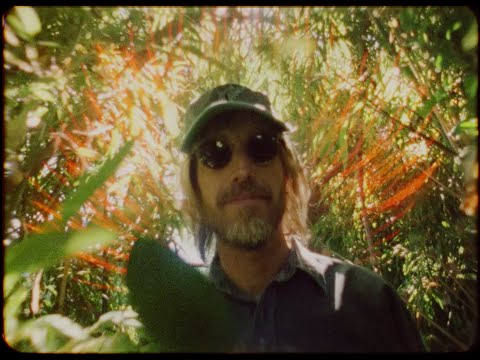
  • Despite becoming one of Petty's most cherished songs, "Wildflowers" was never released as a commercial single in 1994 and didn't receive a music video until 2020, when the Petty estate unveiled an official clip to promote Wildflowers & All the Rest. Directed by Alan Bibby and Jonny Kofoed, the video uses intimate 16mm footage shot during the original sessions by Martyn Atkins, showing Petty at home, walking his dog, lying in the grass, and otherwise being disarmingly human. That same footage later formed the backbone of Wharton's 2021 documentary Tom Petty, Somewhere You Feel Free: The Making of Wildflowers. (though Atkins filed a lawsuit in 2024 over its use).
  • Placed at the very start of the album, "Wildflowers" quietly announces what's coming: a record that balances acoustic confessionals with tougher electric moments. The strategy worked. Wildflowers debuted at #8 on the Billboard 200, went 3x Platinum within nine months, and is now widely regarded as one of Petty's finest achievements, ranking at #214 on Rolling Stone's 500 Greatest Albums of All Time.
  • Though Echo is often labeled Petty's "divorce album," Petty set the record straight. "Wildflowers is the divorce album," he told Zanes. "That's me preparing to leave. I don't even know how aware I was of it while writing."

    The album captures Petty at his most vulnerable and honest, with songs like "You Don't Know How It Feels," "You Wreck Me" and the title track all reflecting his emotional state during this period of deep personal change.

Comments

Be the first to comment...

Editor's Picks

Holly Knight ("The Best," "Love Is A Battlefield")

Holly Knight ("The Best," "Love Is A Battlefield")Songwriter Interviews

Holly Knight talks about some of the hit songs she wrote, including "The Warrior," "Never" and "The Best," and explains some songwriting philosophy, including how to think of a bridge.

Maxi Priest

Maxi PriestSongwriter Interviews

The British reggae legend tells the story of his #1 hit "Close To You," talks about his groundbreaking Shabba Ranks collaboration "Housecall," and discusses his latest project with Robin Trower.

Paul Stanley of Kiss, Soul Station

Paul Stanley of Kiss, Soul StationSongwriter Interviews

Paul Stanley on his soul music project, the Kiss songs with the biggest soul influence, and the non-make-up era of the band.

Second Wind Songs

Second Wind SongsSong Writing

Some songs get a second life when they find a new audience through a movie, commercial, TV show, or even the Internet.

Bob Daisley

Bob DaisleySongwriter Interviews

Bob was the bass player and lyricist for the first two Ozzy Osbourne albums. Here's how he wrote songs like "Crazy Train" and "Mr. Crowley" with Ozzy and Randy Rhoads.

Devo

DevoSongwriter Interviews

Devo founders Mark Mothersbaugh and Jerry Casale take us into their world of subversive performance art. They may be right about the De-Evoloution thing.