Nirvana

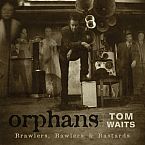
Album: Orphans: Brawlers, Bawlers & Bastards (2006)
Play Video

Songfacts®:

  • "Nirvana" was originally a poem by Charles Bukowski. Waits' version is simply his reading of that poem, set to some minimalist music. Waits has also been recorded reading Bukowski's The Laughing Heart during an interview, but he never formally set it to music (as far as we know).

    In many ways, Waits and Bukowski were cut from the same cloth. Bukowski's been called the "laureate of American lowlife." Like Waits, much of his work dealt with life among the underclass, dramatizing the lives of hookers, criminals, alcoholics, and the seedier characters of city life. Where Waits' work is evenly balanced with positive depictions of working class people and marriage, however, Bukowski remained hard-edged, callous, and deliberately offensive throughout nearly all his work. "Nirvana" is one of the exceptions.
    It's an unusually tender poem for Bukowski. On its surface, the poem is simply the story of a young man riding a bus into an idyllic mountain town and then riding back out again. The real emotional meat of the poem lies entirely in subtext, and Waits doesn't use music to change that. The music itself is so subtle, in fact, that it's easy to forget it's even there.

    Listening to the song closely, we hear the story of an emotionally lost young man wandering around the country. He happens into a nice mountain town very different from the world he grew up in, and observes the simple happiness of the employees there. Waits never comes and says that the young man envies them or wishes he could have what they have, but we feel it coming through in the words.

    The young man thinks of staying, but he doesn't. We aren't told why. Maybe he doesn't think he'd be welcomed there. Maybe he's just become so attached to his rootless sadness that he can't break out of it. Whatever the reason, the young man gets back on the bus and leaves the town behind.

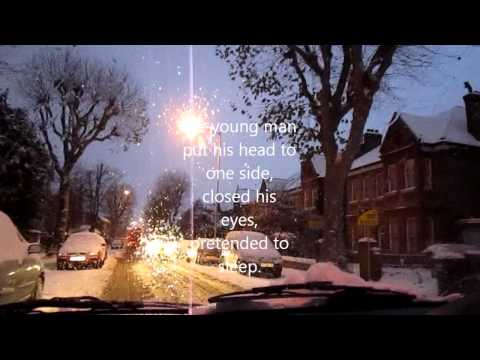
    There's no abrupt shift in the music or any obvious statement in the lyrics to let us know what the young man is feeling, but somehow all the despair comes through loud and clear with the simple act of the young man putting his head to one side, closing his eyes, and pretending to sleep, right back on the road to nowhere that we originally found him on.
  • Waits called Bukowski an artistic "father figure," and admired him from the first time he read the poet's "Notes of a Dirty Old Man" column in the LA Free Press. Waits admired that Bukowski "seemed to be a writer of the common people and street people, looking in the dark corners where no one seems to want to go."
  • Waits nearly played Bukowski in the film Barfly, but had to cede the role to Mickey Rourke for reasons never specified. Waits also met Bukowski once, and in an interview reported that the meeting was too much for Waits because he couldn't keep up with the poet's drinking. "You're a novice, you're a child," Waits said. "You're drinking with a roaring pirate... they're made out of different stock. They're like dockworkers."

Comments

Be the first to comment...

Editor's Picks

John Waite

John WaiteSongwriter Interviews

"Missing You" was a spontaneous outpouring of emotion triggered by a phone call. John tells that story and explains what MTV meant to his career.

Charlie Daniels

Charlie DanielsSongwriter Interviews

Charlie discusses the songs that made him a Southern Rock icon, and settles the Devil vs. Johnny argument once and for all.

Barry Dean ("Pontoon," "Diamond Rings And Old Barstools")

Barry Dean ("Pontoon," "Diamond Rings And Old Barstools")Songwriter Interviews

A top country songwriter, Barry talks about writing hits for Little Big Town, Tim McGraw and Jason Aldean.

Director Nick Morris ("The Final Countdown")

Director Nick Morris ("The Final Countdown")Song Writing

Nick made some of the biggest videos on MTV, including "The Final Countdown," "Heaven" and "Don't Know What You Got (Till It's Gone)."

John Kay of Steppenwolf

John Kay of SteppenwolfSongwriter Interviews

Steppenwolf frontman John Kay talks about "Magic Carpet Ride," "Born To Be Wild," and what he values more than awards and accolades.

Supertramp founder Roger Hodgson

Supertramp founder Roger HodgsonSongwriter Interviews

Roger tells the stories behind some of his biggest hits, including "Give a Little Bit," "Take the Long Way Home" and "The Logical Song."