Il Canto degli Italiani

Album: various (1847)
Play Video

Songfacts®:

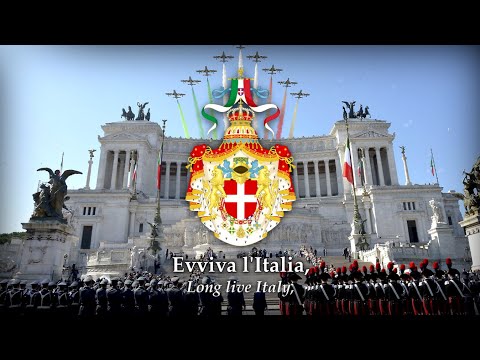
  • Also known as "Fratelli d'Italia" ("Brothers of Italy"), "Il Canto degli Italiani" ("Song of the Italians") is Italy's national anthem. The canto was written by Genoa natives Goffredo Mameli (lyrics) and Michele Novaro (music) in 1847 leading up to the revolutions of 1848 throughout Europe and the First Italian War of Independence waged against Austria. Mameli, then a 20-year-old student, was a follower of Guiseppe Mazzini, a politician who championed for the unification of Italy (at that point, the Italian peninsula was a conglomeration of independent entities). Mameli's lyrics plead the case for unification and liberty:

    We were for centuries
    downtrodden, derided,
    because we are not one people,
    because we are divided.
    Let one flag, one hope
    gather us all.
    The hour has struck
    for us to unite
  • Novaro, who was living in Turin when he received Mameli's lyrics, recalled how he came up with the music: "I placed myself at the harpsichord, with the verses of Goffredo on the lectern, and I strummed, murdered the poor instrument with convulsive fingers, always with eyes at the hymn, putting down melodic phrases, one above the other, but a thousand miles from the idea that they could adapt to those words. I stood up disgruntled with myself; I stayed a little longer in the Valerio house, but always with those verses before the eyes of the mind. I saw that there was no remedy, I took leave and ran home. There, without even taking off my hat, I threw myself at the piano. The motif strummed in the Valerio house came back to me: I wrote it on a sheet of paper, the first that came to my hands: in my agitation I turned the lamp over the harpsichord and, consequently, also on the poor sheet; this was the origin of the 'Fratelli d'Italia.'"
  • The song made its debut at a political demonstration in Genoa on December 10, 1847 to implore King Charles Albert of Sardinia to fight for Italy's independence. More than 30,000 patriots from all over Italy attended the event and heard Mameli's hymn, which quickly became a battle cry for revolution - so much so that Austrian police considered it a political crime to sing the tune. It became popularly known as "Fratelli d'Italia" ("Brothers of Italy") and "Inno di Mameli" ("Mameli's Hymn").
  • When the war broke out in 1848, Mameli volunteered his service in the National Guard of Genoa. After being wounded during the siege of Rome, he contracted gangrene and died of sepsis on July 6, 1849 at age 21.
  • Italy's long-fought battle for unification came in the form of a monarchy after the Second Italian War of Independence in 1861. Mameli's republican hymn was ditched in favor of the "Marcia Reale d'Ordinanza" ("Royal March Of Ordinance"), which was the Kingdom of Italy's official national anthem until 1946, when the country became a republic after World War II. On October 12 of that year, "Il Canto degli Italiani" was chosen as the de facto national anthem. Over 70 years later, and 170 years after its composition, the song finally gained official status as the hymn of the Italian Republic.
  • One of the earliest recordings came from Neapolitan opera singer Giuseppe Godono in 1915.
  • This is often sung at the beginning of Italian soccer matches and other public events.
  • In 2014, Dutch violinist Andre Rieu and his Johann Strauss Orchestra performed this live in Cortona, Italy.
  • The unifying anthem found new significance for Italians during the global coronavirus pandemic that forced the country into lockdown and its citizens into quarantine to prevent the spread of COVID-19. By mid-March 2020, more than 21,000 Italians were infected and 1,400 died from the virus. From rooftops and balconies across the country, the national anthem and other traditional tunes spontaneously rang out from house-bound Italians showing solidarity with each other and support for the medical teams fighting the outbreak.

    The US Navy also made headlines when the USS Mount Whitney, stationed in waters off the Italian port city of Gaeta, showed support by playing the anthem.

Comments

Be the first to comment...

Editor's Picks

Tom Johnston from The Doobie Brothers

Tom Johnston from The Doobie BrothersSongwriter Interviews

The Doobies guitarist and lead singer, Tom wrote the classics "Listen To The Music," "Long Train Runnin'" and "China Grove."

Rickie Lee Jones

Rickie Lee JonesSongwriter Interviews

Rickie Lee Jones on songwriting, social media, and how she's handling Trump.

Jon Anderson of Yes

Jon Anderson of YesSongwriter Interviews

From the lake in "Roundabout" to Sister Bluebird in "Starship Trooper," Jon Anderson talks about how nature and spirituality play into his lyrics for Yes.

Lori McKenna

Lori McKennaSongwriter Interviews

Lori's songs have been recorded by Faith Hill and Sara Evans. She's performed on the CMAs and on Oprah. She also has five kids.

Chris Frantz - "Genius of Love"

Chris Frantz - "Genius of Love"They're Playing My Song

Chris and his wife Tina were the rhythm section for Talking Heads when they formed The Tom Tom Club. "Genius of Love" was their blockbuster, but David Byrne only mentioned it once.

Richard Butler of The Psychedelic Furs

Richard Butler of The Psychedelic FursSongwriter Interviews

Psychedelic Furs lead singer Richard Butler talks about their first album since 1991 and explains what's really going on in "Pretty In Pink."