The Lord's My Shepherd

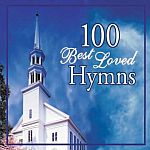
Album: 100 Best Hymns (1650)
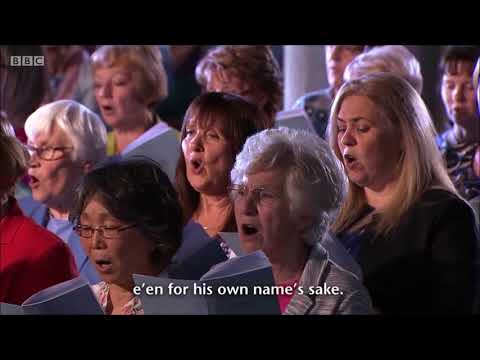
Play Video

Songfacts®:

  • King David of Israel is traditionally reckoned to have written 73 of the 150 Psalms in the Bible. These ancient Hebrew hymns stand out as great poetry that spotlights the heights and depths of human experience.

    During the 16th century Protestant Reformation, the reformers particularly commended the Psalms for singing. Because the reformers felt the need to have versions of the Psalms in the common vernacular in popular song forms, they published several metrical versions of all the Psalms. By the mid-17th century, the Churches of England and Scotland needed a new translation.

    In 1643, the English puritan religious author Francis Rous published The Psalms of David set forth in English meeter. After a committee of translators extensively edited his text, they approved his Psalms for the 1650 Scottish Psalter. Though heavily revised, Rous's text for Psalm 23 is the basis of the hymn "The Lord's my Shepherd" that appeared in the Psalter. This versification of Psalm 23 has stood the test of time and churches still sing it four centuries later.
  • In Psalm 23, David pictures God as a caring shepherd who guides, leads, preserves, and directs us. If we follow our Shepherd and obey His commands, we will dwell with Him forever.
  • Congregations often sing the hymn to the tune Crimond, written by Miss Jessie Irvine (1836-67), whose father was for 30 years the minister of Crimond in Aberdeenshire. "The Lord's My Shepherd" has been associated with the Crimond since Princess Elizabeth chose it for her marriage service in 1947. It was sung again at the State Funeral of Queen Elizabeth II at Westminster Abbey on September 19, 2022.
  • Other well-known versions of Psalm 23 include:

    The sixth movement of John Rutter's "The Requiem." An adaptation of the Roman Catholic Requiem Mass completed in 1985, "The Lord is my Shepherd" is the highlight of Rutter's choral masterpiece.

    "The Lord Is My Shepherd" by Howard Goodall. The English composer wrote the piece when the BBC commissioned him to create a theme song for the comedy series The Vicar of Dibley.

    Worship songwriter Stuart Townend's 1996 version of "The Lord Is My Shepherd." Struggling to write a different song, Townend took a break and flicked to Psalm 23 in his Bible. A simple melody popped into his head and within 10 minutes he'd written the whole hymn.

Comments

Be the first to comment...

Editor's Picks

Angelo Moore of Fishbone

Angelo Moore of FishboneSongwriter Interviews

Fishbone has always enjoyed much more acclaim than popularity - Angelo might know why.

Alan Merrill of The Arrows

Alan Merrill of The ArrowsSongwriter Interviews

In her days with The Runaways, Joan Jett saw The Arrows perform "I Love Rock And Roll," which Alan Merrill co-wrote - that story and much more from this glam rock pioneer.

Rob Thomas of Matchbox Twenty

Rob Thomas of Matchbox TwentySongwriter Interviews

Rob Thomas on his Social Distance Sessions, co-starring with a camel, and his friendship with Carlos Santana.

Rufus Wainwright

Rufus WainwrightSongwriter Interviews

Rufus Wainwright on "Hallelujah," his album Unfollow The Rules, and getting into his "lyric trance" on 12-hour walks.

Classic Metal

Classic MetalFact or Fiction

Ozzy, Guns N' Roses, Judas Priest and even Michael Bolton show up in this Classic Metal quiz.

Ian Anderson: "The delight in making music is that you don't have a formula"

Ian Anderson: "The delight in making music is that you don't have a formula"Songwriter Interviews

Ian talks about his 3 or 4 blatant attempts to write a pop song, and also the ones he most connected with, including "Locomotive Breath."