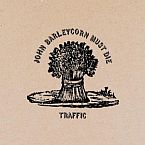
John Barleycorn

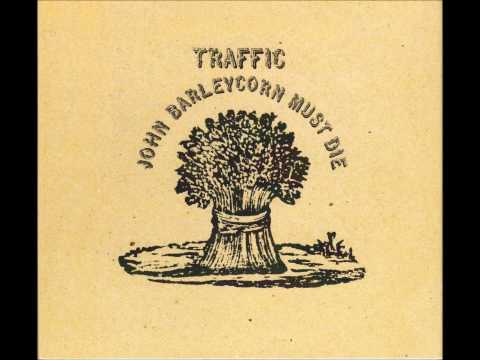
Album: John Barleycorn Must Die (1970)
Play Video

Songfacts®:

  • This is a musical adaptation of a traditional poem from the old west that basically railed against the ludicrousness of prohibition. The joke was that all those "brave" teetotalers who claimed to be doing the work of the Lord were actually hypocrites and were ruining that work, because, as the lyric sums up in the end, no one can do the rudimentary work necessary to build and grow the land "without a little barleycorn." >>>
    Suggestion credit:
    S.D. - Denver, CO
  • The liner notes to John Barleycorn Must Die explain: "Between the years of 1900 and 1910, Cecil Sharpe collected a number of songs, John Barleycorn among them. The many versions of this song are said to have come from Oxfordshire, Sussex, Hampshire, Surrey and Somerset, and there are estimated to be between 100 and 140 versions. The earliest known copy is of the age of James 1 in the Pepoysian collection 1465 printed in black letter by H. Gorson (1607-1641). the popular interpretation is the effort of the people to give up the alcohol distilled from barley but in the last verse:

    "And little Sir John with his nut brown bowl
    And his brandy in the glass
    And little Sir John with his nut brown bowl
    Proved the stronget man at last...'

    but there are many interpretations." >>>
    Suggestion credit:
    Bertrand - Paris, France

Comments: 5

  • Jeff from Pittsburgh, PaAccording to Steve Winwood: "Of course, the title track of 'John Barleycorn' was an English folk song which was sometimes called 'The Passion of the Corn.' And it's a parallel with the passion of Christ and the rural cycle. The winter, the land being dormant, and then the corn growing, rising, being cut off, being ground between stones, and being mistreated, eventually rising again in the form of alcohol or bread. And it was called historically 'The Passion of the Corn.'"
    [BBC Four Documentary, "Steve Winwood: English Soul", 2010; 40:35-41:21]
  • Noriko from Phoenix, AzI see, the lyrics really had a deep meaning and and you can really feel the essence of the song.
  • Randy from Las Vegas, NvThe song came from a poem by Robert Burns written in 1782.
    John Barleycorn: A Ballad
    gif
    Robert Burns (1782)
    clr gif

    There was three kings into the east,
    Three kings both great and high,
    And they hae sworn a solemn oath
    John Barleycorn should die.

    They took a plough and plough'd him down,
    Put clods upon his head,
    And they hae sworn a solemn oath
    John Barleycorn was dead.

    But the cheerful Spring came kindly on,
    And show'rs began to fall;
    John Barleycorn got up again,
    And sore surpris'd them all.

    The sultry suns of Summer came,
    And he grew thick and strong;
    His head weel arm'd wi' pointed spears,
    That no one should him wrong.

    The sober Autumn enter'd mild,
    When he grew wan and pale;
    His bending joints and drooping head
    Show'd he began to fail.

    His colour sicken'd more and more,
    He faded into age;
    And then his enemies began
    To show their deadly rage.

    They've taen a weapon, long and sharp,
    And cut him by the knee;
    Then tied him fast upon a cart,
    Like a rogue for forgerie.

    They laid him down upon his back,
    And cudgell'd him full sore;
    They hung him up before the storm,
    And turned him o'er and o'er.

    They filled up a darksome pit
    With water to the brim;
    They heaved in John Barleycorn,
    There let him sink or swim.

    They laid him out upon the floor,
    To work him farther woe;
    And still, as signs of life appear'd,
    They toss'd him to and fro.

    They wasted, o'er a scorching flame,
    The marrow of his bones;
    But a miller us'd him worst of all,
    For he crush'd him between two stones.

    And they hae taen his very heart's blood,
    And drank it round and round;
    And still the more and more they drank,
    Their joy did more abound.

    John Barleycorn was a hero bold,
    Of noble enterprise;
    For if you do but taste his blood,
    'Twill make your courage rise.

    'Twill make a man forget his woe;
    'Twill heighten all his joy;
    'Twill make the widow's heart to sing,
    Tho' the tear were in her eye.

    Then let us toast John Barleycorn,
    Each man a glass in hand;
    And may his great posterity
    Ne'er fail in old Scotland!


    gif
    clr gif

    Back to the index > Poems by Robert Burns
    Profile of the author > Scottish bard Robert Burns
  • Nathan from Jackson, TnThis song is NOT from the Old West. It's an English folksong detailing the life of John Barleycorn. It's a pagan representation of the Mabon ritual.
  • Joshua from La Crosse, WiJethro Tull has also been known to perform this song in concert, such as on their live album A Little Light Music.
see more comments

Editor's Picks

David Bowie Leads the Society for Prevention of Cruelty to Long-Haired Men

David Bowie Leads the Society for Prevention of Cruelty to Long-Haired MenSong Writing

Bowie's "activist" days of 1964 led to Ziggy Stardust.

Billy Joe Shaver

Billy Joe ShaverSongwriter Interviews

The outlaw country icon talks about the spiritual element of his songwriting and his Bob Dylan mention.

Marvin Gaye

Marvin GayeFact or Fiction

Did Marvin try out with the Detroit Lions? Did he fake crazy to get out of military service? And what about the cross-dressing?

Subversive Songs Used To Sell

Subversive Songs Used To SellSong Writing

Songs about drugs, revolution and greed that have been used in commercials for sneakers, jeans, fast food, cruises and cars.

Song Titles That Inspired Movies

Song Titles That Inspired MoviesSong Writing

Famous songs that lent their titles - and in some cases storylines - to movies.

Sub Pop Founder Bruce Pavitt On How To Create A Music Scene

Sub Pop Founder Bruce Pavitt On How To Create A Music SceneSong Writing

With $50 and a glue stick, Bruce Pavitt created Sub Pop, a fanzine-turned-label that gave the world Nirvana and grunge. He explains how motivated individuals can shift culture.