
Drag Path

Album: Breach (2026)
Charted: 23 57
Play Video

Songfacts®:

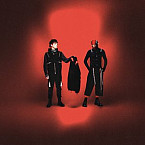
  • Originally released on September 12, 2025, as the 14th and final bonus track on Breach: Digital Remains - a blink-and-you-missed-it digital expansion of their eighth album, Breach - "Drag Path" was available for precisely one week. But like "Level of Concern" escaping quarantine into the wider world, or "Heathens" slipping from soundtrack side quest to cultural ubiquity, "Drag Path" refused to stay obscure. Fans latched on, and the song began circulating in the digital undergrowth.

    By February 17, 2026, Tyler Joseph and Josh Dun had returned to the studio to record a slightly leaner version and released it as a standalone single.
  • A drag path, in the literal sense, is the mark left behind when something is pulled across the ground. Within the song's narrative, the term gains a pointed metaphorical dimension rooted in both Tyler Joseph's personal themes of mental health and the band's fictional Dema/Clancy lore. The image is drawn in part from the "Jumpsuit" music video, where the character Clancy is physically dragged by the villain Nico, leaving a literal mark in the earth. Joseph recontextualizes this as an act of intentional vulnerability: the suffering a person endures leaves visible evidence, a breadcrumb trail of struggle that makes rescue possible.

    A drag path etched in the surface
    As evidence I left there on purpose


    The drag path becomes proof of life rather than defeat.
  • Within the band's ongoing Dema/Clancy saga, "Drag Path" operates as a postscript to the Breach era. Evil - frequently framed in the song as "the devil's eyes" - is persistent but not permanent. In early form, the track was reportedly known internally as "Devil's Eyes," according to the Clancy: Digital Remains booklet.
  • Outside the lore, the phrase took on a life of its own on TikTok, where users began pairing the song with deeply personal clips about survival and endurance. In classic Twenty One Pilots fashion - think "Stressed Out" becoming an anthem for millennial malaise - a specific image turned communal.
  • "Drag Path" was written by Tyler Joseph and produced alongside longtime collaborator Paul Meany of Mutemath, who helped shape much of Breach.
  • Tobias Gundorff Boesen wrote and directed the accompanying stop-motion video, produced at The Animation Workshop in Denmark. It reimagines Boesen's 2010 short film Out of a Forest, replacing its original soundtrack with "Drag Path." The symbolism is Pilots-coded to the core: a wolf embodies chaos, a small bunny represents innocence, and a magician's intervention becomes a metaphor for divine rescue, not prevention of harm, but salvation from within it. Some fans have even suggested that older rabbit figures resemble the grandfathers of Joseph and Dun, a detail that fits neatly into the band's habit of threading family history into myth.

Comments

Be the first to comment...

Editor's Picks

Julian Lennon

Julian LennonSongwriter Interviews

Julian tells the stories behind his hits "Valotte" and "Too Late for Goodbyes," and fills us in on his many non-musical pursuits. Also: what MTV meant to his career.

Barney Hoskyns Explores The Forgotten History Of Woodstock, New York

Barney Hoskyns Explores The Forgotten History Of Woodstock, New YorkSong Writing

Our chat with Barney Hoskyns, who covers the wild years of Woodstock - the town, not the festival - in his book Small Town Talk.

Timothy B. Schmit of the Eagles

Timothy B. Schmit of the EaglesSongwriter Interviews

Did this Eagle come up with the term "Parrothead"? And what is it like playing "Hotel California" for the gazillionth time?

Jack Tempchin - "Peaceful Easy Feeling"

Jack Tempchin - "Peaceful Easy Feeling"They're Playing My Song

When a waitress wouldn't take him home, Jack wrote what would become one of the Eagles most enduring hits.

Howard Jones

Howard JonesSongwriter Interviews

Howard explains his positive songwriting method and how uplifting songs can carry a deeper message.

Harold Brown of War

Harold Brown of WarSongwriter Interviews

A founding member of the band War, Harold gives a first-person account of one of the most important periods in music history.