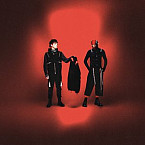
"The Contract" is a moody, shape-shifting single released by Twenty One Pilots as the first offering from their eighth album, Breach. It's the continuation of a sprawling conceptual saga that has been quietly unspooling since 2015's Blurryface, and which fans thought had finally wrapped up with 2024's Clancy.
Except it hadn't. Clancy's final track, "Paladin Strait," ended not with closure but with a whispered "Hello, Clancy." "The Contract" picks up precisely at that unsettled moment, musically and thematically.
The song writhes with inner conflict. "I don't sleep much, that's crazy, how'd you know that?" sings frontman Tyler Joseph. The lyrics circle themes of broken promises, emotional burnout, and the disintegration of something once binding.
Joseph went out of his way to make the song feel uncomfortable. He told Apple Music's Zane Lowe that he deliberately rejected his usual songwriting instincts when crafting the chorus, forcing himself into unexpected leaps in pitch and phrasing. "A previous version of me would never think I could go there," he said, calling the process a kind of melodic unlearning.
Joseph wanted the lyrics to reflect questions rather than answers. Lines like "Is it lights out yet?" intentionally evoke confusion and ambiguity. He confirms that the song contains a lot of emotional wandering, asking "What is this feeling?" rather than trying to resolve it.
As with most Twenty One Pilots material, "The Contract" comes with layers of meta-commentary. The title gestures toward themes that have run through both Clancy and Breach: the invisible agreements between artist and audience, between character and story, between intention and perception. Joseph and drummer Josh Dun initially considered releasing it as a bonus track on Clancy but ultimately decided that would trivialize its significance. Instead, it became the cornerstone of a new record, one that Joseph describes as the actual final chapter of the long-running narrative arc.
That arc includes a few sleights of hand. "We kind of played it like our last record, Clancy, was going to be the end of the story," Joseph told Lowe. "We felt like we had just done a misdirection to the fans."
Hence the title Breach, a cheeky admission that they'd broken the narrative contract, but also a reference to the story's climax. The idea, Joseph explained, was to "breach" both the fictional world they'd built and the trust of their audience, but in a way that was thematically appropriate. "It felt like it worked," he said, "but this is, officially, the end."
Tyler Joseph wrote "The Contract" with his frequent collaborator Paul Meany, English pop-punk singer-songwriter Yungblud, and Yungblud's frequent songwriting partner Matt Schwartz. Joseph and Meany produced the track.
Directed by Frédéric De Pontcharra, the video picks up directly from the final moments of the Clancy album, immersing viewers in a dystopian, cinematic world that leans heavily into the band's established mythology. It is packed with callbacks and allusions to earlier chapters of the Twenty One Pilots saga. The visual dramatizes Clancy's (Tyler's) exhaustion and desperation as he contemplates breaking the cycle of oppression, potentially even betraying his closest ally (Josh Dun/the Torchbearer), in order to escape the endless struggle with Blurryface. The "contract" is depicted not as a literal document, but as a metaphor for unspoken agreements, between friends, with oneself, or with the oppressive system of Dema.
When Twenty One Pilots were thinking about how to expand Clancy, the idea of just tacking on a few extra songs was floated. Tyler Joseph mentioned it to his local barista (because apparently, that's the kind of barista worth consulting on record strategy), who responded: "Oh, like a deluxe?"
Hearing that word made Joseph's heart sink. Suddenly, their carefully crafted, immersive world felt like a fast-food combo deal. That moment killed the "deluxe edition" idea cold and instead sparked something bigger: the duo decided these songs deserved their own space, and Breach was born as a full album.
"It would have been the first and only misstep in an otherwise flawless execution," Tyler joked to Apple Music.