Move to L.A.
by Tyga (featuring Ty Dolla $ign)

Album: Bitch I'm the S--t 2 (2017)
Play Video

Songfacts®:

  • This song pays homage to Ma$e and Total's 1998 hit "What You Want," appropriating lines and emulating Ma$e's energy and flow. The tune also borrows from Curtis Mayfield's "Right On For the Darkness," which is sampled on Ma$e's track. Tyga told Genius how G.O.O.D. Music, founder Kanye West encouraged him to utilise the '90s hip hop classic.

    "I had played it for Kanye and he was like, 'I would love to hear more of that Ma$e flow.' So we went back to the studio. I went through Ma$e's lyrics and the vibe of that and then we listened to the original Curtis Mayfield record and was like, 'We gonna put both of them together and still give it that bounce.'"
  • The track is a collaboration with Ty Dolla Sign. Tyga explained the hook up:

    "We had the song already written and sent it to him. I was like, 'Don't mind my singing, because it's like a reference.' And he heard it, he knew what it was, right off the bat. He sent it right back to me. He was like, 'If you need anything else I can come in and re-record it. This is a smash.' So, it just came together.

    I feel like Ty Dolla $ign, you can really hear the sincerity and the passion in his vocals. I didn't want it so crazy polished. I like the fact that Ty Dolla $ign, he's R&B, but he's still street. He got that thug essence to him, too. I think it just made it great for the record."
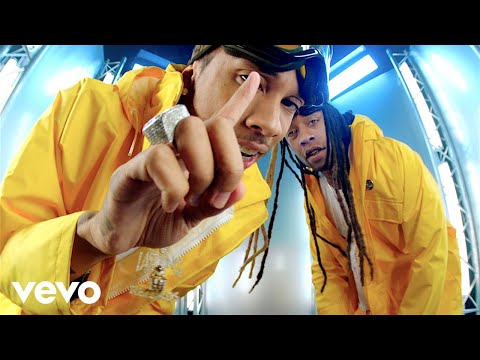
  • The song's music video also pays tribute to to Mase's "What You Want." Tyga explained the visual's concept to Billboard magazine:

    "Man, just because the game is missing a lot of that essence now. I think the late '90s and the early 2000s is like the golden era for rap, the golden era for culture. I think a lot of people don't acknowledge it now as they should be doing. That was the golden era of music. From when Ma$e was out to all the way when 50 [Cent] came out. It was just nothing but rap stars. Hits. Fun. Nobody sounded the same. Everybody had their own unique flow, unique style. The videos were glossy.

    Now, with rap being the biggest genre in music, people need that essence. Kendrick [Lamar] is doing it. I commend Kendrick for doing it and showing the meaning of videos again. For awhile, people were acting like videos weren't important. People were just shooting quick little videos and weren't really caring about the content of it. I've always been a person that was about the visuals, too. It's just the right time. I just know when the time is right to strike. I just feel like that's what the game is missing right now. People just need that essence. People need those superstars again."

Comments

Be the first to comment...

Editor's Picks

Holly Knight ("The Best," "Love Is A Battlefield")

Holly Knight ("The Best," "Love Is A Battlefield")Songwriter Interviews

Holly Knight talks about some of the hit songs she wrote, including "The Warrior," "Never" and "The Best," and explains some songwriting philosophy, including how to think of a bridge.

Maxi Priest

Maxi PriestSongwriter Interviews

The British reggae legend tells the story of his #1 hit "Close To You," talks about his groundbreaking Shabba Ranks collaboration "Housecall," and discusses his latest project with Robin Trower.

Paul Stanley of Kiss, Soul Station

Paul Stanley of Kiss, Soul StationSongwriter Interviews

Paul Stanley on his soul music project, the Kiss songs with the biggest soul influence, and the non-make-up era of the band.

Second Wind Songs

Second Wind SongsSong Writing

Some songs get a second life when they find a new audience through a movie, commercial, TV show, or even the Internet.

Bob Daisley

Bob DaisleySongwriter Interviews

Bob was the bass player and lyricist for the first two Ozzy Osbourne albums. Here's how he wrote songs like "Crazy Train" and "Mr. Crowley" with Ozzy and Randy Rhoads.

Devo

DevoSongwriter Interviews

Devo founders Mark Mothersbaugh and Jerry Casale take us into their world of subversive performance art. They may be right about the De-Evoloution thing.