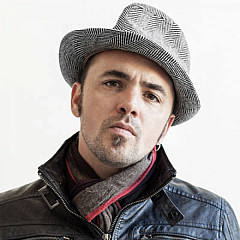
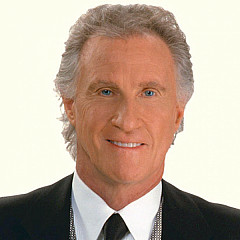
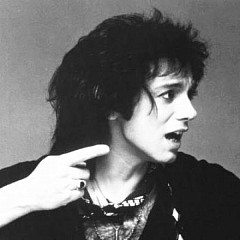
1978-Ali CampbellVocals, guitar1978-2008
Mickey VirtueKeyboards1978-2008
Robin CampbellGuitar, vocals
Earl FalconerBass
James BrownDrums
Brian TraversSaxophone1978-2021
Astro (Terence Wilson)Trumpet1978-2013
Norman HassanPercussion
Duncan CampbellVocals2008-2021
Matt DoyleVocals2021-
In the summer of 1978, UB40 was born out of jam sessions in a basement rehearsal space in Birmingham, England. Several of the members, including Ali Campbell, Brian Travers, Earl Falconer and James Brown knew each other from the campus of the Moseley School of Art. With the addition of Ali's brother Robin, Norman Hassan, Astro and Mickey Virtue, the bands line-up would solidify and remain unchanged for nearly 30 years.
UB40 caught their first big break after Chrissie Hynde spotted the band rocking a London pub stage. She asked them to sign on as the opening act for The Pretenders upcoming tour. In February 1980 they released their debut single "King"/"Food for Thought" on the small independent Graduate Records. The record took off, peaking at #4 on the UK Singles Chart. It was the first single to reach the UK Top 10 without the backing of a major record company.
UB40 cemented themselves as left-wing political activists early in their career. The band took its name from a document (Unemployment Benefit Form 40) used to claim unemployment benefits from the Department of Health and Social Security in the UK. Their debut album Signing Off features cover art emulating the form, and several tracks from the album touch on social and political issues. "Burden of Shame" derides the ills of British Imperialism while "Food For Thought" addresses famine in Ethiopia and "Madame Medusa" takes on the Iron Lady Margaret Thatcher's rise to power in Britain.
UB40's unique sound brings a pop sensibility to the traditional sounds of ska, reggae, early roots rock and dub. While their earlier material was more traditional, both in music style and lyrical themes, some critics and reggae purists look down on their "reggaefying" of pop songs like "
Red Red Wine" and "
I Got You Babe," a sound that brought them much mainstream success in the late '80s and early '90s.
It took UB40 a long time to break through in the US, but it happened in a big way in 1988 when their reggaed-up cover of Neil Diamond's acoustic ballad "Red Red Wine" saturated the airwaves and lit up the Billboard charts. The song was originally released on 1983's Labour of Love, an album of cover songs by some of the band's favorite artists and music idols. The album topped the UK charts then, but it wasn't until their appearance at the Free Nelson Mandela Concert at Wembley Stadium in London in June of 1988 that American's really caught on. The show was televised worldwide, and soon American DJ's were spinning the track incessantly. The song topped the Billboard Hot 100 in October of that year.
Released in July of 1993,
Promises and Lies became UB40's biggest record to date, selling over 9 million copies worldwide. The first single, a cover of Elvis' "
Can't Help Falling In Love" would earn the group their third UK #1. The song also climbed to the top spot on the Billboard Hot 100 in the US and would remain there for 7 weeks, giving the group their second #1 hit in America. The track gained even further popularity when it was included on the soundtrack for the 1993 Sharon Stone thriller
Sliver.
Released on the 25th anniversary of their debut Signing Off, 2005's Who You Fighting For was a formidable return to the politically-tinged roots rock of UB40's early years. Spurred on by their disgust with British and American involvement in the Iraq War, the band penned songs like "War Poem" and "Sins of the Father," calling out the ills of war and unrelenting oil lust. The title track kicks off the message loud and clear with lyrics like "You do the killing, they do the drilling. You do the dying, they do the lying." In 2006 the record was nominated for a Grammy Award for Best Reggae Album.
With over 70 million records sold, UB40 is one of the world's best-selling music artists. So, when four of its original members were declared bankrupt in late 2011, it came as quite a shock. Saxophonist Brian Travers, drummer Jimmy Brown, trumpeter Terence "Astro" Wilson and percussionist Norman Hassan were all declared "insolvent," meaning tax officers could now seize property belonging to the band members to pay back debts stemming from the mismanagement of their now defunct record label DEP International. A spokesman for former lead singer Ali Campbell, who acrimoniously split from the band in 2008, said he was right to quit the band: "It is ironic that the very week they celebrate their first gig they have been declared bankrupt... vindicating both Ali and Mickey Virtue's decision to leave UB40."
Founding member Terence "Astro" Wilson quit in November 2013, claiming the band was making him miserable and describing it as a "rudderless ship."
Ali and Robin Campbell's father was Scottish folk singer Ian Campbell (1933 – 2012). As leader of the Ian Campbell Folk Group, he was one of the most important figures of the British folk revival during the 1960s.
When a teenage Ali Campbell received a hefty compensation package following an assault, he used it to fund musical instruments for the fledgling UB40 band members. He recalled to The Daily Mail: "On my 17th birthday I got caught in the middle of a fight and was hit with a glass - I had 90 stitches on the left side of my face. I used my criminal injuries compensation to start UB40."