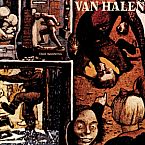
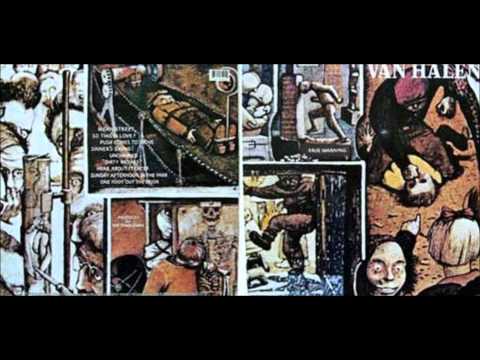
Sunday Afternoon In The Park

Album: Fair Warning (1981)
Play Video

Songfacts®:

  • "Sunday Afternoon In The Park" was no picnic for Eddie Van Halen when it came to its inspiration and sound. According to Eddie's ex-wife Valerie Bertinelli, this near two-minute long instrumental from Van Halen's 1981 album Fair Warning was inspired by the stress of their upcoming wedding, which took place on April 11th, 1981. The following is an excerpt from her 2008 book Losing It – and Gaining My Life Back, One Pound at a Time:

    "We only had a small window in which to schedule the wedding. After One Day [her TV series One Day At A Time], I went straight into the TV movie The Princess And The Cabbie, which was shot in San Francisco; then, starting in May, Ed was to tour for the rest of 1981. The stress of planning the wedding got to both of us. I remember Ed snapping, 'God, can't you just leave me alone?'

    I don't blame him. Ed told me that I'd inspired the song 'Sunday Afternoon In The Park,' a heavy, grinding instrumental. He said it was us fighting all the time.

    'I'm so glad I inspire cheerful songs,' I said."
  • On "Sunday Afternoon In The Park," Eddie used an Electro-Harmonix Micro-Synthesizer to create the demonic sound of the track. According to Paul Reno, the Micro Synthesizer was developed by electronics engineer and designer David Cockerell. The instrument creates different timbres by modifying the input signal into different circuits. It was inspired by the sound of the 1970s analog synthesizers like Moog, Arp, and Oberheim. The first Micro Synth was released in 1979; along with Eddie Van Halen, it was used by John Frusciante (Red Hot Chili Peppers), John Mayer, James Shaffer (Korn), Kim Gordon (Sonic Youth) and Matthew Bellamy (Muse).
  • While this wasn't the first time Eddie used keyboards on a Van Halen song (1980's "Everybody Wants Some!!" being the first), it's one of the few from the band's pre-synthesizer-heavy 1984 album days. Back then the inclusion of keyboards on Van Halen music was not at all welcomed by Eddie's bandmate David Lee Roth and producer Ted Templeman. They preferred he stay focused primarily on playing the guitar since, after all, he was known as a "Guitar God." As a result, Eddie became increasingly frustrated and even considered quitting the band because he couldn't express himself creatively. His angst would ultimately be injected straight into Fair Warning, the band's darkest and most aggressive-sounding album. Eddie did, however, manage to get some synthesizers on the record. He and engineer Donn Landee would wait until the band and producer left the studio to record music.
  • It was around the time "Sunday Afternoon In The Park" was written that Eddie came up with the keyboard riff he eventually used on the band's number one single "Jump." By the time that song was recorded, however, Eddie had built his very own studio he called 5150 Studios. It's with that creative leverage he would go on to complete "Jump" and create the synthesizer riff behind another hit single from the band's forthcoming 1984 album: "I'll Wait."
  • Van Halen brought this Roth-era song back during the Sammy Hagar era during the 1991-1992 For Unlawful Carnal Knowledge Tour, where it was included in Michael Anthony's bass solo. (These Songfacts courtesy of Eric Senich of the Van Halen News Desk and the DISCovery podcast.)

Comments: 3

  • Reza Elghazi from Woodinville, WaEddie used an Electro-Harmonix Mini-Synthesizer, and not an EHX Micro Synth, which is a pedal.
  • Lee Matthews from Virginia'And The Cradle Will Rock' was actually the first VH song with keyboards - it was a Wurlitzer electric piano through the Plexi Marshall. There were no keyboards on 'Everybody Wants Some'.

    There have been rumors that Eddie played the drums on 'Saturday..'
  • Petri from Louisville, KyThe first Van Halen song with keyboards was actually "And the Cradle Will Rock…" from the same album, Women And Children First, not "Everybody Wants Some," which has no keys. In the song, Eddie played the main riff on a Wurlitzer electric piano that he ran through a distorted Marshall guitar amp, and the rest is history!
see more comments

Editor's Picks

Art Alexakis of Everclear

Art Alexakis of EverclearSongwriter Interviews

The lead singer of Everclear, Art is also their primary songwriter.

La La Brooks of The Crystals

La La Brooks of The CrystalsSong Writing

The lead singer on "Da Doo Ron Ron" and "Then He Kissed Me," La La explains how and why Phil Spector replaced The Crystals with Darlene Love on "He's A Rebel."

Trans Soul Rebels: Songs About Transgenderism

Trans Soul Rebels: Songs About TransgenderismSong Writing

A history of songs dealing with transgender issues, featuring Pink Floyd, David Bowie, Morrissey and Green Day.

Lajon Witherspoon of Sevendust

Lajon Witherspoon of SevendustSongwriter Interviews

The Sevendust frontman talks about the group's songwriting process, and how trips to the Murder Bar helped forge their latest album.

Jon Anderson of Yes

Jon Anderson of YesSongwriter Interviews

From the lake in "Roundabout" to Sister Bluebird in "Starship Trooper," Jon Anderson talks about how nature and spirituality play into his lyrics for Yes.

Angelo Moore of Fishbone

Angelo Moore of FishboneSongwriter Interviews

Fishbone has always enjoyed much more acclaim than popularity - Angelo might know why.