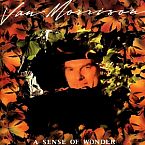

A Sense Of Wonder

Album: A Sense Of Wonder (1985)
Play Video

Songfacts®:

  • In the verses of "A Sense Of Wonder," Van Morrison recounts his youth in and around Belfast, Ireland. In the choruses, he sings about having come to bring a sense of wonder to people's lives.

    The natural assumption is that the chorus is Morrison singing as himself, telling fans he's come to bring a sense of wonder into their lives, but this isn't necessarily the case, especially when considering Morrison's mystical and spiritual bent.

    The voice of the chorus may very well be some sort of magical being, maybe even God, speaking to the young Morrison and explaining that it has come to bring him a sense of wonder.
  • It's easy to describe the leaves in the Autumn
    And it's oh so easy in the Spring
    But down through January and February it's a very different thing


    Describing this wintertime and bringing to it a sense of wonder is exactly what Morrison does in this song. There seems to be a deeper implication of aging and time, and the real "wintertime" may be old age.
  • Some lyric analysis:

    I walked in my greatcoat

    A greatcoat is a long, heavy overcoat.

    On and on and on and on we kept singing our song
    Over Newtonards and Comber, Gransha and the
    Ballystockart Road


    The mentions of Newtonards, Comber, Gransha, and Bollystockart seem to all refer to a series of roads near and through Morrison's native Belfast, Ireland. They still exist today and show up on Google Maps. There are towns and other geographic sites with those names in the area as well, but Morrison is talking about the roads specifically.

    With Boffyflow and Spike

    These are meant to be names of two people, and the song following "A Sense of Wonder" on the album, "Boffyflow And Spike," is titled after them. It's an instrumental, but the liner notes for the album include the story of these two characters, among other folks fictional, nonfictional, or somewhere in-between.


    On and on and on, through the winter of our discontent

    Winter Of Our Discontent is both the name of John Steinbeck's last novel and a reference to the line from Shakespeare's Richard III ("Now is the winter of our discontent / Made glorious summer by this son of York") from which the novel takes its title.


    "O Sole Mio" by McGimsey

    "O Sole Mio" is a song written in 1898. It's not clear who McGimsey is.
  • A Sense of Wonder was the first of a run of albums that Van Morrison released throughout the late '80s and early '90s. No Guru, No Method, No Teacher, Enlightenment, Hymns to the Silence all followed. The promise of healing runs through those records like a thread.

    "It was to do with The Jungian concepts of the conscious and subconscious," Morrison told Mojo magazine. "In the '70s I was given a book, Man and His Symbols by Carl Jung, because I was going through a lot then. Many of the musicians I was working with were on all kinds of drugs, which was weird, and then the fame thing was really kicking in. I didn't plan on all this stuff, I just wanted to do music, so with all this extreme pressure kicking in, expectations were huge. Luckily I got given this book, which said that all this was just a projection. When I saw that, then I was able to work through it with my music."

Comments: 1

  • Frank M from Trenton, MichiganVan wrote these words for a friend's children (Samuel & Felicity) who were apparently going through a rough patch. He wrote it to lift them up.
see more comments

Editor's Picks

Gary Brooker of Procol Harum

Gary Brooker of Procol HarumSongwriter Interviews

The lead singer and pianist for Procol Harum, Gary talks about finding the musical ideas to match the words.

Andy McClusky of OMD

Andy McClusky of OMDSongwriter Interviews

Known in America for the hit "If You Leave," OMD is a huge influence on modern electronic music.

Waiting For The Break of Day: Three Classic Songs About All-Nighters

Waiting For The Break of Day: Three Classic Songs About All-NightersSong Writing

These Three famous songs actually describe how they were written - late into the evening.

Donald Fagen

Donald FagenSongwriter Interviews

Fagen talks about how the Steely Dan songwriting strategy has changed over the years, and explains why you don't hear many covers of their songs.

Graham Nash

Graham NashSongwriter Interviews

Graham Nash tells the stories behind some of his famous songs and photos, and is asked about "yacht rock" for the first time.

Michael Sweet of Stryper

Michael Sweet of StryperSongwriter Interviews

Find out how God and glam metal go together from the Stryper frontman.