Wonderful Remark

Album: The King of Comedy soundtrack (1983)
Play Video

Songfacts®:

  • Van Morrison recorded this song in 1969, which was a transitional time for the singer, as he had recently gotten married and moved to Woodstock, New York.

    Morrison has said that his Woodstock experience was an influence on this song - he moved there for the creative ambiance (Bob Dylan lived there), but grew weary of the town after meeting folks he felt were disingenuous.
  • What is the "wonderful remark" that Morrison sings about here? In his book Small Town Talk, Barney Hoskyns explores the possibility that it came out of an incident that happened between Morrison and Albert Grossman. In 1969, word went out that Grossman wanted to manage Morrison, so the Irishman went to his house to demo some songs. After listening to the tunes, Grossman simply replied, "Burn it" - that's the "wonderful remark."

    At that time, Grossman was the major moving force of the town Woodstock and the music scene that had developed there. The story certainly seems to fit with lyrics such as:

    How can your empty laughter
    Fill a room like our with joy?
    When you're only playing with us
    Like a child does a toy?
  • Morrison's first effort to record the song came at his Moondance session in 1969. Nothing came of it, so he recorded it again in 1972 during sessions for Saint Dominic's Preview. This 8-minute version also went unreleased, and the song remained unheard until Robbie Robertson (of The Band) asked Morrison to contribute a song to the movie The King of Comedy, for which Robertson was working on the soundtrack.

    The film stars Robert De Niro and Jerry Lewis, and was directed by Martin Scorsese, a huge Van Morrison fan. Robertson wanted Morrison to do a poignant track for the end of the film, but they had trouble finding one. After a while, Morrison sang some lines from the unreleased "Wonderful Remark," and that's what they decided to use. They started recording a new version of the song with Robertson on guitar and a group of session men including Jim Keltner on drums and Nicky Hopkins on organ. They couldn't get the right mood and had to stop when a storm knocked out power to the studio. The next day, Morrison had a clear direction in mind, and they got the sound they were looking for.

    This version was featured in the film and included on the soundtrack. Scorsese was thrilled with it; Robertson explained in an interview with BAM, "Marty loved how the song worked in the end, how it embraced the DeNiro character and how it also put him down at the same time. It comes down on violence and it comes down on insanity."
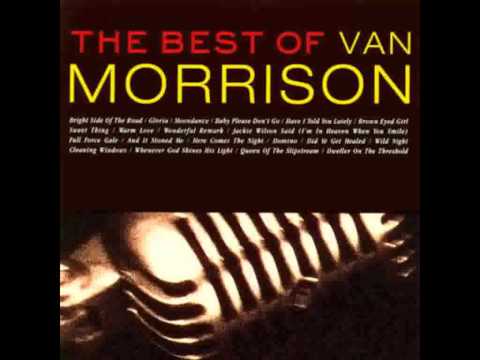
  • The King of Comedy version was included on Morrison's 1990 compilation The Best of Van Morrison; the 1972 recording didn't surface until 1998, when it made the tracklist to The Philosopher's Stone, a collection of Morrison outtakes.

Comments

Be the first to comment...

Editor's Picks

Muhammad Ali: His Musical Legacy and the Songs he Inspired

Muhammad Ali: His Musical Legacy and the Songs he InspiredSong Writing

Before he was the champ, Ali released an album called I Am The Greatest!, but his musical influence is best heard in the songs he inspired.

Michael Sweet of Stryper

Michael Sweet of StryperSongwriter Interviews

Find out how God and glam metal go together from the Stryper frontman.

Devo

DevoSongwriter Interviews

Devo founders Mark Mothersbaugh and Jerry Casale take us into their world of subversive performance art. They may be right about the De-Evoloution thing.

Dennis DeYoung

Dennis DeYoungSongwriter Interviews

Dennis DeYoung explains why "Mr. Roboto" is the defining Styx song, and what the "gathering of angels" represents in "Come Sail Away."

Tom Bailey of Thompson Twins

Tom Bailey of Thompson TwinsSongwriter Interviews

Tom stopped performing Thompson Twins songs in 1987, in part because of their personal nature: "Hold Me Now" came after an argument with his bandmate/girlfriend Alannah Currie.

Evolution Of The Prince Symbol

Evolution Of The Prince SymbolSong Writing

The evolution of the symbol that was Prince's name from 1993-2000.