Album: West Side Story (1957)
Play Video

Songfacts®:

  • Written by Stephen Sondheim (lyrics) and Leonard Bernstein (music), this song first came to life in the 1957 stage production of West Side Story when Riff (Michael Callan), the leader of the Jets, urges his guys to stay cool ahead of their meeting with their rival street gang, The Sharks.

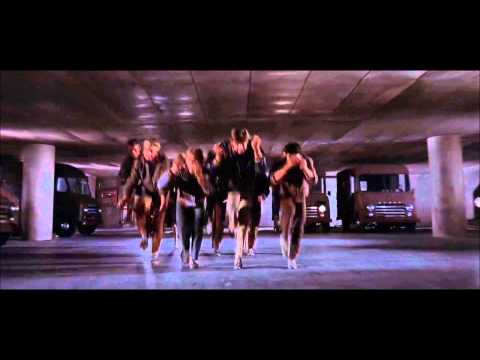
    In the 1961 film adaptation, the musical number is moved to a scene after the deadly rumble that kills Riff, with Ice (Tucker Smith), the new Jets leader, singing it to calm their nerves after the bout of violence.
  • In Steven Spielberg's 2021 remake of West Side Story, "Cool" takes place before the rumble and finds Tony (Ansel Elgort) - the young protagonist who is in love with the rival gang leader's sister, Maria - trying to talk Riff out of bringing a gun to the fight.

    "We wanted the gun to play an important part in the story and to be a character," Spielberg told Entertainment Weekly. "In the play, of course, 'Cool' is what they do when they cool off. After the rumble, they're needing to bleed off that excess energy and rage, and 'Cool' is an expression of that."

    "We very much wanted that to be our own," he continued. "It was important that 'Cool' for us come with Tony's attempt to stop Riff from bringing a gun to a fistfight. We thought it was important to repurpose 'Cool' not as a way of cooling off, but as a way of staying cool. 'Do not bring that gun to the fight.'"
  • This was the first song that Sondheim and Bernstein wrote together. In the film's 2012 commentary track, the lyricist explained that Bernstein likely wrote the opening line ("Boy, boy, crazy boy"), because Sondheim had an aversion to melisma (vocal runs).
  • The chill song title was an exception to the rule when it came to writing street slang for the production. According to Stephen Sondheim, West Side Story playwright Arthur Laurents didn't want to use actual gang lingo because he knew it would sound dated by the time the musical premiered a couple years later. Instead, he invented his own form of street talk mixed with a few actual slang words.

    "One of the very few pieces of actual street argot we used was the word 'cool,' which still meant the same thing back in 1957 that it had meant to jazz musicians earlier," Sondheim told NPR's Fresh Air in 2010. "And that's a word that has stayed, pretty much in the language meaning approximately the same thing, although it changes a little bit. Now of course it just means OK, but 'cool' meant 'better than OK' before, so we kept that."
  • In the 2015 Castle episode "Cool Boys," Castle (Nathan Fillion) and Detective Slaughter (Adam Baldwin) sing this to distract the criminals who are about to shoot them.
  • This was used on Glee in the 2011 episode "Asian F." Mike Chang (Harry Shum Jr.) sings it in his audition to play Riff in a high school production of West Side Story.

Comments

Be the first to comment...

Editor's Picks

Muhammad Ali: His Musical Legacy and the Songs he Inspired

Muhammad Ali: His Musical Legacy and the Songs he InspiredSong Writing

Before he was the champ, Ali released an album called I Am The Greatest!, but his musical influence is best heard in the songs he inspired.

Michael Sweet of Stryper

Michael Sweet of StryperSongwriter Interviews

Find out how God and glam metal go together from the Stryper frontman.

Devo

DevoSongwriter Interviews

Devo founders Mark Mothersbaugh and Jerry Casale take us into their world of subversive performance art. They may be right about the De-Evoloution thing.

Dennis DeYoung

Dennis DeYoungSongwriter Interviews

Dennis DeYoung explains why "Mr. Roboto" is the defining Styx song, and what the "gathering of angels" represents in "Come Sail Away."

Tom Bailey of Thompson Twins

Tom Bailey of Thompson TwinsSongwriter Interviews

Tom stopped performing Thompson Twins songs in 1987, in part because of their personal nature: "Hold Me Now" came after an argument with his bandmate/girlfriend Alannah Currie.

Evolution Of The Prince Symbol

Evolution Of The Prince SymbolSong Writing

The evolution of the symbol that was Prince's name from 1993-2000.