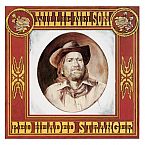
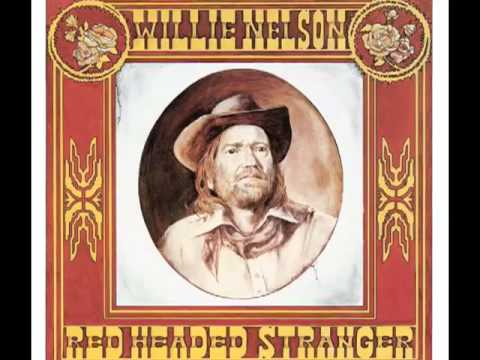

Red Headed Stranger

Album: Red Headed Stranger (1975)
Play Video

Songfacts®:

  • Before Willie Nelson popularized this cowboy ballad as the title track of his 1975 album, the most famous version was by Arthur "Guitar Boogie" Smith, who recorded it in 1954. Nelson, who was working as a DJ in Fort Worth in the '50s, was a big fan of Smith's version and often sang the tune as a lullaby on his radio program The Western Express. "I could see the redheaded stranger. I could feel his heavy heart," Nelson explained in his autobiography It's A Long Story. "And yet, singing this song, I could also feel how little kids, unaware of its tragic message, were mesmerized by the sweet melody, the easy rhythm, and the beautifully repeated patterns that warned us not to boss him or cross him, not to fight him or spite him."

    Twenty years later, he signed a contract at Columbia Records that gave him creative control over his career. While he mulled his next project, his then-wife Connie suggested he record a concept album built around "Red Headed Stranger." With the help of tracks like "Time Of The Preacher," " Blue Eyes Crying in the Rain," and "Can I Sleep In Your Arms," Nelson tells the tale of a fugitive preacher who roams from town to town in search of redemption after murdering his cheating wife and her lover. He doesn't find it in this song, which ends with him killing a woman for touching his late wife's horse.
  • This was written by Edith Lindeman and Carl Stutz, who collaborated on several other popular country songs, including "Little Things Mean A Lot" and "Blackberry Winter." Lindeman, who also worked as a film and theater critic for Virginia's Richmond Times-Dispatch, said she was "just sitting at home one night, playing with the idea of colors" when she wrote the lyrics. Color does play an important part in the song, the red-headed stranger (inspired by Lindeman's red-headed husband) hails from Blue Rock, Montana, rides a "raging black stallion," and encounters a yellow-haired lady.
  • This was originally written for Perry Como, but publishing disputes prevented him from recording it. Aside from Smith and Nelson, it's been recorded by Eddy Arnold, Sonny Curtis, Chris LeDoux and Carla Bozulich. In 2013, Nelson re-recorded it as a duet with Jack White.
  • Columbia was not impressed with Nelson's simple recordings that contrasted with the slick productions coming out of Nashville at the time. "They'd never heard anything, probably, that sparse turned in as a session," he explained. "They thought it needed a little... you know, maybe it sounded pretty good as a demo, but I couldn't be serious about it being a finished product."

    Luckily for Nelson, his contract allowed him to overrule the label's demands and released it as originally recorded. The album went to #1 Country and yielded two hit singles: "Blue Eyes Crying In the Rain" and "Remember Me."
  • The album inspired the 1986 film of the same name, with Nelson playing the title character and Morgan Fairchild playing his unfaithful wife. After deals with Universal (who wanted Robert Redford in the lead role) and HBO fell through, Nelson and writer/director William Wittliff decided to finance the movie themselves. For their primary set, they spent around $800,000 to build an Old West town, nicknamed "Willieville," across from Nelson's golf course in Austin, Texas.
  • Nelson turned down the opportunity to record "The Gambler" because he was too worn out from singing this song. In a Today show interview, he said his pal Kenny Rogers offered him the now-iconic tune before recording it himself. "I said, 'You know, I think it's a great song, but I don't think I'll do it,' because, I was doing, every night, a song called 'Red Headed Stranger' which has 100 verses in it,' Nelson explained. 'I said 'I just don't want to do another long song,' so he said, 'OK, I will record it myself,' and so he did and, you know, there it is."
  • Because of this album, Nelson earned the nickname Red Headed Stranger.

Comments

Be the first to comment...

Editor's Picks

Guy Clark

Guy ClarkSongwriter Interviews

Vince Gill, Emmylou Harris and Lyle Lovett are just a few of the artists who have looked to Clark for insightful, intelligent songs.

Rupert Hine

Rupert HineSongwriter Interviews

Producer Rupert Hine talks about crafting hits for Tina Turner, Howard Jones and The Fixx.

Sending Out An SOS - Distress Signals In Songs

Sending Out An SOS - Distress Signals In SongsSong Writing

Songs where something goes horribly wrong (literally or metaphorically), and help is needed right away.

Jethro Tull

Jethro TullFact or Fiction

Stage urinals, flute devices, and the real Aqualung in this Fact or Fiction.

Timothy B. Schmit of the Eagles

Timothy B. Schmit of the EaglesSongwriter Interviews

Did this Eagle come up with the term "Parrothead"? And what is it like playing "Hotel California" for the gazillionth time?

Stan Ridgway

Stan RidgwaySongwriter Interviews

Go beyond the Wall of Voodoo with this cinematic songwriter.