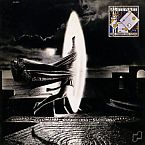
Roads To Moscow

Album: Past, Present And Future (1973)
Play Video
  • They crossed over the border, the hour before dawn
    Moving in lines through the day
    Most of our planes were destroyed on the ground where they lay
    Waiting for orders we held in the wood
    Word from the front never came
    By evening the sound of the gunfire was miles away
    Ah, softly we move through the shadows, slip away through the trees
    Crossing their lines in the mists in the fields on our hands and on our knees
    And all that I ever was able to see
    The fire in the air glowing red, silhouetting the smoke on the breeze

    All summer they drove us back through the Ukraine
    Smolensk and Viasma soon fell
    By autumn we stood with our backs to the town of Orel
    Closer and closer to Moscow they come
    Riding the wind like a bell
    General Guderian stands at the crest of the hill
    Winter brought with her the rains, oceans of mud filled the roads
    Gluing the tracks of their tanks to the ground while the sky filled with snow
    And all that I ever was able to see
    The fire in the air glowing red silhouetting the snow on the breeze

    In the footsteps of Napoleon the shadow figures stagger through the winter
    Falling back before the gates of Moscow, standing in the wings like an avenger
    And far away behind their lines the partisans are stirring in the forest
    Coming unexpectedly upon their outposts, growing like a promise
    You'll never know, you'll never know which way to turn, which way to look you'll never see us
    As we're stealing through the blackness of the night
    You'll never know, you'll never hear us
    And the evening sings in a voice of amber, the dawn is surely coming
    The morning roads leads to Stalingrad, and the sky is softly humming

    Two broken Tigers on fire in the night
    Flicker their souls to the wind
    We wait in the lines for the final approach to begin
    It's been almost four years that I've carried a gun
    At home it will almost be spring
    The flames of the Tigers are lighting the road to Berlin
    Ah, quickly we move through the ruins that bow to the ground
    The old men and children they send out to face us, they can't slow us down
    And all that I ever was able to see the eyes of the city are opening
    Now it's the end of the dream

    I'm coming home, I'm coming home, now you can taste it in the wind, the war is over
    And I listen to the clicking of the train-wheels as we roll across the border
    And now they ask me of the time that I was caught behind their lines and taken prisoner
    "They only held me for a day, a lucky break," I say they turn and listen closer
    I'll never know, I'll never know why I was taken from the line and all the others
    To board a special train and journey deep into the heart of holy Russia
    And it's cold and damp in the transit camp, and the air is still and sullen
    And the pale sun of October whispers the snow will soon be coming
    And I wonder when I'll be home again and the morning answers "Never"
    And the evening sighs, and the steely Russian skies go on forever Writer/s: Alistair Ian Stewart
    Publisher: Universal Music Publishing Group
    Lyrics licensed and provided by LyricFind

Comments: 7

  • Kim From Campbell River from CanadaAl Stewart told me in person after a concert in Vancouver, that Roads to Moscow is based on Solzhenitsyn’s book; this after I had told him about an essay I wrote in History 12, analyzing each line of the song. He was pleased!
  • Vladimir from Cz/ruThe song is not exactly Solzhenitsyn's story (Solzhenitsyn has never been captured) but certainly inspired by it. Generally, it is one of the best songs (or maybe just the best) ever written about Russia in English.
  • Bob from CoquitlamI first heard this song in the early '70's and it became a favorite since then.
  • Laurie from Vancouver CanadaAs a young girl of 16 reading Alexandr Solzhenitsyn in the early 70s, I remember hearing this song for the first time ... I was blown away. To create a musical story of one of histories horrific events and losses of young lives .It was for me, pure genius and compassion. It still moves me , 40 yrs later .To write and create a symphonic song, 8 mins long, capturing the perspective of a young Russian soldier in a time of such loss and horror, WW 2 , a topic removed from the modern times ... it was like reading and listening to a historical poem. Thank you Al Stewart for honoring the youth, who are the pawns of all wars. I listen this son every Remembrance Day.
  • Guy from Woodinville, WaThis song moved me so much when I first heard it as a young man. It is one of the most intelligent and literate songs ever written. It made me a confirmed Al Stewart fan for life. I still look forward to every concert when he comes to the Seattle area. And he still produces fantastic music--the man is amazingly prolific! Just listen to 2006's "Somewhere in England 1915." Brilliant stuff!
  • Bill from Oakland, CaMatt's got it right. The song is the story of Alexander Solzhenitsyn, who served in the Red Army artillery during the war. The narrative starts with the German invasion in the summer of 1941, describes the epic fighting retreat from Poland to Moscow, and then the slog back as the Russians learned how to beat what had been the best army in the world when it started. But, near the end, Solzhenitsyn wss captured by the Germans, held for a day, and then turned loose when they retreated. Winning the war hadn't helped Stalin's murderous paranoia, and anyone who had such experience, or any other contact with Westerners, Axis OR Allied, was considered likely to have become a spy. So Solzhenitsyn was jailed, tortured, tried, convicted and shipped off to the Gulag. He managed to survive, to outlive Stalin, and he was freed along with thousands of others in the later 1950s. Of course, millions had been sent to the Gulag, and many had died. His ground-breaking fiction, "A Day In The Life Of Ivan Dennisovich" told what the Gulag had been like. Later he produced the 3 volume, non-fiction, "The Gulag Archipelago". Richard Overy's "Why The Allies Won" has a quick and to-the-point analysis of how the Axis, the Nazis, the Facists and the Japanese Army had appeard to be unbeatable when the war started in 1937, but were halted by the fall of 1942, and completely lost strategic initiative by the middle of 1943. Wirth's "Russia At War" tells the military story from the Russian side effectivly, and "Enemy At The Gates", about Stalingrad, captures the exact moment of what Churchill called "The Hinge Of Fate". (Along with El Alamien in North Africa and Midway/Guadalcanal in the Pacific). I've seen Al Stewart perform this song several times and he introduced it as the story of Mr. Solzhenitsyn, with slides while he played, once or twice. Its a great song.
  • Matt from San Jose, CaSorry to disagree, but this song is written from the perspective of a Russian soldier.

    The end of the song is most chilling. The soldier was captured by the Germans, and then released. Communist Russia was very suspicious of captured soldiers because they though they had been "comprimised." The "special train" that the soldier must board will take him to a kind of exile Siberia, forced by his own government.
see more comments

Editor's Picks

Christopher Cross

Christopher CrossSongwriter Interviews

The man who created Yacht Rock with "Sailing" wrote one of his biggest hits while on acid.

Rufus Wainwright

Rufus WainwrightSongwriter Interviews

Rufus Wainwright on "Hallelujah," his album Unfollow The Rules, and getting into his "lyric trance" on 12-hour walks.

Jon Anderson of Yes

Jon Anderson of YesSongwriter Interviews

From the lake in "Roundabout" to Sister Bluebird in "Starship Trooper," Jon Anderson talks about how nature and spirituality play into his lyrics for Yes.

When Rock Belonged To Michelob

When Rock Belonged To MichelobSong Writing

Michelob commercials generated hits for Eric Clapton, Genesis and Steve Winwood in the '80s, even as some of these rockers were fighting alcoholism.

Charles Fox

Charles FoxSongwriter Interviews

After studying in Paris with a famous composition teacher, Charles became the most successful writer of TV theme songs.

Wolfgang Van Halen

Wolfgang Van HalenSongwriter Interviews

Wolfgang Van Halen breaks down the songs on his debut album, Mammoth WVH, and names the definitive Van Halen songs from the Sammy and Dave eras.