A Design For Life

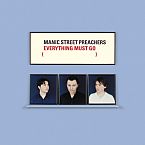
Album: Everything Must Go (1996)
Charted: 2
Play Video
  • Libraries gave us power
    Then work came and made us free
    What price now
    For a shallow piece of dignity

    I wish I had a bottle
    Right here in my dirty face
    To wear the scars
    To show from where I came

    We don't talk about love
    We only wanna get drunk
    And we are not allowed to spend
    As we are told that this is the end

    A design for life
    A design for life
    A design for life
    A design for life

    I wish I had a bottle
    Right here in my pretty face
    To wear the scars
    To show from where I came

    We don't talk about love
    We only wanna get drunk
    And we are not allowed to spend
    As we are told that this is the end

    A design for life
    A design for life
    A design for life
    A design for life

    We don't talk about love
    We only wanna get drunk
    And we are not allowed to spend
    As we are told that this is the end

    A design for life
    A design for life
    A design for life
    A design for Writer/s: James Bradfield, Jones Nicholas, Sean Moore
    Publisher: BMG Rights Management
    Lyrics licensed and provided by LyricFind

Comments: 17

  • European Qoheleth from CorkJonathan that's nonsense. The song has nothing to do with religion. It's about class.
  • Pmiller from UkI suppose what he trying to say is that you the upper class get jealous of the working class and can never understand how we can have so much fun with so little, they do not understand the working people.

    I mean not so much nowadays but the working class have always been a close knit community, that looked out for each other and the upper class are mainly out to get each other, backstabbing each other etc and the working class spirit of pulling together to help each other is something that they will never experience.

    I have travelled around the world and you'll always find that the people who laugh the loudest are always the poor
  • Trev from Wiltshire Just for conversation purposes, what type of building was the video filmed in?
  • Nigel from Bristol UkWho cares what its about? Its a great song, with great lyrics, intelligently written, a great guitar backing and a joy to listen too. And I'm really, really old.
  • Tryst from Wales, United KingdomThis song clearly describes the problems associated with a borgeoise/capitalist obsesed culture
  • Rob from Babylon, United KingdomThe song is a celebration of the welfare system.
    The line 'we don't talk about love, we only want to get drunk' refers to stereotypical views of working class.
    It certainly isn't a song that advocates drinking and lad-culture of the 90's, although possibilly mistakenly? panders to it.
    I wouldn't say it's a critique of the working class, it's more of a critue of other critiques.
  • Polly from Inverness, EnglandThe phrase "then work came and made us free" Refers to a sign in a concentration camp, but obviously in German :D Luvvin the Manics forever x
  • Dave from Cardiff, WalesThe period between 1996 and 1998 saw an explosion of Welsh acts coming to the forefront on the back of MSP's success earlier in the decade - Catatonia, Super Furry Animals, Gorky's Zygotic Mynci, 60ft Dolls all began breaking through, but the Manics were the only Welsh band of that era who went on to score a UK No.1 hit
  • David from Liverpool, EnglandA Design for Life was supposedly inspired by a Joy Division song called An Ideal for Living.
  • Nick from Norwich, EnglandThese geezers from Wales found some OK words to rhyme nicely with a nice catchy tune. Enough to make a popular chune for the summer of 1995 and an above average melody for the last 10 years. Congrats. But lets face it, it ain?t Shakespeare! There again, how many 3 minute pop songs are? If you?re looking for something more profound, OCS were of the same era, better and less pretentious.
  • Dan from Sydney, AustraliaI strongly disagree with the last few comments .... richey once quoted on MTV that this song was in fact about massive ball sacs attacking old ladies
  • Constantine from Athens, GreeceMy opinion is that the song is about how, not just the elders, but mostly the society and the power structures that are

    inscribed in it, and reflect on its cultural industry, economic system, and ways of education(in libraries for example), are all used as

    mechanisms to manipulate and supress the idea that one has for his/herself, in order to make the person fit into a stereotype ( a

    role, if you want, created by the system) that only serves to help it sustain itself.
    So, "libraries gave us power", huh? But what kind of power is that? A library (in Newport), built with coal-miners'

    money but filled with books written by bourgeois intellectuals (at that time there was no other form of discourse) serving only as a

    "knowledge" gateway into the realm of the upper class - teaching people the sort of knowledge that will only create a false

    conciousness. The inscription on the library (Knowledge is power) means tha anyone MAY get his share of power, but only if he

    incorporates that particular knowledge (and its conditions) ...
    "Then work came and made us free" I love the irony of the manics! Why should anyone need to work in order to be

    free?! Any marxist you may read, will point that a dominating system (such as capitalism) needs to create false conditions of life, in

    order to then come as a "saviour", impose its rules, and give you "deliverence" from misery... the misery of survival, which the

    dominant oligarchy created in the first place. Just like in Auschwitch,one of those workhouses/purgatories-built-on-earth, where

    nazis exploited the jews until their death, because they needed cheap working hands ...
    Then the third line comes, and its not surprising that after the first two it makes the most obvious remark: "what price

    now for a shallow piece of dignity". Dignity, that is lost through all these filters of modern society. And what dignity can one have

    when one has no option but to being forced( no sorry, "tought") into living a life that is simply undermining his/her liberty?
    As for the title of the song, i think it confirms all these thoughts. Throughout the song, which is filled with ironic lyrics

    ("we only want to get drunk"), the only words that are not in this frame of thought, is where James sings "i wish i had a bottle.."

    and "a design for life". Instead, these lyrics may be seen as complaints about the situation.
    At first, the title didn't mean that much to me (no, i think its not a reference to Joy Division, or a mockering of a Ford

    ad). That was until i found out about Alfred Adler, a socialist-psychologist that wrote in the 30's-40's, who spoke of a "Design for

    Life", that everyone creates individually, and gives a person his "purpose" in life. Adler believed that, as children, everyone forms

    a set of beliefs, about the world, about oneself, and about ones position in that world, and in the social relations that exist in it.

    And that those beliefs guide a person in his life, as the base of his reasoning for his actions.
    I hope i am making some sense by now?! To make it a bit more clear, you can see that by controlling those aspects of

    life, which many people see as obvious, as another "law of nature" and given, (working conditions, educational system) those who

    hold power can form ones' image-of-self. Literally by ordering what you can or can't do (and by assigning signs that tell you that on

    buildings, making it explicit) they drive people (people who have lost control over their own lives) into alienation and loss of

    self-awareness. It is they who are the authors that "draw" the "design for life" instead of the real subjects.
    That is the state, that the manics suggest, the working-class finds itself in,today, and the reason why this song is meant

    to expose this lie - that we live in a classless society.
  • Robert from Bergen, Norway"Libraries gave us power" is followed by the line "then work came and made us free" which is a translation of the slogan "Arbeit macht frei" which was seen on the steel gates of Auschwitch. Probably Nicky tries to express the paradox of evolved cultural nations like Germany and England being capable of keeping people in slavery and ignorance. Not only the Holocaust but also sending the bigger part of the male population in Wales down in the darkness of the mines to slave away their adult life. The darkness of the mines can also be seen a metaphore for the general ignorance that's encouraged for the lower parts of the British class system. This line; "I wish I had a bottle right here in my dirty face to show the scars.." refers to the miners, a wet bottle will leave a white "scar" in the coal dust when a miner coming from work drinks from it.
  • Matt from Romford, EnglandThe chorus lines 'We don't talk about love, we only want to get drunk,' and the line' I wish I hada bottle right here in my dirty face,' refer to the prevailing 'lad-culture' in mid-'90s Britain with the Brit-Pop band Oasis being it's main front (Liam Gallagher has alot of front himself); Nicky's lyrics always were more simple than Richey, which require more of an explanation.
  • Jonathan Taylor from Keighley, EnglandI song's chorus echoes real life and how our elders believe we should live it- get a job, get ammried, have kids and what the media says life should be and how u should be---a life without religon
  • Paul from Cardiff, WalesThe line 'Libraries gave us power' is actually inspired by the phrase 'Knowledge is Power' which is on the door above the library in Pill, Newport. Apparently, Nickys wife used to work there.
  • Rian from London, United StatesAww, Nicky Wire is so clever. I do prefer Richeys Lyrics but, i do love all the band so i guess i like this song
see more comments

Editor's Picks

Dino Cazares of Fear Factory

Dino Cazares of Fear FactorySongwriter Interviews

The guitarist/songwriter explains how he came up with his signature sound, and deconstructs some classic Fear Factory songs.

Rock Revenge Songs

Rock Revenge SongsMusic Quiz

John Lennon, Paul Simon and Lynyrd Skynyrd are some of the artists who have written revenge songs. Do you know who they wrote them about?

Susanna Hoffs - "Eternal Flame"

Susanna Hoffs - "Eternal Flame"They're Playing My Song

The Prince-penned "Manic Monday" was the first song The Bangles heard coming from a car radio, but "Eternal Flame" is closest to Susanna's heart, perhaps because she sang it in "various states of undress."

John Parr

John ParrSongwriter Interviews

John tells the "St. Elmo's Fire (Man In Motion)" story and explains why he disappeared for so long.

Grunge Bands Quiz

Grunge Bands QuizMusic Quiz

If the name Citizen Dick means anything to you, there's a chance you'll get some of these right.
Michelle Branch

Michelle BranchSongwriter Interviews

Michelle Branch talks about "Everywhere," "The Game Of Love," and her run-in with a Christian broadcasting network.