

Street Fighting Man

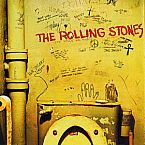
Album: Beggars Banquet (1968)
Charted: 21 48
Play Video
  • Everywhere I hear the sound
    Of marching, charging feet, boy
    'Cause summer's here and the time is right
    For fighting in the street, boy

    Well, now what can a poor boy do
    Except to sing for a rock and roll band?
    'Cause in sleepy London Town
    There's just no place for street fighting man, no

    Hey, think the time is right
    For a palace revolution
    'Cause where I live the game to play
    Is compromise solution

    Well, now what can a poor boy do
    Except to sing for a rock and roll band?
    'Cause in sleepy London Town
    There's just no place for street fighting man, no

    Get down

    Hey, said my name is called Disturbance
    I'll shout and scream, I'll kill the king
    I'll rail at all his servants

    Well, now what can a poor boy do
    Except to sing for a rock and roll band?
    'Cause in sleepy London Town
    There's just no place for street fighting man, no

    Get down Writer/s: Keith Richards, Mick Jagger
    Publisher: Abkco Music Inc., BMG Rights Management, Songtrust Ave
    Lyrics licensed and provided by LyricFind

Comments: 23

  • Paul from Sioux Falls, SdA couple of weeks ago I saw the Stones in concert in Minneapolis (10/24/2021) and they opened the show with "Street Fighting Man". Several days later I looked up their set list and listened to a few of the songs. The "Dancing in the Street" line used by the Stones has always interested me so, after reading the comments on this site, I looked up the song on Wikipedia. If you'll look there at the song's Motown origins and the hit delivered by Martha and the Vandellas in 1964, it appears that the song became a civil rights anthem in some circles. The line worked perfectly in "Street Fighting Man" in that in the UK the original song itself ("Dancing In the Street") was considered by some a call for violent protest. Perhaps the reason the song topped the set list at the Minneapolis concert is because of the resent unrest in that city?
  • Neal from Redmond WaSongFacts states above, “In the US, the single was originally released with a picture on the sleeve of police beating protesters in Los Angeles. ... This single was quickly pulled by the record company and is now a rare collectors item.”

    There is no evidence that the “single” was pulled from release. In fact, "Street Fighting Man" reached #30 on the Cash Box Top 100, a more reliable indicator of actual sales than the Billboard Hot 100. Today, copies of the record are common and easily purchased on the Internet.

    The picture sleeve, however, is another story: apparently it was never released commercially. The powers-that-be at London Records ordered it destroyed prior to release. A few copies escaped the shredder and are among the most valuable rock & roll collectables of the '60s, selling for thousands of dollars in almost any condition.

    The single was also issued in several other countries with picture sleeves, most of them non-controversial. But Decca of Denmark designed a picture sleeve (Decca F-22825) using the same photo that appeared on the "No Expectations" side of the American sleeve (London 45-909). This is also a rather rare item and sells for hundreds of dollars in collectable condition.
  • Barry from Sauquoit, NyOn November 13th 1968, the Rolling Stones' Brian Jones purchased the Cotchford Farm* in Sussex, England; it was the former home of 'Winnie the Pooh' author A.A. Milne, and came replete with statues of Pooh characters around the grounds...
    At the time the Stones didn't have a record on Billboard's Hot Top 100 chart; but during that calendar year they charted twice, "Jumpin' Jack Flash" at #3 and "Street Fighting Man" at #48...
    * Sadly, just under eight months later on July 3rd, 1969 Mr. Jones would drown in the farm's swimming pool at the young age of 27.
  • Jpd from Willis, TxThe Stones opened many of their 2004/05 "40 Licks " tour with this song .. in reference to the war raging in Iraq .. which I though was very appropriate.
  • John from Mulberry, FlThe song was on Rod Stewarts first album, "Gasoline Alley" in the U.S.A. , as Richard mentioned, but when I search for a copy of it on "You-Tube" all I get is ~~~ nothing?
  • John from Grand Island, NyNHL Buffalo Sabres Theme Song.
  • Benjamin from Milwaukie (oak Grove), OrA very early take on this song also featured Blind Faith's Ric Grech on violin.
  • Peter Griffin from Quahog, RiIs it just me, or are there two slightly different sounding versions of this? I have 2 different ones on my 2 MP3 players! One sounds rather dated like it came genuinely off the vinyl, the other sounds like it's been remastered. Hmm...
  • Sam from Seattle, WaDoes anyone else notice a "clicking" noise in the Rage Against the Machine cover?
  • Paul from Cincinnati, OhThat's pretty amazing that just in 5 years this song went from something that was banned from some radio stations to something that was covered by Rod Stewart.
  • Aaron from Chicago, Ilwhen this song is played at the end of "V For Vendetta" i nearly cried in the theater.... it was so beautiful. so poetic. and it kicks in right at the end of one of most poetic scenes in history of film making (or atleast i think so lol) just perfect
  • Gary from Ny, Nythis was the first stones song in which keith uses open tuning---which by the way is fun to play
  • Joshua from Twin Cities, MnThis song appears as the end-credits music for the 2006 comic-book-adaptation movie V for Vendetta.
  • Joshua from Twin Cities, MnWhoops: "The lyric is actually "...*fighting* in the street", of course. I cut-and-paste from the page for Bruce Springsteen's "Racing In The Street", which borrows the same line from Martha and the Vandellas.
  • Joshua from Twin Cities, MnThe second line of the first verse is a takeoff on Martha And The Vandella's "Dancing In The Street": "Summer's here and the time is right for racing in the street." Ironically, in 1985 Mick Jagger would cover "Dancing In The Street" with David Bowie.
  • Rick from San Juan, United StatesThe picture sleeve for the London 909 U.S. single is extremely rare. It's value is estimated at $10,000.00 on Joel Whitburn's "Top Pop Singles" 2002 edition.
  • Chester from Port Townsend, WaI'm posting this to clear up the facts about the "Street Fighting Man" picture sleeve mentioned a few times above. There is so much misinformation about it AND the song that I thought I would pass on the research I've done using a powerful magnifying scope and a broad, longterm research project about this and other protest songs from that era.

    First - the pictures on the sleeve........they are taken from the Hollywood Strip riots in Los Angeles in late 1966. A magnified examination of the the cops uniforms and unit patches reveals that they are from the Los Angeles County Sheriffs Department. There is at least one California Highway Patrolman as well. In the picture on the front of the sleeve there are a couple of "protest" signs visible - these are protesting the halting of the kids congregating on the "Strip" not the Vietnam War. In fact, most Vietnam war protests during the 60's were relatively peaceful up until the debacle at Kent State in 1970. The picture on the back is emblematic of who was engaged in these "riots" - the young man and the woman are not dressed for a protest but for a night out on the town (along with the thousands of other kids the cops were trying to drive away from the street!). BTW - Stephen Stills wrote the definitive song about the Strip riots, "For What it's Worth", a hit for Buffalo Springfield in 1967. Brian Jones plays tamboura and sitar on the 45 and he taught the open tuning to Keith that he uses on his acoustic guitar. Since "SFM" was recorded in March 1968 it probably wasn't written as a result of the London riots at the US Embassy later that month. Keith and Charlie had the basic guitar/drum riff down for the tune (as "Everybody Pays Their Dues") before they ever went into the studio - the tune was more probably inspired by the huge student riots in Paris the year before - events that shook all of Europe and were much in the news in the UK.
  • Liam from Campbell River, CanadaMotley Crue recently covered this on their latest album
  • Logan from Abilene, TxHere's the details on the guitar sound, taken from Guitar World Acoustic:
    Richards used a cheap cassette recorder with a wired microphone, which he dropped in the soundhole of his Gibson Hummingbird acoustic. He then overloaded the input stage of the recorder to get an overdriven sound, but with the dryness of an acoustic tone.
    This song was also recorded in an alternate tuning, Open D (low to high, D A D F# A D), which is a common tuning for blues slide guitarists.
  • Phil from Rochester, NyI think Stewart's version stinks. The Stones should steal "Maggie May" as recompense.
  • Rudi from Melbourne, Australiarage against the machine covered it on renegades.
  • Richard from St. Louis, MoRod Stewart covered it as his first song on his first album, the rod stewart album in the states and as an old raincoat wont ever let you down in Brittan.

    It features a distorted accoustic guitar Richards got when he miced his accoustic with a cheap tape recorder. it talks about this in Guitar player magizine...I give more details when I find the issue.
  • Simon from Newcastle, Englandcovered by oasis and released as a b side to "all around the world" in 1998
see more comments

Editor's Picks

Christopher Cross

Christopher CrossSongwriter Interviews

The man who created Yacht Rock with "Sailing" wrote one of his biggest hits while on acid.

Rufus Wainwright

Rufus WainwrightSongwriter Interviews

Rufus Wainwright on "Hallelujah," his album Unfollow The Rules, and getting into his "lyric trance" on 12-hour walks.

Jon Anderson of Yes

Jon Anderson of YesSongwriter Interviews

From the lake in "Roundabout" to Sister Bluebird in "Starship Trooper," Jon Anderson talks about how nature and spirituality play into his lyrics for Yes.

When Rock Belonged To Michelob

When Rock Belonged To MichelobSong Writing

Michelob commercials generated hits for Eric Clapton, Genesis and Steve Winwood in the '80s, even as some of these rockers were fighting alcoholism.

Charles Fox

Charles FoxSongwriter Interviews

After studying in Paris with a famous composition teacher, Charles became the most successful writer of TV theme songs.

Wolfgang Van Halen

Wolfgang Van HalenSongwriter Interviews

Wolfgang Van Halen breaks down the songs on his debut album, Mammoth WVH, and names the definitive Van Halen songs from the Sammy and Dave eras.