Rarely has such desperation appeared so prevalently in a pop song as in the instance of Creedence Clearwater Revival's 1969 B-side hit, "Lodi." The tumultuous sixties were dying down and paving the way for what would amount to one of the worst economic decades in American history. The hippies were losing. The war effort in Vietnam was quickly spiraling out of control. The entertainment industry, too, felt the cold sting of the souring national mood.
John Fogerty and the rest of CCR often at the beginning of their career played podunk towns up and down California. The venues and clientele were far different than their bigger-city counterparts in Los Angeles and San Francisco. The song's narrator is a down-and-out musician playing a gig in Lodi – meant to be symbolic for all small, rural towns – where he's been stranded and unable to even pay for a bus. As a musician who's played local bars, I can tell you there isn't much in life as frustrating as trying to share your art with a roomful of people who don't even know you're there, and if they did, couldn't care less to listen.
Fogerty never actually visited the Northern California town prior to writing the song, but only chose Lodi because it was the "coolest sounding name." "I sat down and wrote about being on the road, being a musician; not the happy glamorous part, rather, I projected myself ahead maybe ten years, as a country musician singing that minor hit I had ten years ago. There I was. I wasn't in Los Angeles… I'm all the way out in Lodi! The song went from 'Lodi' to 'Oh, Lord, stuck in Lodi, again,' – not a happy thought," said Fogerty, according to Hank Bordowitz in his book,
Bad Moon Rising: The Unauthorized History of Creedence Clearwater Revival.
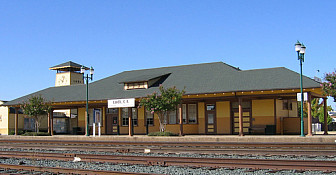
Lodi captured the sad, desperation of the time. But what is Lodi, actually? Other than the CCR song, the town is perhaps best known as a center for wine production (the Zinfandel Capital) in spite of much less prestigious roots. The area, just 30 miles south of Sacramento, was founded in 1859 when a group of local families thought to establish a school there and the patriarchs decided to offer a real estate incentive to the Central Pacific Railroad if they'd create a new route through the budding town. Fast forward a century and Lodi hadn't grown into much more than an agricultural town full of farmers, fields, crops, and not much else.
"Younger people loved it," Fogerty said of the song. "The older folks were very upset with that song. Lodi has grown up, and it's a fine city. It really wasn't necessarily a knock on the city. It was just a rural town – one of many we played – and those were tough ones that you played when no one cared. We used to play there a lot in the delta areas of California. I remember distinctly, we were playing in this bar and there might have been eight people in there. They were all drunk, just like the song says. We might as well not even been there."
If I only had a dollar, for every song I've sung
Every time, I had to play while people sat there drunk
You know I'd catch the next train, back to where I live
Oh, Lord. I'm stuck in Lodi again Justin Novelli
February 18, 2017
Lodi Songfacts
Browse all Songplaces
Comments: 1


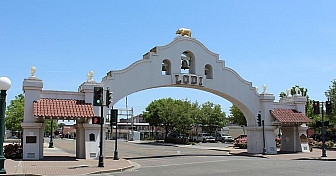 Lodi Arch