Old pirates, yes, they rob I
Sold I to the merchant ships
Minutes after they took I
From the bottomless pit
Read full Lyrics
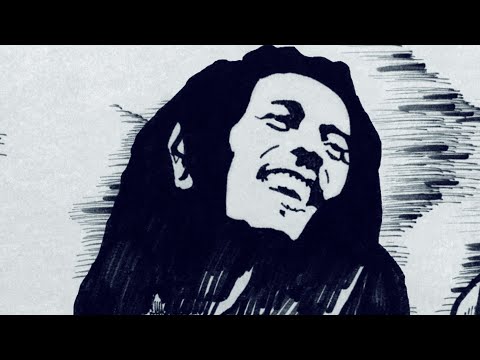
Plucking off the first few notes of "Redemption Song," by Bob Marley, is a sure-fire way of starting a fireside sing-song, because everyone knows the words – especially the bit about pirates. Released in Marley's final solo album in 1980,
Uprising, this song is a marker in Marley's career both in terms of music and message. It has been considered one of the Top 20 most important political songs of the last century by
New Statesman magazine, and ranked #66 in
Rolling Stone's 500 Greatest Songs of All Time list.
 Sunset in North Africa
These days, Marley's lyrics conjure up a swashbuckling mirage, set in the Caribbean and starring Keira Knightley and Johnny Depp, for most Western listeners. But the African pirates Marley was talking about were of a rather different quality. Hard-bitten outcasts from their own societies on the so-called Dark Continent, they made their trade in human cargo by selling their own people into slavery. These victims were either captured during battle by local warlords and chiefs - the "spoils of war" - then sold to the pirates (who sold them to the slavers' "merchant ships"), or they were captured during raids on innocent villages. Only the young and strong were taken in the largest displacement of people in recorded history. Estimated figures of those displaced from Africa during the four centuries of the Transatlantic Slave Trade rises into the tens-of-millions, and those were just the survivors.
For Africa this was the Holocaust and the Second World War combined. But unlike either of those tragedies, curiously there has been little to no recognition or apology from the nations involved. At the 2001 World Conference Against Racism held in Durban, South Africa, the former slave-trading nations of England, Portugal, Spain, the Netherlands, and the U.S.A. were requested to give a formal apology for their part in the Transatlantic Slave Trade; just an apology by way of compensation. None was forthcoming. Marx claimed in 1847, in
The Poverty of Philosophy, that the age-old practice of slavery (going way back before even the Greeks) was the single most important factor in modern industry, and that its eradication would lead to "the complete decay of modern commerce and civilization." Bob Marley said it better: "Some say it's just a part of it, we've got to fulfill the book." Perhaps it is due to this tragic inevitability that countries remained mute on their past practices. Where a desperate "We've changed!" would not suffice, they preferred to remain silent rather than offer an insincere apology. Would they have done anything differently if given a second chance, but presented with the same situation? It is doubtful.
Unfortunately, the legacy of slavery is psychological rather than physical. Born and raised in Jamaica, one of the worst ex-colonies of all with terrible social and economic problems, Marley all too well knew its after-effects on the collective mind of his people. When he quoted from Jamaican activist-politician Marcus Garvey's speech in the chorus, singing "Emancipate yourselves from mental slavery, none but ourselves can free our minds," he was highlighting that "Redemption Song" is not about slavery. It's about becoming free again.
Douglas MacCutcheon
August 4, 2014
Redemption Song Songfacts
Browse all Songplaces
Comments

 Sunset in North Africa