I'll take my horse
And I'll ride the northern plain
To wear the color of the greys
And join the fight again
Read full Lyrics
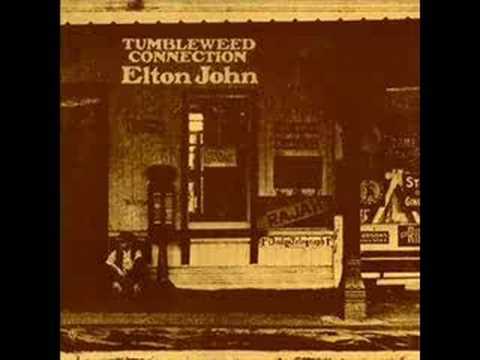
In the spring of 1970, Elton John and Bernie Taupin set out to write and record a concept album chronicling themes of Americana and utilizing country and western instrumentation and style. All the songs on
Tumbleweed Connection conjure imagery of the Dustbowl, the Wild West, and other 19th century rural America. For example, "Ballad of a Well Known Gun" –
I pulled out my Stage Coast Times
and I read the latest news – tells the story of a fugitive on the run who finally gets caught. Additionally, "Talking Old Soldiers" –
Well, do they know what it's like to have a graveyard as a friend? – explains a chance encounter between an old man and a young soldier during which the older of the two describes how his glory days full of good times, good friends, and lots of laughs have digressed into the sadness that accompanies his being mocked as a crazy old coot.
 30 Pound Parrot Rifle, Port Hudson
"My Father's Gun" – one of Bob Dylan's favorite songs – tells the story of a Confederate soldier who's just buried his father's body and plans to rejoin the American Civil War.
From this day on, I own my father's gun. We dug a shallow grave beneath the sun. I laid his broken body down, beneath the southern land. It wouldn't do to bury him where any Yankee stands.The listener can hear both the despair and hope entwined in the narrator's voice. As a son who recently buried his father and as a soldier fighting for the losing side, the tone in the verses carries an air of doubt and timidity. However, when the chorus drops, the inclusion of the gospel choir helps to pick up the mood, letting the listener know that, while the narrator is sad, he's also filled with fortitude for what's to come. But what will he do next? He's on his way to the next battle.
I'd like to know where the riverboat sails tonight. To New Orleans, well, that's just fine, alright. 'Cause there's fighting there and the company needs men.Unfortunately, if the narrator buried his father in the spring or summer of 1863, he never would've made it down to New Orleans from the northern plains of Louisiana. Struggling for control over the Mississippi River, the Union Army assaulted and surrounded the area northwest of Baton Rouge called Port Hudson and laid a 48-day siege that essentially opened the river to Union troop and supply navigation.
Siege of Port Hudson, Capt. Edmund C. Bainbridge's Battery A, 1st U.S. Artillery In addition to providing the Union with complete control over the Mississippi River as a trade route and supply line, the Siege of Port Hudson also enhanced the reputation of Black soldiers, since the 1st and 3rd Regiments of the Louisiana Native Guards became the first with Black officers. A minority of the fighters were free men who'd been educated, while the vast majority were escaped slaves longing to fight for the freedom of their brothers.
The Siege of Port Hudson may not have been a turning point in the war, but it certainly helped the Union cause. If the narrator of "My Father's Gun" had made it to the battle and fought for the Confederacy, in all likelihood, he'd have been killed, since the siege claimed the lives of over 7,000 Southern fighters.
As soon as this is over, we'll go homeWith this line, the narrator sings of a Confederate victory. Little could he have imagined that his potential death during the battle brought him home to his father, hopefully in Heaven.
Justin Novelli
September 2, 2016
My Father's Gun Songfacts
Browse all Songplaces
Comments: 6

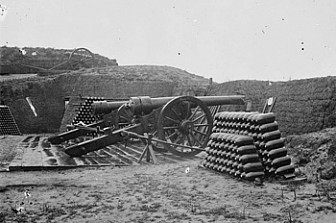 30 Pound Parrot Rifle, Port Hudson
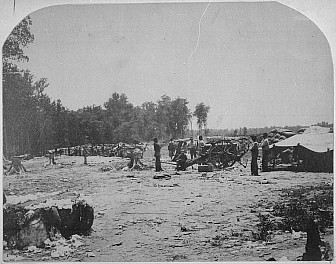 Siege of Port Hudson, Capt. Edmund C. Bainbridge's Battery A, 1st U.S. Artillery