Well my daddy worked the furnaces
Kept 'em hotter than hell
I come home from 'Nam worked my way to scarfer
A job that'd suit the devil as well
Read full Lyrics
The 2016 presidential election resurrected a narrative that had been removed from the mainstream consciousness for some time. All of a sudden, for the first time in ages, average Americans were talking again about the Rust Belt and the loss of jobs in the former manufacturing centers of the United States. The people who lived in those old centers never forgot, of course, and neither did Bruce Springsteen.
Springsteen has been a chronicler of the American working and "under" classes since the very beginning of his career. The guy long ago worked his way into wealth and stardom, but he never forgot where he came from - that is, in fact, one of his most endearing traits.
In 1995, over 20 years after the release of his debut album,
Greetings from Asbury Park, N.J., Springsteen was still making music about those Americans America had left behind. "Youngstown," from
The Ghost of Tom Joad, is one of many songs that stands as testament to Springsteen's devotion to one of his most enduring themes.
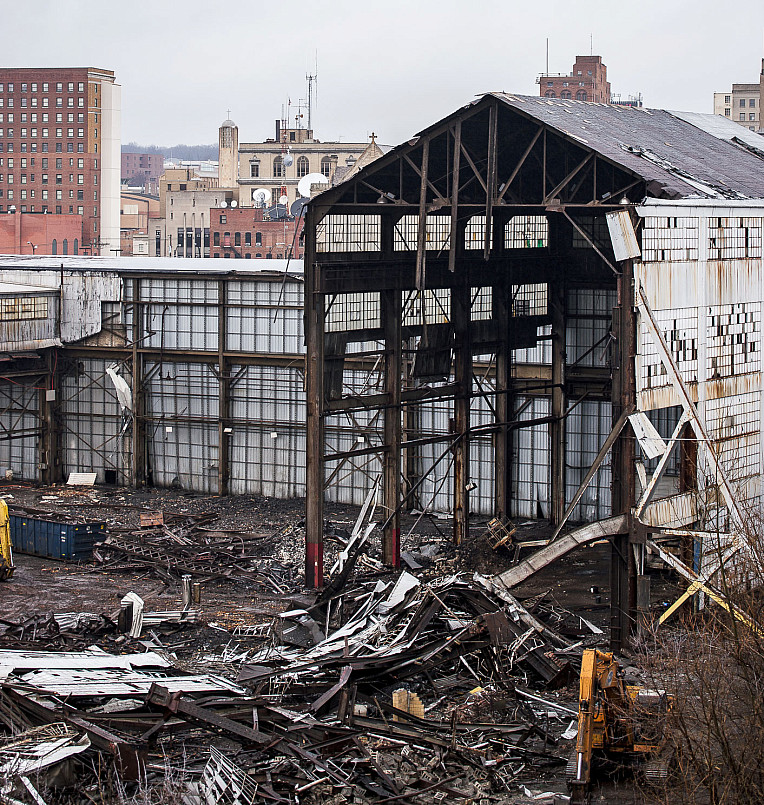
 The remains of the Wean United factory in Youngstown
Photo: TheAmericanExplorer, DreamstimeLike many Midwest towns, Youngstown, Ohio, became a prosperous place due to the steel industry in the 1880s to early 1900s. Also like many of those same towns, it saw a significant decline after that same steel industry lost favor. Almost overnight, at least in the way it felt emotionally, people that were full of excitement for the future found themselves grounded in a place without anything to look forward to except dwindling jobs with dwindling pay.
Springsteen brings the Youngstown tale down to human scale by telling its story through the remembrances of one Vietnam vet who is trapped in a hopeless present while surrounded by reminders of a hopeful past. This narrator recalls what Youngstown used to be by recounting his father's work in the steel mills and talking about how the good times started back in 1803 when James and Danny Heaton first found iron ore in the area.
The chorus of the song finishes with:
My sweet Jenny, I'm sinkin' down
Here, darling, in YoungstownJenny probably has a double meaning, indicating both a woman and Youngstown Sheet and Tube's Jeanette Blast Furnace, which was a major center of employment for the town until it was shut down in 1977.
Dale Maharidge's book,
Journey to Nowhere: The Saga of the New Underclass, introduced Springsteen to the Youngstown story. He told BBC Radio that it resonated with him so much "probably through my own kids and my own job, in the sense that the thought of being told after 30 years or so, that what you're doing isn't useful anymore, or has no place, or that the world has changed and that's the way it is. And you're 50 and gotta find something else to do. That's almost impossible... I don't know what I would do in that circumstance."
Like most of Springsteen's best songs, "Youngstown" embodies its subject rather than simply talking about it. The song feels like something bubbled up from the smelters, ragged and proud, rusty and defiant, just like the town it's named after.
Jeff Suwak
January 27, 2023
Youngstown Songfacts
Browse all Songplaces
Comments


 The remains of the Wean United factory in Youngstown