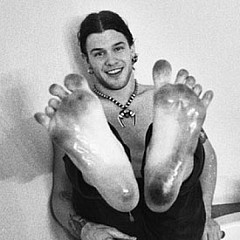
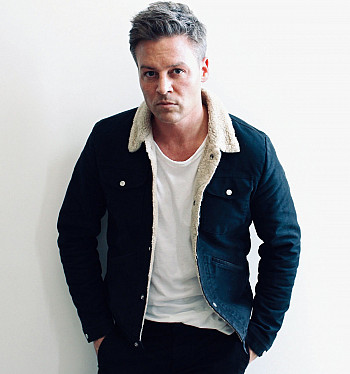
 Bootstraps (Jordan Beckett) has the kind of ethereal, evocative sound music supervisors love. You'll hear him in some of the most dramatic scenes of Grey's Anatomy, Parenthood, Suits, Supergirl and Hawaii Five-0. When we boil down his songmaking process, we learn that his soundscapes are there to frame the song, not distract from it. It's an approach that distills the pure emotion out of the music, and also makes them perfect for placements.
Beckett grew up in Portland, Oregon, and is now based in Los Angeles, where he can find song inspiration at insipid Hollywood parties. His first album, Bootstraps, was released in 2012, followed in 2016 by Homage, an album of covers featuring his diaphanous version of "Stand By Me," which has been used in the Power Rangers movie and in episodes of MacGyver and Lethal Weapon. In 2019, he released the album Demo Love, the title a play on how the word could mean both "demonstrate" and "demolish." It contains a very hopeful song about friendship called "Whenever You're Around," and some others that reveal his penchant for diving headfirst into his pain. There are also three intriguing interludes, including one that may or may not be a transcript from an actual breakup voicemail.
Jordan Beckett: Yes, but I have people that I work with. I do all of the production on my own and then I'll go into the studio with a couple of people that help me out.
Songfacts: So, how do you go about creating the soundscapes for your songs?
Beckett: I go about it first by writing the actual song, so nothing is done production-wise to the aesthetic sonically until I have the song done. I get the foundation built for the song on piano or guitar and then I'll start adding elements in, but I've found that you have too many options now as a producer. The computer is like a menu at a Cheesecake Factory, so I find it difficult to boil it down to the core of the song. So the sonic stuff is really an afterthought to support what I'm trying to say or do.
Songfacts: At what point do the words come?
Beckett: The words come as I'm hunting around for the song on guitar or piano. A lot of times I'll think of a line just to hang the song on, and a lot of that was done especially on this album, more in the spirit of Motown or Bill Withers. I would think up a line that I could fill out the song around, and once I found that core, I would slowly start to put the blocks together for how to make that work.
Songfacts: Give me an example of a song on this album with a line that you hung it around.
Beckett: "I'd Rather Be Blue." I had that line in the back of my head and I didn't know what to do with it. I was working on the song off and on, and then I took an Uber into Hollywood one night because I had to go to a stupid Hollywood birthday party. I started thinking about how I'd rather be home, stewing in my bummer mood that I was in, and then I thought of the line, "I'd rather be blue if I had to choose."
The line, "I'd rather be in and stare at the ceiling," was motivated by my friend being like, "You have to go out, you have to do something. You can't just stay in every night." So the lyrics just came to me all at once while I was in the Uber once I got that first thing. I knew the line "I'd rather be blue" was going to be on the album, but it didn't come organically until that moment struck me.
Songfacts: Why were you so bummed out?
Beckett: Various things in my life. I'd gone through a breakup and I felt like a lot of things were just lurching forward. I couldn't put my finger on what was wrong, but when it happened, there were other people in my life that were causing me to feel like, what is the point of going out and doing these things. Like I'm not that fun to be around.
So, a lot of the album revolved around those ideas. "Whenever You're Around" is about as straightforward a song I could write. It's that universal feeling of being around someone and the world feels a little better when they're around, like the song "Lovely Day" by Bill Withers. A lot of those songs were percolating in my mind at the time.
Songfacts: "Whenever You're Around," if you didn't know the story behind it, it could sound like it is about a romantic relationship and not a friendship.
Beckett: I didn't want it to have to be a love story song. There's a Bill Withers line on "Lovely Day," "Just one look at you and the world's alright with me," and I was thinking about how universal that sentiment is. In that song, he's not really talking about a love, it's really more of how when someone is around it just feels a little better.
I feel like a lot of songs are written like a man and a woman, so I tried to rein that in a little bit on that song, and I thought of a lot of things like my relationship with my niece and nephew. It's like, whenever you're around, everything's a little bit brighter in my world.
Sam Jaeger directed the music video for "Whenever You're Around" and stars in it along with Alexandra Daddario and Erika Christensen. Jaeger starred in the TV series Parenthood, and has appeared in Law & Order, The Handmaid's Tale, American Sniper, and a passel of other movies and TV shows.
Beckett: The video for that song came about with my friend Sam Jaeger, whom I had known for 15 years. Sam was really the first person to motivate me to go into music. I was really reluctant at the beginning, but then I did the music for his first film, Take Me Home. I knew I wanted him to do a video, and that song was specific because Sam and I had talked about that before, especially with his wife, where they'd been through a lot of things, and Sam just kept coming back to the fact that just whenever she's in the room, life feels better. So I knew he would get it, and I knew he would be able to flesh that out as a video.
Songfacts: Is this the first video you've done?
Beckett: Yes.
Songfacts: So often, you create songs that are then put in different scenes for TV or movies, and here you have a song with a video created around it.
Beckett: Yeah, I thought about that and I feel like I've kind of farmed out my music for people I don't know to hang the songs on whatever the scene is. That video was fun because it opens on an autobiographical story with me, and that was the first jump-off point for Sam and I. So it was cool to put myself into it and be able to create the content around the music rather than just watching it on TV and seeing how they cut it together.
Songfacts: Are you the kid at the birthday party?
 Beckett: Yeah. I told Sam about this recollection I had when I was younger and this girl smiled at me at her birthday party. I had just gotten done with a Little League game and I went inside after she smiled at me and flexed in the mirror because I felt so excited. I told Sam that and he ran with the rest of the story and tied it all together.
Songfacts: How does it work to get the placements in the TV shows and the movies?
Beckett: That's a good question. There are sonically things that work in TV and film - certain sounds, voices and moods. The way I write music naturally, the way that I sing, sort of fits the mold for what a lot of shows are looking for.
I didn't know what "sync" was or placement on TV was when I did my first album. I had a placement before the album was done, and I had no idea what it was. I had no Facebook or anything like that, and I was really reluctant about it because I had no idea what it was. But it's just a sensibility that I have and the music that I've made tends to work for those people. I could probably enumerate for you what those sonic things and sounds artists are looking for.
Songfacts: Yeah, I would love to hear that.
Beckett: Well, generally speaking, syncs happen when they are looking for the music to enhance the emotion around the scene, and pair really well with it or heighten the emotion around it. So, a lot of times, a bar-band rock song is not going to work in a pivotal moment in a montage sequence on a show like This Is Us or Parenthood or Grey's Anatomy, and neither does hip-hop because the subject matter doesn't lend itself to that kind of emotion. Also, it's best to create atmospheric sounds because an editor can cut around that. So, when you have songs with really big choruses like most songs on the radio, an editor has trouble cutting that because when the chorus comes in, it's so big that the editor has to cut through the song.
A lot of my songs that have done really well in the sync world are pretty linear - they don't have these big, huge chorus hits. "Stand By Me," which has hands down been the biggest sync song I've done, has no kick drum. It has a lot of atmospherics, and the chorus is kind of slowly growing into a swell. So it's really good for an editor, and that's just the pragmatics of TV and film.
Songfacts: Did you do "Stand By Me" for any particular placement?
Songfacts: Well, that must have been a pleasant surprise when it got picked up by so many places.
Beckett: Yeah, that's one of the baffling things about making records work. You put all this time and energy into like three songs and those are the three songs that wind up getting the least attention.
Songfacts: Well, it also sounds like you are very much connected with the songs that you write, which makes it sometimes hard for you to give them up. When you have a cover song, maybe you don't have that issue.
Beckett: I'm more inclined to be open to sync opportunities with a cover. But also, my own music, I've had really good fortune of being on some really great shows and knowing some music supervisors who genuinely like my music and use it. It's when it becomes this cold, capitalistic transaction that I sort of recoil. But a lot of the songs I've had placed, I have relationships with the music supervisors - they've been to my shows and they've been supportive of my music since the beginning, so it's a different thing.
Songfacts: Can you tell me about the song "Replica"?
Beckett: Yeah. I thought "Replica" was a great song title. It sat with me for probably two years, and then I was listening to Dolly Parton's "9 to 5" and that song for some reason sparked an idea for me. I wrote the lyric, "I saw no replica," and that resonated with me and I knew what the song was. But it wasn't until that line came that I was like, "OK, I know how to frame this song up."
Songfacts: What's going on in the song?
Beckett: It's closely related to "Someone Like You" by Adele, where it's like, I saw no replica and I still don't. There's nobody who can replicate what you did.
That was the core of it, and ironically, "Someone Like You" was done out of the studio that I work out of, so I'm always looking at this plaque on the wall of this like 30-times Platinum song, so maybe subconsciously I was thinking about that idea of wanting someone you can't have anymore and holding on to that idea of who they were - there's nobody who can replicate that person for you.
Songfacts: Is that a real voicemail that you synthesized on "Find Someone Who Makes You Happy"?
Beckett: I legally cannot confirm or deny that.
Songfacts: Can you please tell me about your song "Guiltfree"?
So, very early on I had all these demos of songs and I would send them to Sam - he was one of maybe three people I would send music out to. I wrote a bunch of demos that were just done on guitar and a vocal, and I had a song called "When You Leave Guilt Free," and that song became "Guiltfree."
There was a very early demo of that song that was called "When You Leave Guilt Free," and it was much more folky and less rock. When I went into the studio, Dave [Quon] and Nate [Warkentin] and the guys I was working with were like, "Guiltfree" is a cool title, just call it that. And then I kind of re-wrote it and reworked it.
Songfacts: So, you didn't need to be feeling the breakup at the time to write the song, which I guess is good because it means you don't need to be enduring heartbreak in order to write a heartbreak song.
Beckett: No. A lot of my music is less of an autobiographical storytelling of something that happened last night, and more of all of the things that are percolating in my brain on any given day. And it's not linear. You know, your mind is not linear: It thinks in random fashion. So, it's really more about the song and feeling the song come alive.
It's more for me about serving what the song is, and less about going, "I just went through a breakup, and now I'm going to write a breakup song." I've never been able to write a song like that with a direct cause and effect - it's always about me channeling a feeling or a moment. I have like a lightbulb thing go on in my mind, and then I can find the song. But I've never been able to wake up and go, "Alright, I feel this way and I'm going to write this song."
Songfacts: What's one of the songs on Demo Love where that lightbulb went off?
 Beckett: "Touchdown" was a song like that. I was in Paris and I got an Airbnb right by Notre Dame. I was writing in this little bungalow thing, and I had that first line, "I'm only thinking of you here in Paris," as a tongue-in-cheek sort of thing like the colloquialism "I only do this on days that end in Y."
I wanted to write that song in that way where it's like, "I only do this on the days that my feet hit the ground." But when I found that first line, something about being in Paris for me and being jetlagged and all that sparked that song, and that just came instantly to me when I got into my Airbnb and started writing.
Songfacts: Were you there before the fire?
Beckett: Yeah, I was actually.
Songfacts: Why Bootstraps?
Beckett: You know, I've been thinking about this lately. It was something my dad said to me on a phone call one time. He said something like, "Pull yourself up by the bootstraps." I've been thinking about it lately because that expression has been hijacked by a lot of different people I don't want to associate with.
It's really about how you are the only person that can make your destiny a reality. You're the only one of your own self-will that's going to make something happen. The more I thought about it, the more I felt like I don't necessarily agree with that, especially as I'm getting into this album and I'm seeing this video happen and seeing how the songs came together. It's really a communal thing - it has to be in harmony with other people and in community with other people, and it isn't just this self-will thing where it's you versus the world. More so than ever before I feel this team of people that support and love my music and have rallied behind me that have made it all happen, and then I have this name that is not really emblematic of how I actually feel.
November 11, 2019
More at bootstrapsmusic.com
Here's our interview with Bill Withers, where he explains "Lovely Day"
More Songwriter Interviews