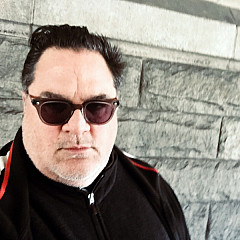
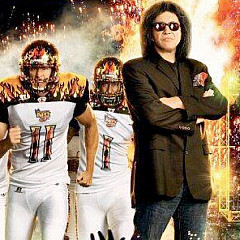
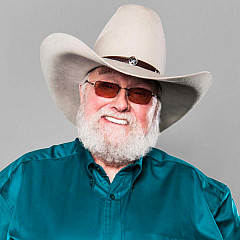
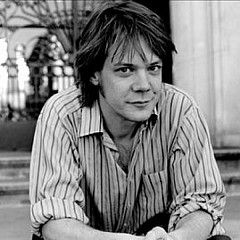
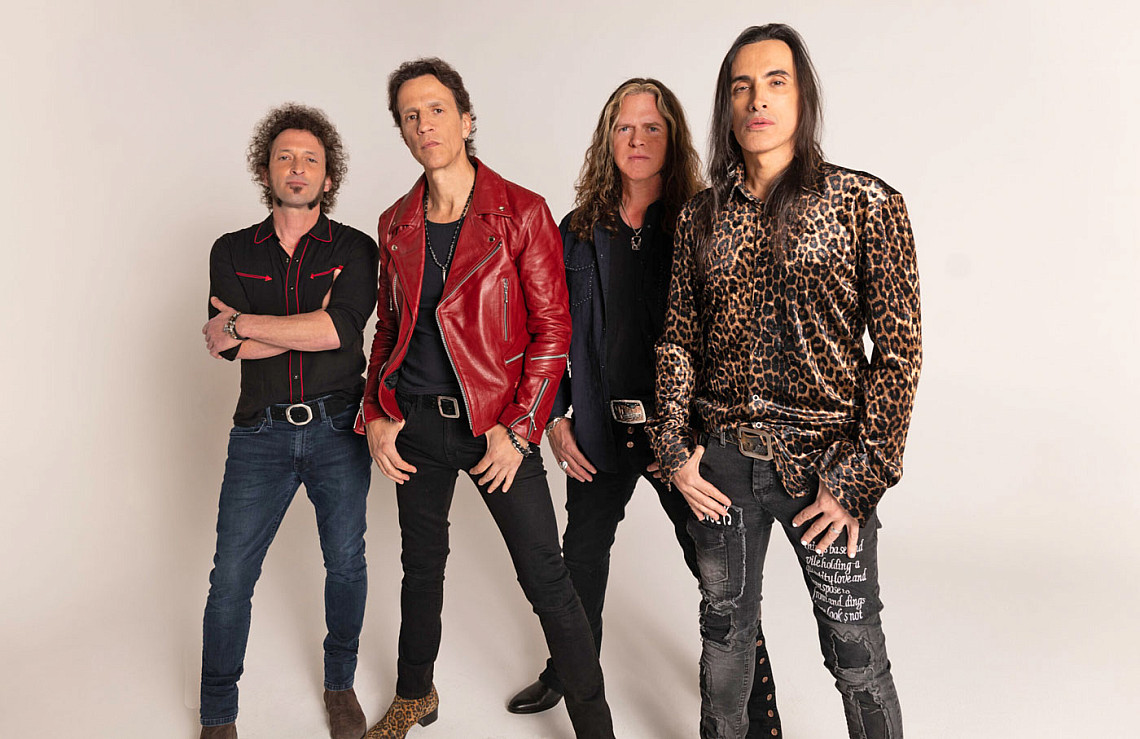
 Extreme: L-R, Kevin Figueiredo (drums), Gary Cherone (vocals), Pat Badger (bass), Nuno Bettencourt (guitar)
Over the years, singer Gary Cherone has had the honor of playing alongside some of rock's all-time guitar greats: Nuno Bettencourt (his longtime bandmate in Extreme), Joe Perry (Gary is currently lead singer of the Joe Perry Project), Brian May (he performed "Hammer To Fall" alongside the three surviving Queen members at Wembley Stadium), and of course, Eddie Van Halen (as the lead singer of Van Halen from 1996-1999).
Extreme is best known for their hit acoustic ballad "More Than Words," but they're really a hard-rock band. They return on June 9, 2023 with their first studio effort in 15 years, Six. Like their 1990 masterpiece, Pornograffitti, the album alternates between rockin' tunes ("Rise," "Thicker Than Blood") and acoustics ("Other Side Of The Rainbow," "Small Town Beautiful").
Cherone spoke with Songfacts prior to the arrival of Six, and in addition to discussing the new album, he also covered the stories behind several of Extreme's best-known tunes and talked about the unreleased songs he worked on with Van Halen. Gary also took us back to that mammoth Freddie Mercury Tribute Concert in 1992 when Extreme pulled off an impressive medley of Queen hits.
Greg Prato (Songfacts): Let's discuss the new Extreme album, Six. How does the songwriting work now compared to earlier albums?Extreme is best known for their hit acoustic ballad "More Than Words," but they're really a hard-rock band. They return on June 9, 2023 with their first studio effort in 15 years, Six. Like their 1990 masterpiece, Pornograffitti, the album alternates between rockin' tunes ("Rise," "Thicker Than Blood") and acoustics ("Other Side Of The Rainbow," "Small Town Beautiful").
Cherone spoke with Songfacts prior to the arrival of Six, and in addition to discussing the new album, he also covered the stories behind several of Extreme's best-known tunes and talked about the unreleased songs he worked on with Van Halen. Gary also took us back to that mammoth Freddie Mercury Tribute Concert in 1992 when Extreme pulled off an impressive medley of Queen hits.
Gary Cherone: As far as me and Nuno, it's pretty much always been the same, most of the time inspired by a guitar first. And if something moves me, I'll write a lyric. It evolved after the band split up in '95-'96.1 We started writing separately and with other people, so there's some contributions from other people on this record. But as far as me and Nuno, it's pretty much always been the same. Sometimes I'll hand him a lyric that might inspire something, put him on the piano, and vice versa.
Songfacts: What was the lyrical inspiration behind the song "Rise"?
It's funny, the chorus is almost misleading in the sense that it's uplifting. "We're going to lift you up, up. Rise." But then the third line is, "We're gonna raise you up, then rip you apart." I see these reaction videos where new fans are watching the video and they're trying to explain, "Oh, it's an uplifting song." And then they hear that line and you see them twisting their heads, going, "This isn't what I thought it was."
Songfacts: What's another new track that means a lot to you lyrically?
Cherone: The first one that comes to mind is "Thicker Than Blood." It's a heavier theme.
I don't think there's anything any writer can write new under the sun, it's just from their perspective. So, "Thicker Than Blood," you could say it's topical today with division going on politically, but I try to write in a general sense where it can relate to hopefully 10-20 years from now.
"Thicker Than Blood" is a critique of tribalism, and love is the vehicle to move you past that tribalism. In times of fear and anxiety, people withdraw to their tribes, and it's harder to love the neighbor, it's harder to love the stranger. This song is a critique of that, saying love is the answer to that.
Songfacts: How do you feel about "More Than Words" these days?
Cherone: It's funny, that has a history with Extreme. It was the vehicle for our success. It brought a lot of people to the band. To this day, it still does.
There was a time when we thought it was a blessing and a curse because it was a misinterpretation of what the band was. It was one-tenth of the band. It was a ballad, but it became so big that it was bigger than the band. People know the song and don't know who does it.
But over the years, we embraced it. It was our vehicle to reach a bigger audience. We still love singing it. Lyrically, I think it holds up. Actions speaking louder than words. It has some biographical history to it with a certain person, so when I hear it, it reminds me of that time.
Songfacts: Other than your big hits, which Extreme song from the '90s really stands out for you?
Cherone: For Extreme and the catalog, I always go back to "Am I Ever Gonna Change?" which is a powerful, musical song. Lyrically, self-reflecting.2
There's another song called "Tell Me Something I Don't Know" off of Waiting For The Punchline. There are songs we still do in the set, like "Rest In Peace," which means a lot to me lyrically. I thought it was one of Nuno and mine's best songs.
Songfacts: What was the lyrical inspiration behind "Get The Funk Out"?
Did it represent the band at the time, like we're this kind of funky, groovy hard-rock band? We might have been a little bit outside the hair-metal scene we were coming out of. It was like a defense of what our music stood for. But again, it's a general sense. I think anybody can apply it: "If you don't like me, get the funk out."
Songfacts: "Decadence Dance."
Cherone: "Decadence Dance" was written on that same tour. It's funny, Pornograffitti evolved into a loose concept record. I was writing those lyrics at a certain point in time, so there were running themes going throughout. "Decadence Dance" was the overture of the record and it was setting up a theme of a loss of innocence. A young boy leaving home and going into the decadent world and being tempted by all the things that go on in life.
Songfacts: "He‐Man Woman Hater."
Cherone: One of Nuno's best pieces of music. At the time of writing that, it was just a campy take on The Little Rascals catchphrase, "He‐Man Woman Hater." And I tied that into the theme of Pornograffitti. That was at the end of the record – the protagonist was trying to reconcile his past and trying to move forward.
In its defense, it's sung in a campy style, but it was Francis – the kid – trying to reconcile his past and some of the things that he did within the story when it came to sex, drugs, and rock n' roll. He tried to reconcile pushing away the woman that he truly loved and confusing it with some of the indiscretions he did on the road.
Songfacts: "Peacemaker Die."
Cherone: Off of III Sides to Every Story. That's one of my favorite songs. Again, musically I think Nuno and the band are brilliant in it. Lyrically, it certainly was inspired by the peacemakers. There's two parts of two verses, so I look at each little stanza representing the four peacemakers that I was writing about. The first one was Gandhi, the second was Jesus, the third was Martin Luther King Jr., and the fourth was John Lennon with the reference to "I'm the one with the gun." Those who were outspoken and that got out of line – the true good radicals – seemed to get snuffed out by the powers that be.
I had to reach out to Martin Luther King III to get permission to use pieces of the "I Have A Dream" speech. I remember being very nervous that morning calling him up. I remember him being a little bit confused about the title. He got the concept of what we were trying to say, but he thought people would misinterpret it as wanting to kill peacemakers. So it was a little bit of a discussion but he gave us the blessing. I always cherished that moment.
Songfacts: What's the best Van Halen song you worked on?
But something that I thought was new and original was a song called "Once." I thought Eddie musically expanded his horizons. It started off as a piano piece, but then it got a little bit more elaborate with the band. Lyrically, I think it was a bit more complex.
"Year To The Day" is another track I thought was a strong song on that record.
Songfacts: What are your thoughts on "How Many Say I"? That's the only Van Halen song that Eddie sang lead on.
Cherone: In the past with me and Nuno, we've always traded off – I would show Nuno a lyric, he might write to it. With my experience in Van Halen, that's not how Eddie wrote. So, that was one of the new things we did together. I just had a lyric – I might have written it over three days – and he looked over my shoulder one day and said, "What's that?" And I said, "I'm finishing up this lyric called 'How Many Say I.'" And he said, "Do you mind if I take it?"
He took it, I went to bed in the guest house, and he stayed up all hours of the night. Woke up the next morning and he showed me on the piano. He sang it – he'd made a rough demo of it. I thought it was brilliant. His voice reminded me of Tom Waits or Roger Waters.
I was the one who encouraged him to do it on the record. He was a little reluctant. It's gotten criticism over the years because Eddie sang it, but I thought the initial demo was so inspiring. For me, it was just like, "You should sing it." I twisted his arm a little bit, but then he embraced it because I was comparing him to Floyd. His demo was so emotional – I thought it was great.
Songfacts: Michael Anthony and Eddie Trunk have both said that the material demoed for the next Van Halen album after III would have been even better. What are your thoughts and do you remember any song titles?
Cherone: In hindsight, looking back, joining the band, I would have rather toured and then recorded the first record with them, because Van Halen III was a studio production, I was getting to know the guys, and there was a writing/evolutionary process of me and Eddie writing. Then we went on tour and we became a band. We pretty much lived together on the bus and playing so many shows, so we came back tighter, we came back more focused.
I don't know if it was subliminally because the record wasn't received great that we were writing material that was more down the strike zone of VH. Titles come to mind... there was one lyrical title, "Left For Dead," that I took those lyrics and I did a record with a band called Tribe Of Judah a couple of years later and wrote to different music. A song called "Rivers Wide" comes to mind. I'd have to rattle my brain as far as some of the other titles.
Songfacts: How much of that material was actually demoed, and would you like to see it officially released at some point?
Cherone: That wouldn't be up to me, that would be up to Alex. There are different degrees of recording. There's some demos that are just me and Eddie and a drum machine, there's some rehearsal stuff, there's some stuff that we brought in Patrick Leonard and did a couple of those songs, so those were pretty much finished.
It doesn't bother me if they don't see the light of day. Maybe somewhere down the road if they were to do a reissue of VH III and we would add a few songs, that would be something I'd be interested in, but that period for me is pretty well-documented. It is what it is. More importantly, I'd rather remix VH III if I had my choice. But I'm more focused on Extreme and the new music at this point.
On April 20, 1992, five months after Freddie Mercury died, his Queen bandmates held a concert in his honor at Wembley Stadium that raised money for AIDS research. Extreme was the second act to perform, following Metallica. They did a medley of Queen songs and also played "More Than Words." Then Gary returned later to join Tony Iommi, Brian May, John Deacon and Roger Taylor on "Hammer To Fall."
Metallica played only their own songs, so Extreme was the first to cover Queen that night, and they killed it. Gary really commanded the stage and gave a fitting tribute to Mercury. The concert was broadcast live around the world and later sold on home video.
Songfacts: Lastly, what are some memories of when Extreme performed at the Freddie Mercury Tribute Concert in 1992?Metallica played only their own songs, so Extreme was the first to cover Queen that night, and they killed it. Gary really commanded the stage and gave a fitting tribute to Mercury. The concert was broadcast live around the world and later sold on home video.
We were out to dinner with him and he said he was going to put on the biggest show in rock history for Freddie, and he wanted us to do it. We immediately went back to the studio and pulled out all the Queen CDs. I knew exactly what we were going to do. Me and Nuno talked about doing the medley and if we could get away with it, and we did. It was just a great day.
I could go on forever about meeting Elton John, Bowie, the Queen guys. We even met Freddie Mercury's mom backstage, which was amazing. But the performances and who played that day, it doesn't get any better than that. Every once in a while we watch it and I go through every second, because you relive every second. It was quite a moment for Extreme.
April 10, 2023
For more Extreme visit extreme-band.com
Further reading:
Interview with Nuno Bettencourt
Interview with Jason Bieler of Saigon Kick
Long Live Queen - An Excerpt
Diving Down Into Eddie Van Halen's Life And Music
photo: Jesse Lirola
Footnotes:
- 1] Extreme re-grouped in 2007 with Figueiredo on drums. Cherone, Bettencourt, and Badger are original members. (back)
- 2] "Am I Ever Gonna Change?" is part of an orchestral suite on Extreme's 1992 album, III Sides To Every Story. The song includes a spoken interlude in Latin. (back)
More Songwriter Interviews