Despite what he sings in "Alone Again (Naturally)," Gilbert O'Sullivan is no more depressed than Randy Newman disdains short people. It's simply a talent for channeling the pathos of others into songs.
Born in Ireland but raised in England, O'Sullivan went to art school before landing a publishing deal with CBS. That flamed out, but he ended up under the wing of Gordon Mills, who also managed Tom Jones and Engelbert Humperdinck. In contrast to Jones and Humperdinck, though, O'Sullivan was not a sexy (Humperdinck) crooner or a swaggering (Jones) pop singer. No, O'Sullivan was the sort of brainy singer/songwriter that appealed to the likes of a young Morrissey. Jazz icons Sarah Vaughan and Diana Krall (and many others) have put their voices to O'Sullivan songs because his music and lyrics sit well next to the standards most often sung by the world's best vocalists. If he is, as his song puts it, alone again, he's alone at the top.
Born in Ireland but raised in England, O'Sullivan went to art school before landing a publishing deal with CBS. That flamed out, but he ended up under the wing of Gordon Mills, who also managed Tom Jones and Engelbert Humperdinck. In contrast to Jones and Humperdinck, though, O'Sullivan was not a sexy (Humperdinck) crooner or a swaggering (Jones) pop singer. No, O'Sullivan was the sort of brainy singer/songwriter that appealed to the likes of a young Morrissey. Jazz icons Sarah Vaughan and Diana Krall (and many others) have put their voices to O'Sullivan songs because his music and lyrics sit well next to the standards most often sung by the world's best vocalists. If he is, as his song puts it, alone again, he's alone at the top.
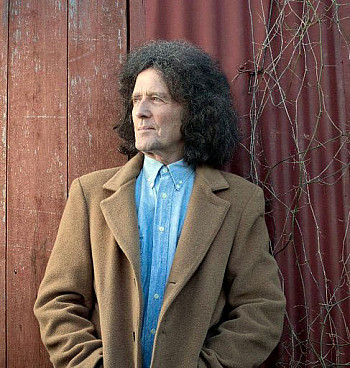 Dan MacIntosh (Songfacts): I want to start with "Alone Again (Naturally)." Were you surprised that it became a hit? And why do you think it has made such a deep connection with listeners?
 Gilbert O'Sullivan: All I ever set out to achieve was to write what I thought was a good song. Before it was ever out there in the marketplace, if I thought it was a good song, that for me would be a success. That's all I concentrated on.
"Alone Again" was written with two other songs in a writing period when I was 22 years of age. I had been a postal clerk in London, so I was only able to write after work in the evening. When Gordon Mills managed me – he managed Tom Jones and Engelbert Humperdinck – when he took me on, he allowed me to quit my job and move into a bungalow that he owned where I could write every day. So, therefore, I was in a writing mode, and "Alone Again" was just one of the songs I'd written. I was really pleased with it, happy with it, but I didn't see it as being any more special than other songs. Suffice it to say, I was happy.
Actually, when it was recorded, it was recorded with "Out Of The Question," and everybody thought that "Out Of The Question" was the commercial song. "Alone Again" was good, but they didn't think it would be commercial. But in the end, the decision was made to release it. So, I'm really pleased how these things take off. The reaction I get when I meet people who tell me how much it means to them, it's very special. And the covers... recently Diana Krall and Michael Bublé. Neil Diamond did a really nice version. Even going back to people like Sarah Vaughan. Nina Simone's done it. It's fantastic, the reaction I've had with that song.
Songfacts: Wow, I have not heard the Sarah Vaughan version. That's my homework for today. I loved her as a singer.
O'Sullivan: Gosh, this would go back to the early '70s. It would have been 1972. "Alone Again" was such a big song at that time that everybody was recording it, which was fantastic for me as the writer.
O'Sullivan was the plaintiff in a 1991 landmark case that finally established that samples must be cleared. Other lawsuits had been filed but would typically reach settlement; O'Sullivan was different because he didn't just want money, he wanted the offending song - Biz Markie's playful reinterpretation "Alone Again" - pulled from the market, which is exactly what happened. "I'll go to my grave in defending the song to make sure it is never used in the comic scenario which is offensive to those people who bought it for the right reasons," he said.
Songfacts: Tell me a little bit about a newer song, "The Same The Whole World Over." What inspired that song? O'Sullivan: As the writer of these songs, I'm influenced by rock songs, I'm influenced by ballads, I'm influenced by all kinds of songs. So, I'd written a few ballads. I'd written a medium-tempo song to vary the writing. That's the key so you don't get stuck always writing slow songs. I have those rock songs. I have those rocky melodies, so it's nice to be able to incorporate them. "The Same The Whole World" is one of those that is on this new album. The producer liked it, so we said, "Yeah, let's go for it." I actually had heavier, rockier stuff, which I played for the producer and he said, "We'll leave those." So, the writing varies. It's nice to be able to incorporate all kinds of songs.
"Alone Again (Naturally)," a #1 hit for six weeks in the summer of 1972, is by far O'Sullivan's biggest American hit, but in the UK he's best known for "Get Down," which was the most-performed song in Britain in 1973 and his second #1, following "Clair." His catalog is filled with lesser-known gems like "Matrimony," a light-hearted song about a couple getting married at the registrar's office to save money.
O'Sullivan: No, I'm a good Catholic boy. I would never get married outside the church. What you're doing, Dan, is you're being a good lyricist. A good writer doesn't mean you have to experience everything. Going back to "Alone Again," a lot of people were surprised it wasn't based on personal experience. To be a good lyricist, you have to have an understanding of the subject you're writing about. Getting into the subject. How you think it is.
So, "Matrimony," I would never want to get married in a registry office and not invite my parents, but there are people going through that type of situation. That's a really popular song in Latin America because it has that Latin feel. Latin never dates, so it's one of the highlights when we do it live.
Songfacts: It's kind of funny about the registrar because the city I live in [Norwalk, California], there's a county registrar and there are celebrity sightings when somebody wants to get a quick marriage. A lot of times when I drive by it, I can see people outside dressed in their wedding gowns and their tuxedos. But I'm with you, I could never do something like that where you get married at a government building.
O'Sullivan: Mind you, having said that, I wouldn't want to have 300 people there to see me get married. It's crazy, we're actually going to a wedding this weekend in Austria for a really good friend of ours, and his daughter's getting married in front of 350 people. I'd go crazy.
 Songfacts: So, you're OK singing in front of a lot of people, but getting married is a different story?
O'Sullivan: I'm comfortable singing in front of people, but if I meet any of them in the lift afterwards, I would bottle up.
Songfacts: Are you an introvert?
O'Sullivan: Yeah, I think so. I'm basically very shy. Shyness is with you all your life, I think. It's not something that just happens.
I'm very introverted on my own in my bedroom upstairs, but I'm very confident on the stage singing my songs. One of the people interviewing me said, "You know, you don't do other people's songs." Well, I don't do other people's songs for a couple reasons. One, I don't see myself as a great singer. I see myself as having a distinctive voice. And secondly, I wouldn't feel comfortable doing it. Singing my own songs in front of thousands of people, I'm very, very comfortable, which is kind of weird when you consider that offstage shyness.
It helps to be that way as a writer. Take somebody like Bernie Taupin, who writes for Elton John. Elton writes the melody, you know, and Taupin writes the lyrics. He goes off to a mountaintop, somewhere way off in America somewhere to write the lyrics. You need that space. You need to have that kind of approach and attitude to be able to do what you're doing. To be able to sit down with a notebook and spend hours, days, trying to write lyrics.
Songfacts: Tell me, did you ever speak to Clair Mills? You wrote "Clair" with her in mind.
O'Sullivan: That was our manager Gordon Mills' daughter. And I used to babysit for them. They would ring me up and say they had to go to some big do, and I would babysit. I'm one of six, so I'm used to kids. The song was written as a "thank you" to the parents, and she laughs at the end. Gordon plays the harmonica solo, so it's pretty much a family record.
I saw her when she came to the concert I did at Hyde Park in front of a 60-piece orchestra [in 2017]. My daughters were with her. She said when I sang "Clair" in front of 25, 30 thousand people, she had tears in her eyes. The song means a lot to her. She's very grown up now, with two children of her own, but I still have that relationship with her.
Songfacts: The lyric in "Nothing Rhymed" mentions a Bonaparte Shandy. What is that?
O'Sullivan: Okay, between you and me and the bedpost, it's a way of getting around saying Napoleon brandy.
February 10, 2020
Get tour dates at Gilbert's website
Mike Scott and the "Fisherman's Blues" story
Richard Ashcroft
Chris Rea
More Songwriter Interviews