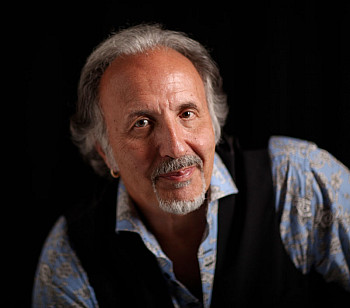
 It's surprising that "Joe Gruschecky" is not a better-known name amongst rock n' roll fans. After all, he has worked with the crème de la crème of the rock business over the years: Mick Ronson and Ian Hunter are listed as producers of his 1980 release Have A Good Time But Get Out Alive! (Steven Van Zandt was unlisted as a co-producer), Steve Cropper produced his 1981 set Blood on the Bricks, and Bruce Springsteen (Bruce Springsteen!) produced Joe's 1995 album American Babylon, and toured with Gruschecky as his guitarist that same year for a brief spell (Springsteen and Gruschecky have subsequently performed together on occasion).
Hailing from Pittsburgh and serving as the leader of the Iron City Houserockers, Gruschecky and company created a buzz straightaway with their aforementioned debut, Have A Good Time But Get Out Alive!, which Rolling Stone called a "new American classic." And despite never scoring that all-important breakthrough hit, Gruschecky has certainly built a following, which continues to this day, as evidenced by his 2013 release, Somewhere East of Eden (credited to Joe Gruschecky and the Houserockers).
Gruschecky shot the breeze with us about what he learned from working with such an impressive list of producers over the years, writing and touring with the Boss, and if he is comfortable being tagged a "heartland rocker."
Joe Grushecky: Okay. Every three years, I like to do a new album. I had been going to Nashville, doing a bunch of co-writes in Nashville, and I started recording the co-writes when I got home. I had a huge, huge backlog of songs that I was going through, and I just felt prolific and creative, so I was recording as many things as I could record and at the same time I was messing around with some old songs in a more acoustic, really stripped-down style.
I just kept recording and slowly the story I wanted to tell started to emerge when I wrote the title track, "Somewhere East of Eden." That was the impetus of me putting this particular batch of songs out as a record. When I wrote that song it opened a new door for me and I started writing even more songs. So it became a very prolific period of my songwriting career.
I had the luxury of choosing from about 35, 40 songs.
Songfacts: What are some your favorite songs on the album?
Gruschecky: "Somewhere East of Eden." East of Eden by Steinbeck is one of my favorite books of all time. I've read it and re-read it several times, and I found an old dog-eared copy of it somewhere and I said, "Oh, man, I wish I could read this again."
The next day I was reading on the Internet about Iraq veterans returning, and Iraq, traditionally and mythically speaking, is where the Garden of Eden was supposed to be. I thought, "These guys are returning to the United States from somewhere east of Eden." And that phrase just struck in my head.
And I read about this one particular guy who pulled this Iraqi family from a burning wreck, and he was never able to quite recover from it. He was like a master of war, but when he got home he barely could find any work. So that spurred that particular song.
The first part of the record was about conflict and fighting and redemption, and the end of it eases up a bit.
Impetus for the song "Who Cares About the Kids," I was working in the inner city for years teaching what they call "social emotional support" to kids now. So, kids with bad behaviors. But I've worked with everything from autistic kids to schizophrenics to Down syndrome to post-traumatic stress kids to bipolar kids. So quite a history of working with kids who need a lot of help. So that inspired that song. One of the kids and I had was the inspiration for that.
Songfacts: How would you say that you approach your songwriting?
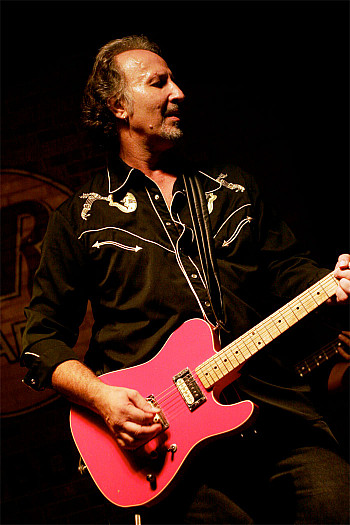 Gruschecky: For this particular batch of songs, I sat down with acoustic guitar and just banged them out on acoustic before I started recording them. Sometimes it goes a little bit differently. If you record acoustically and write acoustically, it gives you a different outlook than the whole electric thing. This time was me sitting with an acoustic guitar trying to find something interesting to say or some chord progression or some riff that I found to be pleasing to myself. I'm all about self-entertainment.
Songfacts: Looking back, who would you say are some of your favorite songwriters of all time?
Gruschecky: Jagger and Richards are probably my all time favorites, followed closely by The Beatles and Dylan and Van Morrison. The Stax guys in different combinations.
Songfacts: It seems like the Stax guys don't really get the credit that they deserve as songwriters.
Gruschecky: I had the pleasure of doing a record with Steve Cropper. I'm a huge Stax fan. I like the Stax stuff more than Motown, even though they're both great. But the Stax is a little bit grittier.
Steve himself wrote "Dock of the Bay," "Midnight Hour," and "Ninety-Nine And A Half," "Knock on Wood," I mean, top those! "Dock of the Bay"... untouchable.
Songfacts: How was it working with Steve Cropper as a producer?
Gruschecky: Well, we had so much respect for him and he was such an idol of mine. He actually came into Pittsburgh for two weeks and lived here in Pittsburgh and rehearsed with us. I was so nervous playing guitar around him that my hands were shaking, that's how much respect I had for the guy.
But he turned out to be a really good friend and we had a terrific time making the record. It was like going to school - his sense of timing was so impeccable. And really, working with him made us way, way better musicians. It was like a college course on how to play guitar and how to play as a band. So he was really, really influential. He worked with us very, very closely.
Songfacts: You've also had Mick Ronson, Ian Hunter, and Steven Van Zandt produce your albums. How was it working with them, as well?
Gruschecky: Well, they're all supremely talented people. Steven is just really, really good in arrangements and he really pushed me to make every word count and not throw away anything: Don't throw away lines. Make them all count. I learned that from working with Steve. He did great arrangements.
Mick Ronson, just a tremendous musician. He was all about feel. Great guitar player.
And Ian... I was a huge Mott the Hoople fan, so working with him was a great choice, too. I've been blessed. I worked with those guys and then we did something with Bruce. So I really have been lucky. I was reading a Rolling Stone magazine 100 best guitar players of all time feature, and I've had the pleasure and honor of working with three of them producing my records.
Songfacts: That's cool. You just mentioned Bruce. I understand you've had a pretty long relationship with him. How did you first meet Bruce Springsteen?
Gruschecky: We met because of Steve. Steve was working on Have A Good Time But Get Out Alive!, one of our early records. He turned Bruce on to that record. Bruce came to see us play one night and we just struck up a friendship that's lasted since like 1980.
Songfacts: How did it come about that Bruce produced American Babylon?
Gruschecky: Well, I asked him to please contribute to a song. He invited me to Los Angeles and we were having so much fun together - at least I was. I think he was, too. But anyway, we ended up doing a whole record together - it just felt right. The whole working relationship just felt good. And then I had the pleasure of co-writing with him, too, so we have about 10 co writes.
Songfacts: As far as Bruce as a producer, how would you compare him to the previous producers we just discussed?
Gruschecky: Well, Bruce is just a superior musician. You don't realize what a great musician he is. Everybody knows he plays guitar, but he can pick up a mandolin and play it, he can play keyboard great, he's a good bass player. He has an impeccable sense of timing and he's just a great, great musician.
He would guide me to maybe use a chord in a song that wasn't so obvious or make a left turn in the song instead of a right turn. Just approach things more open-minded, not to get locked into an arrangement you can't move out of. It was great, because I was giving him lyrics and he was putting the music to my lyrics. One of the best lyricists of our time was using my lyrics, which was just a big thrill.
Bruce Springsteen is a wildly prolific songwriter whose songs have also had a huge impact on those whose covered them. His first single, "Blinded By The Light," was a #1 hit for Manfred Mann in 1977. The following year, Patti Smith scored her biggest hit with "Because the Night," which Springsteen gave her at the urging of Jimmy Iovine. The Pointer Sisters, who had yet to crack the Top 10, made #2 in 1978 with Springsteen's "Fire." Gary U.S. Bonds, hitless since the '60, enjoyed a career resurgence after covering Springsteen's "This Little Girl" in 1981.
Joe has the rare distinction of writing songs with Springsteen, which Bruce will sometimes do to help out his friends and bandmates.
Songfacts: What are the names of the two songs on that album that he co-wrote and what are the memories of writing those two songs?Joe has the rare distinction of writing songs with Springsteen, which Bruce will sometimes do to help out his friends and bandmates.
Gruschecky: Well, the first song was called "Homestead." Bruce and I had done a couple of songs, and the project was "Chain smoking and never be enough time, forget about you." As we were finishing up in the studio, after initial recording started, I played Bruce about 10 songs I'd written, and he said, "Man, you could do better than that. Go home and write." So I went home and I was on a mission to write some good songs. I had this lyric for something about Homestead, which is like the quintessential steel mill town here in Pittsburgh. I knew a lot of guys that worked there personally, and our families worked there. So I had to come up with a really good lyric.
I thought the music I had to it wasn't nearly as good as the lyric, so I took a leap of faith and asked Bruce if he would be interested. I gave him the lyrics, and a couple of days later he called me up and said, "Oh, this is great. Come on up, let's do it." So that's how the first one started.
And then I had a companion piece to it called "Dark and Bloody Ground" that I was saving for him to do music to, because I thought it should go with "Homestead." So he was kind enough to do that, and that was the beginning of our writing. Then we did a bunch of other stuff after that.
Songfacts: And if you want to talk a little bit about memories of the tour where Bruce joined on guitar.
Songfacts: Something about his guitar playing, I don't think he gets the credit as a lead guitarist, like a song like "Adam Raised a Cain" on Darkness on the Edge of Town, that's a great song that not too many people know that that's him playing guitar.
Gruschecky: Yeah. He's a great guitar player. We still do gigs together and we pick songs on purpose that he can rip on.
Songfacts: If someone is new to your music, which albums would you recommend the most from a songwriting standpoint that they check out?
Gruschecky: Well, from the old days, the consensus is Have A Good Time But Get Out Alive! from the Iron City Houserockers. And then everybody likes American Babylon, which is Bruce's. Then I did one called Fingerprints that I think is pretty good. But it's like asking which is your favorite kid.
My new one's my favorite now, because it's the newest. But there are highlights on each one of them. I try to do the best job I can with the resources I have at the time, and there's just a few of them I like better than others. There's a few of them I don't like at all.
Songfacts: From reading past articles, most people describe your music as heartland rock. Do you agree with that tag?
Gruschecky: You know, heartland rock is not a very fashionable term. I guess it would be John Mellencamp, me and Bruce, Bob Seger. That's all good people to be lumped in with, but my roots, I'm a pretty eclectic guy. I happened to grow up in an atmosphere where you've got to be able to play a Hank Williams song plus a Howlin' Wolf song, a Motown song plus a Stax song, and a Dylan song if you wanted to work. So my palette - my taste - is pretty wide-ranging.
I like to think that when you listen to one of my records you could hear a lot of different influences. Americana, American music.
March 4, 2014
More Songwriter Interviews