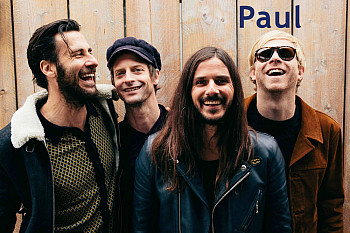
 Amidst all the Auto-Tune abuse and studio shenanigans that are plaguing the majority of mainstream music in the early 21st century, thank goodness for bands like The Temperance Movement, who provide some much needed dirty rock n' roll. Interestingly however, the mostly British band's tale is not the expected "schoolboys who rocked in their garage for years" script. It turns out that its members have played with a variety of pro artists, including Jamiroquai, Ray Davies and The Waterboys.
Think a jam session between the likes of The Stones, The Faces, and AC/DC, and you're not far off from the tunes that comprise their two albums so far: 2013's self-titled debut and 2016's White Bear. When we spoke with the group's guitarist, Paul Sayer, it became clear that they share something in common with The Rolling Stones, whom TTM opened for on some of their 14 On Fire tour dates: the song is king.
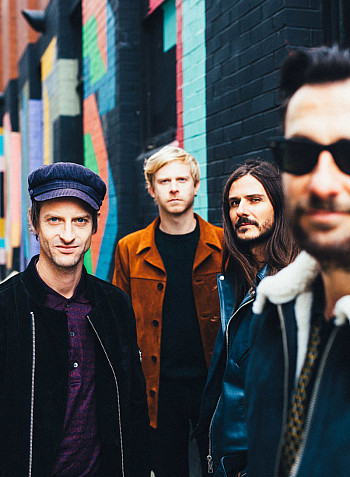 Greg Prato (Songfacts): How does the songwriting work in the band?
Paul Sayer: It's constantly changing. There are a lot of very talented people in the band, and everyone has a lot of facets to what they can do. With the first album, that was maybe a bit more straightforward, because Nick [Fyffe, bass] and Damon [Wilson, drums] hadn't really even joined the band when we recorded it. So 90 percent of the first record was me, Luke, and Phil [Potashnick, TTM's original guitarist], sitting down together. The second album, we were a band, and there were a lot of ideas coming from a lot of different places. And for us, when we're writing, what we really need to hold onto is a good idea. Once we know we've got that, we turn that idea into a song quite easily and quite quickly. Whether it's a guitar riff or a lyrical idea, it gives you confidence that it's going to turn out to be a good song.
So for the second record, we jammed quite a lot when we were on tour. We recorded the jams and didn't worry about it too much, but I think subconsciously we knew we were going to save this stuff because we were working towards making an album. Or, we'd get together - three of us, four of us, or five of us - and jam in a rehearsal room. And again, it was coming up with a good idea - like the foundations of a song. And then those ideas came from all over - someone would start playing something, and the rest of us would latch onto it. I remember sitting here at my computer, having 200 voice memos on my phone, going through everything, and being fairly ruthless and whittling them down to the few ideas that we used in the start of writing.
We live in London and Phil [Campbell, vocals] lives in Glasgow, so quite often, we'd send something up to Glasgow and he would send it back down as a finished song. There were times when I went up to Glasgow and we did a bit of writing together, and there were times when Phil came down and me, Luke, and Phil got together in the same way that we did for the first record. I guess the answer really is, it works in different ways. We really like that, because I think it helps give us a bit of variety in what we do, and it keeps things well-rounded, I suppose.
Songfacts: What was the lyrical inspiration behind the song "Take It Back"?
It's just about trying to stay somewhere down the middle, and not just run off with the band and never come back. But also, not just stay at home, because it's easy. Follow the thing that you really want to do with your life - which is be in a band and touring and time away. "Take It Back" is kind of like "take it back home."
Songfacts: "Only Friend"?
Sayer: There's a real common thread running through the first album, which is about redemption. With this band, all of us have done different bits musically before the band got together. We all felt like it was finally the right vehicle for all of us collectively, to do what we want musically.
"Only Friend" is about your past and where you've been, and where you are now. I remember particularly with that one, it took us a while until we got to the point to where "Trouble was my only friend." There were a few different words and ideas flying around other than "trouble," and then when we hit on that, we thought that was the one.
Songfacts: "Three Bulleits"?
Sayer: Generally, the writing lyrically on the new album is a lot less real or factual. It's not really about direct experiences, it's more having fun with words and a lot of ideas without any real answers. A bit more of a comment on society.
Bulleit Bourbon is a type of whiskey that stands out from the rest of the pack due to its high rye content. Manufactured by Diageo, it was first introduced in 1999, although the first batch was created back in 1830 by a chap named Augustus Bulleit... hence the company's name.
"Three Bulleits," the title came from a round of drinks. For a while, the drink of choice on our rider was Bulleit Bourbon. Someone said, "Who wants a drink?" and three of us put our hands up, and someone said, "OK. Three Bulleits." So that was the seed of the idea. It's a fairly purposely un-cohesive look at society. In general, lyrically, the second album is more about all the mental stuff that is going on around the world at the moment, and the fact that there are no real answers to a lot of it. So there aren't any answers in the songs really. It's just an observation, almost.
Songfacts: What are some memories of playing a few shows with The Rolling Stones back in 2014?
Sayer: It was an amazing thing to be asked to do that. My memories are really about the time off stage, about watching them and getting to hang out with them, and a couple of tiny little things that those guys said to me over the time that we were with them. For example, Keith Richards said to me, "Just keep this thing together." That was his wisdom, and it stuck with me. He's dead right. Being in a band, the hardest thing to do is to stay together and keep doing what you're doing, because it's very intense in lots of different ways - musically, personally. It's a very intense situation to be in. And in the moment, you can get very caught up in it, and either make some bad decisions or get fucked off with someone else in the band and storm off and damage your relationship.
The most amazing thing about The Stones is that it's still together - as well as all the amazing music they've made. That's the craziest thing: they're still a band. There's no one like them that I can think of. Like, a lot of those sort of legendary artists from around the same time as them that are out there touring are solo artists, and various people around them have come and gone. If you think about a band like Led Zeppelin, for example, they're long gone, and the idea of them still being a band, you can't comprehend it.
He really brought that into focus when he said that. That is the most important thing. I guess the other thing was just getting to see them do their show every night. We talk a lot about what kind of music works in what kind of venues. But the thing is, their music works in any venue. Really, it's like a bar band/blues band almost - the roots of it - but they can play an 80,000-seat arena, and it still works. And the reason I think that it still works - other than Mick Jagger's charisma - is the songs. The songs are so great that they work everywhere. I think that's worth hanging onto: for us the band is built on songwriting first. Often, you get bands that have the musical aesthetic or something that you like, but beneath it the songs aren't there. I think that's what people respond to. The song is king.
February 4, 2016.
For more, visit thetemperancemovement.com.
More Songwriter Interviews