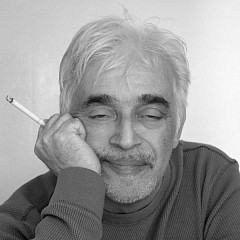
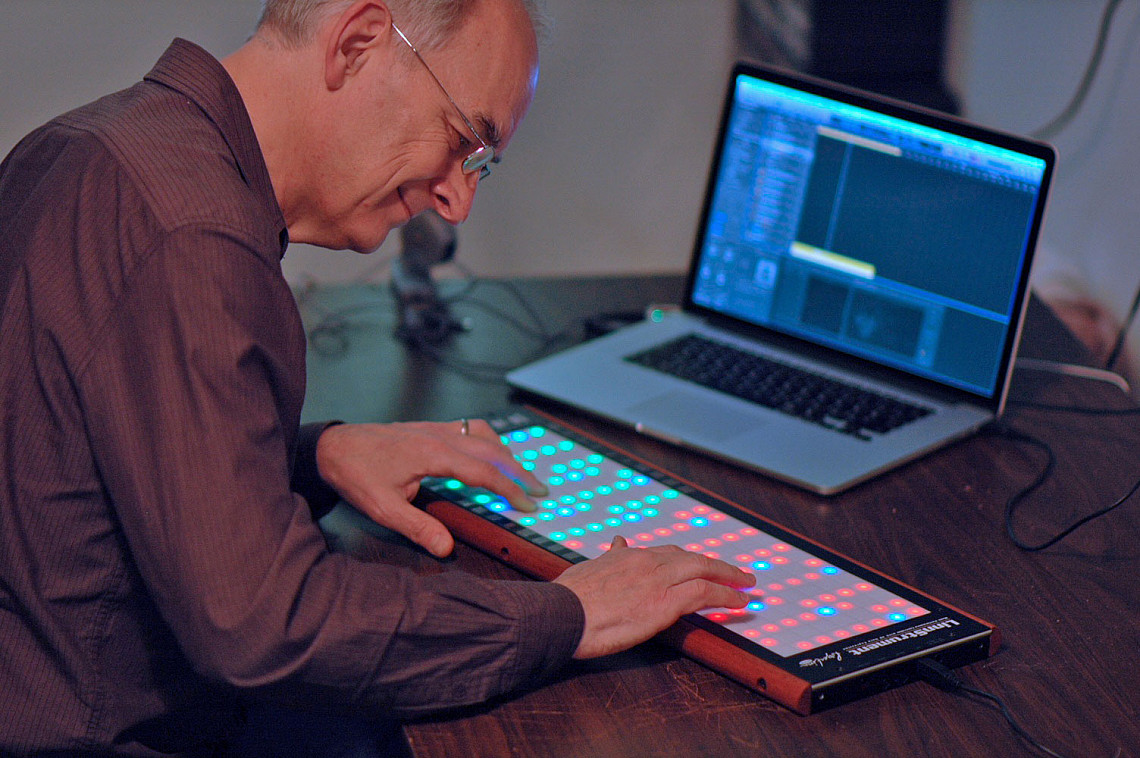
 Roger Linn with his new LinnStrument
A Linn Electronics LM-1, the first programable drum machine that sampled real instruments, is on display at Paisley Park. Introduced in 1980, Prince transmogrified those sounds into groundbreaking tracks like "When Doves Cry," "Little Red Corvette" and "1999." Roger Linn, in his early 20s when he designed it, had done time with Leon Russell as a touring guitarist and studio wizard, and had even co-written some songs, including "Promises," released by Eric Clapton in 1978.
Drum machines at the time were typically associated with home organs and generated synthetic sounds because sampling even a fraction of a second took lots of expensive computer power. While the big manufacturers waited for Moore's Law to kick in, Linn pushed forward, creating about 500 LM-1 units that sold for $5000 each, about the price of a Ford Escort. These 500 machines helped define the sound of the '80s. "Thriller," "Don't You Want Me," "Shock The Monkey," "Turn Your Love Around" - all used the LM-1.
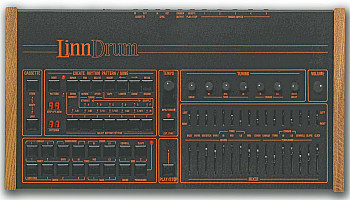
In 1982, Roger released a more affordable model, the LinnDrum, which was used on a new wave of hits: "Boys Of Summer," "Love Is A Battlefield," "Take On Me," "Radio Ga Ga," "Relax." The Linn 9000 followed in 1984 and the MPC60 in 1988. Here, he answers our questions about his remarkable creations, including his latest release, which might very well lead to the next evolution in music.
 Carl Wiser (Songfacts): How did songwriting and playing the guitar inform your work creating drum machines?
Roger Linn: It gave me an awareness of what results the musician wanted, as well as the need to keep it simple so it doesn't interrupt the creative process.
Songfacts: What musician used the LM-1 or Linndrum most effectively?
Roger: The most effective use was probably Jeff Porcaro's programming of LM-1 on "Nobody Wins" by Elton John. Few know it's a drum machine because of Jeff's extraordinary drumming skills.
Songfacts: What is the most creative use of a Linn on a popular song?
Roger: I liked what Prince did because he altered the sounds in creative ways.
Songfacts: What was Leon Russell's role in the evolution of the drum machine?
Roger: Before working with Leon, I had rejected drum machines as low-quality add-ons in home organs. Leon introduced me to the idea of using the primitive drum machines of the day in recordings, which kept the tempo steady and therefore permitted even the drummer's track to be replaced if needed. It sparked my interest in finding a solution to the problems of 1) the lack of programmability and 2) the poor sound quality.
Songfacts: What was the first song you heard that used the LM-1, and what was your reaction?
Roger: I don't recall which song was first, but the first Top 10 hit was "Don't You Want Me" by The Human League. It made me feel very good to hear it used on a hit.
In the early '90s, The MPC60 became the sequencer/sampler of choice for a number of pop and hip-hop producers. De La Soul, Dr. Dre and Wu-Tang Clan all put it to use, as did Jimmy Jam and Terry Lewis, who built many of Janet Jackson's hits with it.
The songwriter-producer Oliver Leiber had to create a hit in a hurry for Paula Abdul soon after he got one, so he used the two-bar bassline and drum pattern he put together to learn the machine on the track and created "Opposites Attract," which went to #1 with some help from an animated rapping feline.
The songwriter-producer Oliver Leiber had to create a hit in a hurry for Paula Abdul soon after he got one, so he used the two-bar bassline and drum pattern he put together to learn the machine on the track and created "Opposites Attract," which went to #1 with some help from an animated rapping feline.
Roger: I feel good any time an instrument that I created has an influence on music-making. The MPC was particularly influential on hip hop because of its emphasis on beats.
Songfacts: Why were the Linn sounds on those early Madonna records so effective?
Roger: I'd say the effectiveness was in the creativity by those who created the recordings. My drum machines were merely tools that enabled creative people to make better music.
Songfacts: Stevie Wonder owned at least two Linns and would sometimes sync them up. What songs best demonstrate his use of your creations, and how do you feel about how he used them?
Roger: He's a very creative guy and as I recall, he bought the second drum machine I ever made. I think he used my drum machine very well on "Part-Time Lover."
Songfacts: Did Steely Dan use your machines?
Roger: No. Their engineer Roger Nichols had created his own drum machine called Wendel, which played the drums on their hit "Hey Nineteen." By coincidence, Roger and I had both bought our first computers in around 1975 at a place called Computer Power and Light in Studio City, an area of Los Angeles. Wendel used that same computer and a early but high-quality digital audio interface, running a program he had written to enter simple looping beats on the screen. A very creative and talented guy.
A few years ago, Roger noticed that most EDM hits don't contain instrumental solos - the expression is all done with vocals. Much of this he attributed to the binary nature of electronic instruments, which led him to design the LinnStrument, a padded MIDI controller that senses finger movement. Sound On Sound called it "a really ingenious new instrument design."
Roger: Very well. There are now 1400 of them out in the hands of musicians worldwide. So far it's mostly the visionaries but others are gradually coming around to understand the futility of playing music with on/off switches, which is essentially what a MIDI keyboard is.
Songfacts: What are your thoughts on how Peter Gabriel and Phil Collins used the LM-1 in the early '80s?
Roger: Good thoughts indeed, and I appreciate their creative uses.
Songfacts: When you hear a song, can you always tell if one of your creations was part of it?
Roger: It was easier in the early '80s when my first drum machines shipped with fixed sounds. But once I added the ability to change sounds and later sample your own sounds, and people became better at programming, it became harder to tell.
Songfacts: How do you stay mentally, creatively and physically fit?
Roger: Regarding the first two, it is intrinsic to my personality that I value ideas. Regarding the third, I exercise.
February 16, 2018. Learn more at rogerlinndesign.com.
Here's a list of songs that used a LM-1 or LinnDrum.
More Songwriter Interviews