In the early 1980s, Squeeze singer-songwriters Chris Difford and Glenn Tilbrook were compared to John Lennon and Paul McCartney - great musicians with a vast collection of catchy pop songs: "Tempted," "Up the Junction," "Pulling Mussels (From the Shell)," "Cool For Cats" among them. Unlike the Beatles, Squeeze never hit it big in America, but flying under the radar has its advantages, as Tilbrook points out.
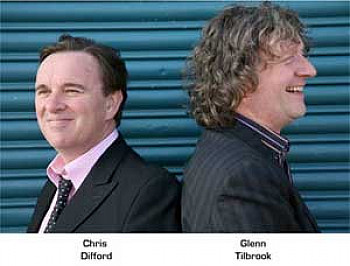 Glenn Tilbrook: In America, we've never been a top line act in terms of size. We've had our little bits and pieces in different markets, huge on the east coast, never big on the west coast. Nothing ever happened all at the same time. We've never had a record that really hit properly, so we never got to that level of the band. But I think people are much more familiar with us than they think they are. We play five tracks from our singles album and you'll probably know four of them. So in an odd way that gives us a longer span - there are still people discovering us all these years later. What's weird about coming back to Squeeze last year after an eight-year gap is the amount of young people coming to our shows now is incredible. A whole generation has discovered us. It means that what we did is still touching people in some way all this time later, it's a lovely feeling.
Carl Wiser (Songfacts): It must be nice to play these little theaters with great acoustics filled with people who are passionate about your music.
Songfacts: Chris, how do you feel about the "New Wave" label that I always read to describe Squeeze over here?
Chris Difford: It's silly. Very silly. The only Punk band I knew was Iggy Pop and I didn't really know what New Wave was, but it came and it went very quickly. It never really meant anything to me. I think we're more like The Monkees than a Punk band.
Glenn: Yeah, we came up at that time. It's not a label I would give to us. I think we could be called Pop music. And I think Pop music at its best can be truthful and funny and honest. Make you laugh. I grew up on Pop music.
Chris writes the lyrics, Glenn comes up with the music and usually handles lead vocals. Here, they talk about the songwriting process and finding their talents.
Chris: When I was at school, I had a really good English teacher. He looked at some of the poems I was writing on the back of my mathbook, and he thought they looked somewhat interesting. There's always the type of teacher that picks up on something when you're at school, and he did that. Then he brought in a Bob Dylan album, and I listened to that, and it kind of all made sense rather quick.Chris: You go into kind of moods and modes in your imagination that are normally dormant, and things just come up. Sometimes I sit down and kind of have a plot for what I'm going to work on, but most of the time it just sort of flows. For a lot of the writing that Glen and I did, there's no real rhyme or reason about how it actually came together. But it just comes through.
Songfacts: Glenn, do you come up with the music for all these songs before you look at Chris' lyrics?
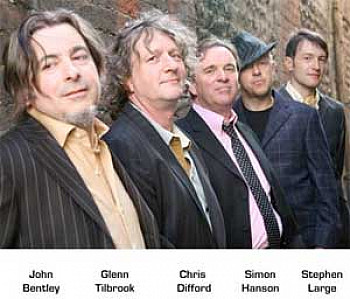 Glenn: No, it's always in response to the lyrics. I always write to Chris's lyrics. And what's more, I made a habit pretty early on of never reading lyrics he gave to me until I sat down with the guitar or piano. So first response is what interests me.
Songfacts: Chris, has there ever been a song where he's put music to your words, and you just say, "Oh, no, that's not going to work"?
Chris: Probably, but I can't think of any examples. 99% of the time I've been real thrilled to hear what the music is.
Songfacts: How many sets of lyrics does Glenn get to choose from?
Chris: 20 or 30.
Songfacts: Glenn, how do you decide which ones to turn into songs?
Glenn: It's a gut feeling what you like. If Chris gives me a lot of lyrics, I write songs for the ones that I like the most first. The ones that strike me first, that's what I write with.
Songfacts: What's one of the songs that came really quickly to you?
Glenn: "Up The Junction" happened pretty quickly, "Some Fantastic Place." My job is to present it in a way so you don't confuse any lines of the lyrics, and musically build something interesting around it.
Many Squeeze songs have some distinctly British lyrics, including just about everything in "Cool For Cats," which Chris sings in a heavy accent. We asked Glenn about how audiences relate to their songs.
Glenn: All my favorite songs are quite specifically about things, people, events, stuff that seemed quite close to the writer. So if I listen to Randy Newman's songs, I'm not from L.A., I can't relate to what he's thinking. But I get immersed in his world, and the things I don't know, or I can't understand, I fill in the blanks. I think that American people do that with our songs, too. You might not know what a line is, but you get a mental picture of the events in the song, and then build your own world for it. Just like reading books or listening to the radio, they're drawing pictures. And I think I love people that do that. It's something I always try to do. That is maybe our mission statement.Songfacts: Is it ever weird for you, singing somebody else's lyrics?
Glenn: No, never. It's a bit like playing cover songs - I don't feel like I don't like them, or I can't relate to them in some way.
Songfacts: The song "Pulling Mussels (From the Shell)," how did you guys come up with that one?
Chris: That was inspired during our holidays - my parents sent us for this sort of holiday camp. And by the Small Faces - an English band that wrote very English lyrics. Like a post card snapped image of holiday world, really. Holiday life.
Songfacts: That was a specific place that you went that kind of you pulled those images from?
Chris: Absolutely, yes. Margate. It was written in the back of the van going from one park a night to another.
Songfacts: Glenn, what did you think when you saw the lyrics for "Pulling Mussels"?
Glenn: Songs to me are like diary excerpts, as musically when I hear them, I go right back to where I was at that point. And at that point, I don't know whether you'd call it an apartment, but it was basically just one room and a kitchen. And from my first royalty check I bought a piano, I bought a mini Moog, I bought a 4-track recorder. And that was all I needed, I was happy. So I'd just stay in the middle of the night and write and write and write, and that was great for me. It was really good. I was also smoking a bit of weed at the time, so everything was very slow. But "Pulling Mussels" and "Another Nail For My Heart," which we wrote within days of each other, were really, really slow. (laughs)
Songfacts: Chris, even though it was a hit in America, you don't like "853-5937," do you?
Songfacts: Where did the number come from?
Chris: It was Glen's telephone number.
Songfacts: Glenn, how did you come up with your other American hit, "Hourglass"?
Glenn: Some songs, you think, "I'm gonna play an instrument," and see what happens with that. When I was about 7, I learned to play guitar. I started playing piano a year before that, and I'm not an accomplished pianist. And I'm not the world's best guitarist, either, but I'm better on guitar than I am on keyboards. But when I write, I swap between the two all the time. On "Hourglass," I got a thumping drum machine. So I thought it would be fun to feed a lot of chords into the drum machine and play it without the knowledge of what they were. The freedom of the knowledge of what they may do is actually very liberating. I think writing is always about tricking yourself into doing something different, and that's just one way you can trick yourself.
Songfacts: Chris, what's one of the more personal songs you've written?
Chris: "Some Fantastic Place" is an example of a very personal song. It's about a friend of mine and Glenn who died of cancer. But she was very responsible for Glenn and I sort of sticking together as friends since I was a kid.
Glenn: "Tempted," because it was a sort of breakthrough song for us, in spite of the fact that it was a hit. It was our first song. It was when we grew up, really, as a band. When we finished it I couldn't quite believe it was us.
Songfacts: Chris, the song "Take Me I'm Yours," how did you get the idea for that?
Chris: I was staying at my manager's house (Miles Copeland) and his mother was or is an archaeologist. And she'd worked a lot in Egypt where Miles went to school. She had pictures and matching ornaments from that part of the world, and it inspired that kind of lyric. But it changed into a very different song over the years.
Songfacts: One of the songs I think is interesting, because it doesn't really have a chorus, is "Up The Junction."
Chris: I remember when we recorded that I imagined it would never be a hit and we'd have to take it off the album. And the record company said that they disagreed, and it was that second #2 record, so they said if the manager was wrong he'd have to eat his heart... Not a very tasty thing to be doing.
Songfacts: Glenn, tell me about creating a song.
August 7, 2008. Learn more about Squeeze at squeezeofficial.com.
More Songwriter Interviews