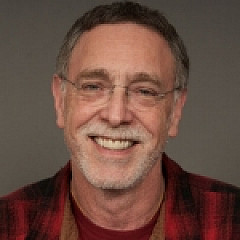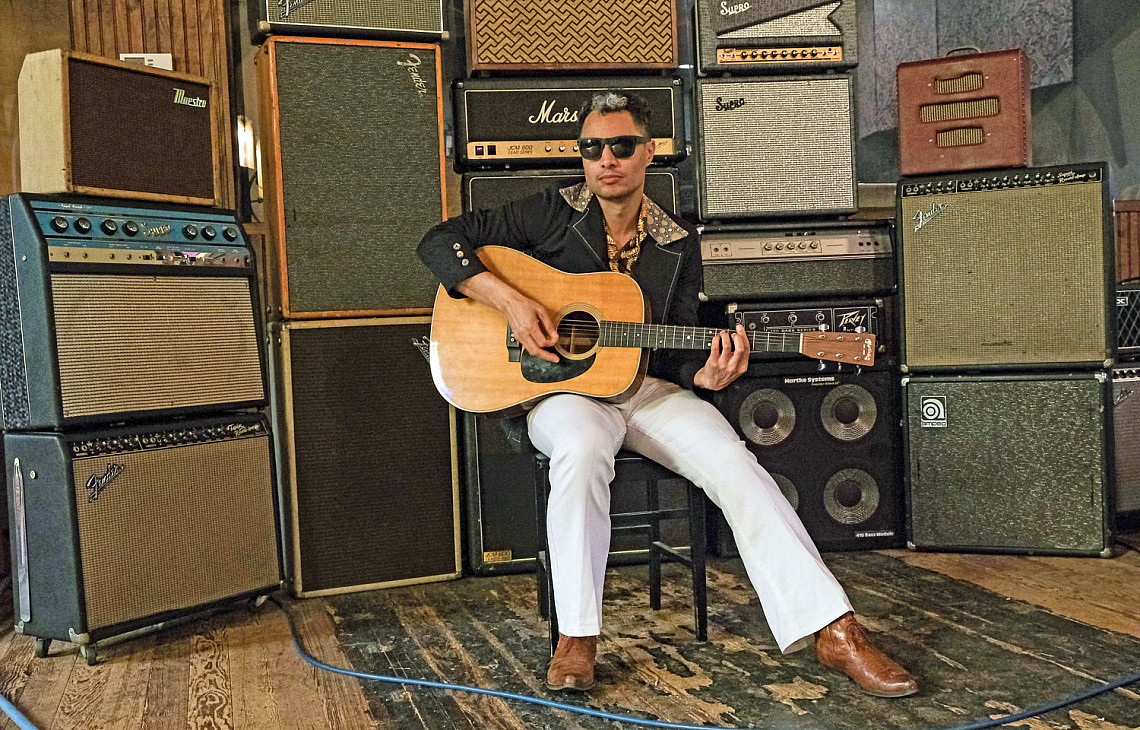
When José James needed a compact tagline to describe his ear-pleasing blend of jazz, soul, hip-hop, and R&B, he came up with this:
A jazz singer for the hip-hop generation
It worked. His debut album, The Dreamer (2008), made inroads in the jazz world and beyond, earning rave reviews along the way. Most of his songs are originals - standouts include "Trouble" (2013) and the jazzy bop "Saturday Night (Need You Now)" from his latest album, 1978 - but he's also known for putting his unique spin on classic songs. His take on the Gershwin classic "They Can't Take That Away From Me" is a standout from the Fifty Shades Darker soundtrack, and in 2018 he paid tribute to Bill Withers with an album of covers called Lean On Me.
In this discussion, James tells the stories behind some of his defining songs and takes us through his creative process, which includes a blend of poetic expression and beatmaking. One of his tricks is listening to different types of music and singling out something he likes in each song. Another is recording in analog to give it some heft, like how taking a photo with a film camera will put you in a different mindset.
A jazz singer for the hip-hop generation
It worked. His debut album, The Dreamer (2008), made inroads in the jazz world and beyond, earning rave reviews along the way. Most of his songs are originals - standouts include "Trouble" (2013) and the jazzy bop "Saturday Night (Need You Now)" from his latest album, 1978 - but he's also known for putting his unique spin on classic songs. His take on the Gershwin classic "They Can't Take That Away From Me" is a standout from the Fifty Shades Darker soundtrack, and in 2018 he paid tribute to Bill Withers with an album of covers called Lean On Me.
In this discussion, James tells the stories behind some of his defining songs and takes us through his creative process, which includes a blend of poetic expression and beatmaking. One of his tricks is listening to different types of music and singling out something he likes in each song. Another is recording in analog to give it some heft, like how taking a photo with a film camera will put you in a different mindset.
A Jazz Singer For The Hip-Hop Generation
That was something brilliant and catchy that I came up with on my first album. I quickly learned that if you don't shape the conversation around yourself as an artist, then other people will do it for you.I don't know where that came from, but it made sense, and it's something I grew into over the years. You know, me and Robert Glasper, Christian Scott (aTunde Adjuah) - our generation, I think, is the first generation to grow up listening to jazz through the lens of hip-hop. In Rakim samples, Prince Paul samples, Q-Tip, all of these hip-hop producers were sampling jazz and soul records, so the first time I heard jazz, it was through Cypress Hill or Digable Planets or something like that, so I've always looked at jazz as this mutable, expandable, and very current thing. Even if you're going back to Louis Armstrong, I'm always trying to find a way to make it feel like today.
His New Single "Dark Side Of The Sun"
I've been producing a lot of tracks at home with Ableton, making beats and trying to connect my songwriting side to my contemporary production side. I downloaded a bunch of J Dilla's drum sample packs and just started making all these beats. And I'm fascinated by North African sounds and hand claps - I did a collaboration in 2013 with Hindi Zahra, who is a French-Moroccan singer. We did a song called "Sword + Gun" - an updated version of that.Lyrically, it's about this idea of the sun being all life-giving, all light-giving in our universe, but if you get too close to it, it pulls you in and it consumes everything. And for me, Black people historically in Western society have always been giving to society without reaping the benefits. So it's this idea of living in the dark side of the sun.
Once I found that idea, that poetic idea, it opened up a lot of concepts for me. I'm a Gen Xer, so fame is always something that we look at. We're skeptical of it.
And just the challenge of living as a creative person in this digital moment, this digital global society where we're more connected and we're also more disconnected at the same time.
Songwriting And Creative Process
Typically, I get an idea on my iPhone and I make a little voice memo. Often I get an idea and I'll beatbox and sing the bassline at the same time. I get a lot of little quick ideas that are little cells that later I take to the piano or to the guitar and turn into a song. And then once it's a song I'll go back to Ableton, sit down with some analog synths and maybe with my Push, which is a beatmaking instrument, and create a whole demo. Then I give that to the band in the studio.So there are about five different stages of getting to the final version of the song. I really have to love it to get to that point.
And I still love analog recording. I still love having to pay a lot of money to go into a really nice room to capture something, because it puts a pressure on me as a performer, and I really have to believe in the song as a songwriter as well.
Incorporating Different Styles Into His Music
I do a lot of listening. I listen to a lot of old and new music at the same time. I'm always trying to find something that I like. A good friend of mine helped me get into this concept of listening for something you like in every style of music, whether it's just the snare sound or the vocal production.Even if it's a genre that maybe is not my favorite, I'm always trying to find a way into music, and that's been incredibly helpful. Sometimes I'll pull a snare sound from a James Taylor record that I really love, or a J Dilla beat, or a certain style from Joni Mitchell. Really, it comes from anywhere.
All of the artists that I admire - Miles Davis or what have you - they really listen to a lot of different sources and try to get that together. I'm really a writer at heart - literature was my first love. Writers are always looking at the world, and at society, and pulling from different sources.
I don't really believe in genre. I don't believe in time. I think that everything is sort of happening at the same time on some cosmic level, so it's all just an expression of the human heart, and if you can find the best way to do that, that's the key.
Artists And Movements That Influenced James
I've had huge touchstone moments. I grew up in the golden age of hip-hop, so A Tribe Called Quest, Digable Planets, they were huge. De La Soul, huge influences.That moment of rap was so diverse. They were pulling from all kinds of sources for the beats, and what they were talking about was very abstract. The storytelling was a very high level. When I got into jazz, it was dominated by Billie Holiday and John Coltrane and Miles Davis. They all had a very unique voice. When I think of any of those artists, it's not just their music and their instrument, it's this whole vibe. You put on Kind Of Blue [Miles Davis album], you put on A Love Supreme [John Coltrane album], you put on anything by Billie Holiday, and it just brings you right into this emotional space, and that was very interesting to me.
Outside of that, Marvin Gaye is my go-to for everything else. He really combines this incredible male vulnerability that I find fascinating and lacking in a lot of R&B today. And he also encompasses doo-wop, rhythm and blues, jazz and funk. He's the master to me.
Adapting To Changing Music Industry
Starting my own record label has been the best way to keep creative control and also be nimble. When I was with Blue Note and EMI and then Universal, it was great to have the major label support, but I realized that sometimes it's better to be on the speedboat than an ocean liner. Changes happen so quickly now, and it's important for the business side or the label side to align with the vision of the artist.I go through periods where, like right now, I'm highly creative and I want to release a lot of music really quickly, put out a lot of singles, put out an album, keep going, and there is frustration sometimes when you're on someone else's schedule and they're like, "We just can't release it. You have to wait two years." So it's been incredible to be under the vision of Talia Billig, who's the president of Rainbow Blonde and my creative partner. She just completely gets me as an artist. When I say I want to do a tribute to Erykah Badu this year, she's like, "Great, let's do it." There's never any barrier to getting it out worldwide and at the highest level artistically possible, which is very rare. I'm very lucky.
Prince was a huge influence, and I should shout him out because I'm from Minneapolis and he always talked about artists, songwriters owning your publishing and your masters. It's taken a long time, but I think musicians are finally now understanding what he meant and saying, "I'm going to take steps to control my work forever," which is cool.
For so long, we've been taught that you just write the songs, go on tour, look cool, put on your glasses and your leather jacket, drink the champagne and go around the world and we'll handle the rest. Then you see a lot of people in their twilight years with no control over their masters or their publishing or their image, and broke. Is fame worth that, or is it better to put your nose to the grindstone and talk to your accountant a couple of times to see what's really going on? It's not as glamorous, but it's more important.
Making A Connection To Audience At Live Shows
After the pandemic I did a lot of soul-searching about why I perform, why I create, and I really wanted to double down on this idea of, We're not doing it for ourselves, we're doing it for others. We're doing it to uplift. We're doing it for society. We're doing it to create a healing space.After reading about a lot of violent things happening at concerts over the past six years or so, I really wanted to focus on consciously creating a safe space at my concerts. Physically safe, but also emotionally safe. You know, some of the best moments I've had as a listener or a viewer at concerts or dance shows came when the artist or the leader has created this incredible space where I felt free to feel my feelings. I saw Bill T. Jones in New York and it was life-changing. I had never seen modern dance before, and those lessons stuck with me because a lot of my audience is new to jazz, new to R&B. Sometimes it's their first concert ever, and that is such a sacred honor to create that space.
My first concert ever was Michael Jackson - the Bad Tour. And I'll never forget, there was a moment where he threw his hat out at the end of "Smooth Criminal," and every single person in the stadium stood up, including me, and reached for the hat instinctively. It was such a cool, beautiful lesson in how music can really unite us regardless of age or race or politics. So I try to really set the stage, bring the musicians who I know are going to be the most sensitive and then take the audience on a journey. And I rarely use a setlist because I try to feel where people are with me and then go on a journey together.
Seeing Michael Jackson For First Concert
It was all downhill from there, you know what I mean? The thing that's cool about Michael - and I don't think he gets enough credit for it - is he was pretty genre-less himself. When you look at Thriller and Bad, there's so much rock in there, so much funk, R&B, pop. There's all kinds of stuff. And he was doing covers. He was doing "Come Together." That is the first time I heard that song, and it planted a lot of seeds in my mind. I do a lot of covers myself, and sometimes that's the first time people have heard Bill Withers or Erykah Badu or Billie Holiday.What I love about an artist like Michael or Beyoncé or Taylor Swift, any of these high-level pop artists, they never underestimate their audience. They give them everything. They give you the highest level of artistry, and I really respect that. That's what I got from Michael. He's like, if I'm not going to get you with this great band, I'm going to get you with these great vocals, or I'm going to get you with this outfit, or I'm going to get you with these dance moves. I'm going to get you one way or another, and I'm going to take you somewhere you've never been before.
I like the idea of this kind of magic in our society that still exists where you can open a book or go to a concert and at the end of that experience, you're a different person. You've learned something, you've gone through some kind of passageway. That's what I got from Michael. I saw Michael Jackson and I was like, "I'm a performer." I was 8, and it was like, "Well, that's what I do." You could spend decades of therapy and college education trying to get that idea implanted into somebody's head, but when I saw Michael, I was like, "Yeah, that's it."
Collaborations
What I value most is honesty. I've done a lot of collaborations over the years and I think when both sides are acknowledging that we're going to create something that's different, something that we can't do alone and maybe a bit more unusual for each of us, that's when the best things happen. For example, when I collaborated with Hindi Zahra, I went to Paris with no band, nothing, just a little song idea - which she hated by the way - and we literally created that song from scratch with no band. We recorded all the parts.That was my first real lesson in true collaboration. We're just two people coming together, having a conversation, seeing what happens. What I look for now is something that's going to challenge me and maybe expand my idea of what creativity is. This is my 12th album, and I think it's really easy to start to coast around this moment mid-career. I want to keep pushing and staying creative, finding something new.
When you collaborate with somebody, they have this wealth of experience and knowledge, and if you can tap into that and give of yourself to it, it works both ways. Sometimes artists, we get in our heads and we feel like we don't have anything to offer, or we look at the accolades of another artist and think they're so much cooler or better or they've done this, or they've won this Grammy or whatever. So it's really refreshing sometimes to just sit down together at a piano and say, "How are you feeling today?" And start from there.
How Personal Experiences Shape José's Songs
I straddle many, many worlds and I feel like I don't fully belong in any of them. My mom is 10th generation Irish American, Irish Catholic, and my dad is Afro-Panamanian via Panama, born and raised in Panama.I'm from the Midwest as well, from a city that most Americans that I've met don't know where it is. If I say Prince, then they're like, "Oh yeah, that's where Prince is from," but they don't know where Minneapolis actually is, in my experience.
So it's kind of a strange identity. I've also lived in London, Amsterdam, and now I live in Pasadena. I lived in New York for most of my adult life. So, I've had a lot of diverse experiences, and depending on my hairstyle or what I'm wearing, I'm often perceived as many different cultures: Puerto Rican, Panamanian, Moroccan, what have you. Until I open my mouth, everyone thinks I'm Brazilian. I probably would have been a great spy in another life.
But when, for example, the George Floyd tragedy happened, I could see both sides of the scenario. I largely grew up in a white neighborhood but being Black, so I've been able to have empathy for all levels of society, which is pretty rare. And it's pretty needed. I don't think there are any answers, other than personal revelations of identity. What I've come to for myself is that identity is what you claim, what you feel, and that's been really empowering.
José's Best Song Most People Don't Know About
I would say "While You Were Sleeping." That one is probably the song I'm proudest of as a songwriter. At the time it was definitely my most personal. Lyrically, harmonically, I love that song and I also produced it.The arc of it - it's crazy, nine-minutes long or something, and it's all recorded live. It's the best of my talents as a bandleader, as a producer, a songwriter and performer, but I think it was a little bit too heavy for people at the time. They were expecting a party follow-up album and I was not in that space.
Advice For Aspiring Musicians
I heard this a lot as a young artist, and it really actually pissed me off so I'm going to add that caveat, but "Your time will come." That could be incredibly frustrating at moments, certainly in this very youth-focused, youth-oriented TikTok moment. But when I look at the history of the music business, I see Bill Withers getting his first record deal at a very mature age. I see John Coltrane not being discovered as a solo artist until very late in his career. Sharon Jones... there's no rhyme or reason to it, and that can be frustrating, but also empowering. The longer you work on your sound, your ideas and your craft, when it gets discovered you'll have something to say.On the other end of it, sometimes artists get discovered too soon and then they're not ready for the moment and all the scrutiny. And when that door opens, you can't close it. You can't put the genie back in the bottle. It's hard to know that it's a marathon because everyone will tell you it's a sprint, but it's a marathon, regardless of genre. When you look at people like Beck or Slash or Joni Mitchell or Herbie Hancock - people who have been in the industry for so long and they've gone through so many different changes and styles - you start to realize it doesn't really matter when you get discovered, it just matters that you're ready when you do get discovered and that you can stay in it and stay creative and stay positive. So I think that's the best advice.
April 25, 2024
Subscribe to the Songfacts podcast, part of the Pantheon Network
More from José at josejamesmusic.com
Here's our classic interview with Bill Withers
Photos: Janette Beckman
More Songfacts Podcast