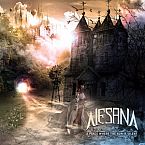

Circle VII: Sins of the Lion

Album: A Place Where The Sun Is Silent (2011)
Play Video

Songfacts®:

  • This is a track from the North Carolina post hardcore band Alesana's fourth album, A Place Where The Sun Is Silent. The LP is a sonic interpretation of Dante Alighieri's 14th century poem Inferno, which itself is the first part of his epic work The Divine Comedy.
  • At 62 minutes, the album is the band's longest to date. Vocalist-guitarist Shawn Milke told Noisecreep that this was because they had a lot to say. He explained: "We did and we had the characters on the record to write to, so the story is what it is – we were not about to mess around with Dante's Inferno, [laughs]. As far as squeezing a lot of music onto an album, the eye opener for me was the album Colors by Between the Buried and Me. It was more than an hour long, which was such a bold thing to do. I remember hearing that and thinking, don't ever compromise your music just because of length. Do what's right for the music. That's an amazing record that really changed how I look at things."
  • Dante Alighieri (1265-1321) was an Italian poet from Florence. The Divine Comedy, an imaginary journey through Hell, Purgatory and Paradise, is generally considered the greatest poem of the Middle Ages. Written by Dante in the Tuscany dialect, it was only completed a few months before his death. So successful was Dante's work that the Tuscany dialect became the standard language of Italy.
  • The Divine Comedy was written in the style of terza rima, an Italian verse form in triplets which the Roman poet Virgil used. (Virgil was Dante's fictional guide during his journey through Hell). For the poetry buffs amongst you, this meant it was written in lines of 11 syllables, the second line rhymed with the first and third line of the succeeding triplet and in the last there was an extra line rhyming with it's second. Basically, it rhymed A-B-A, B-C-B, C-D-C, D-E-D.
  • Dante's Inferno comprises the first movement of The Divine Comedy and describes the nine circles of the hell where the sins and punishments get worse the further down you go. This song describes the seventh circle. The nine circles are:
    (1) Limbo (for the unbaptised).
    (2) The lustful.
    (3) The gluttons.
    (4) The avaricious.
    (5) The wrathful & the sullen.
    (6) The heretics.
    (7) The violent and bestial, the sins of the lion. This circle is divided into three parts: Violence against Others . Violence against Self. Violence against God, Nature, Art.
    (8) The fraudulent.
    (9) The treacherous..
    At the bottom of circle 9 is Lucifer. Dante writes that the Devil has three faces and with his sidemouths he is chomping on Caesar's assassins, Brutus and Cassius, and with his central mouth, Judas the betrayer of Christ.
  • Other songs that reference Dante's Divine Comedy include "Pyramid Song" by Radiohead and "Roll Right" by Rage Against The Machine. Also Christian rockers Red have cited Dante's epic work as an influence on the concept of their Innocence and Instinct album.

Comments

Be the first to comment...

Editor's Picks

Wedding Bell Blues

Wedding Bell BluesSong Writing

When a song describes a wedding, it's rarely something to celebrate - with one big exception.

Judas Priest

Judas PriestSongwriter Interviews

Rob Halford, Richie Faulkner and Glenn Tipton talk twin guitar harmonies and explain how they create songs in Judas Priest.

Billy Joe Shaver

Billy Joe ShaverSongwriter Interviews

The outlaw country icon talks about the spiritual element of his songwriting and his Bob Dylan mention.

John Kay of Steppenwolf

John Kay of SteppenwolfSongwriter Interviews

Steppenwolf frontman John Kay talks about "Magic Carpet Ride," "Born To Be Wild," and what he values more than awards and accolades.

Pam Tillis

Pam TillisSongwriter Interviews

The country sweetheart opines about the demands of touring and talks about writing songs with her famous father.

Glen Burtnik

Glen BurtnikSongwriter Interviews

On Glen's résumé: hit songwriter, Facebook dominator, and member of Styx.