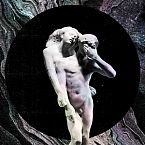

Here Comes the Night Time

Album: Reflektor (2013)
Play Video

Songfacts®:

  • This sonically schizophrenic song features propulsive percussion and festive horns gleaned from Haiti. Arcade Fire multi instrumentalist and co-vocalist Régine Chassagne has roots in the Caribbean country as her Haitian parents immigrated to Canada during the tyrannical dictatorship of Papa Doc. The band has traveled there on several occasions in recent years, including a trip to Haiti's Carnival in Jacmel.
  • Three percussionists from the Haitian band RAM lent a hand to this floor-filler. Chassagne, and Will and Win Butler spent two weeks in New Orleans with the drummers working specifically on rhythm. "We just recorded beats," Chassagne told The Guardian. "We were interested in doing hybrid beats that could translate stuff that I know from my family background in Haiti. I was always interested to try to find rhythms that mean something, to communicate emotion through rhythm and music. Because rhythm is almost like a vocabulary."
  • The song is reprised at the beginning of the record's Side B with an alternative version titled "Here Comes the Night Time II."
  • This is one of several songs on Reflektor inspired by the band's time spent in Haiti. Frontman Win Butler told The Sun: "We spent a lot of time in Haiti, an island a lot of people don't get to see. So we wanted to bring Haiti to the people. And the Haitians know how to party. We have a lot to learn, that's for sure."
  • The song starts with Butler singing:

    "When the sun goes down
    When the sun goes down, you head inside
    Cause the lights don't work."

    He explained in an interview with Macleans magazine: "There's a crazy energy in Port-au-Prince when the sun goes down, because there is no electricity in a lot of the city. A lot of parts of the city are pretty dangerous, and people are rushing around trying to get home."
  • The song finds Win Butler criticizing Christian missionaries, whom he believes shouldn't be attempting to convert Haitians from their own beliefs. The Arcade Fire frontman explained to Rolling Stone that he was thinking about, "Just the absurdity that you can go to a place like Haiti and teach people something about God. Like, the opposite really seems to be true, in my experience. I've never been to a place with more belief and more knowledge of God."
  • Win Butler described the song to Rolling Stone as "kind of a hybrid of Haitian Rara and Jamaican influence." He added: "We spent some time in Jamaica, but it sounds like a Cure song at the end of the day, kind of a mashup. I mean, it's not like our band trying to play Haitian music. I just felt like we were opened up to a new influence. Bob Marley probably felt the same way the first time he heard Curtis Mayfield."

Comments

Be the first to comment...

Editor's Picks

Pam Tillis

Pam TillisSongwriter Interviews

The country sweetheart opines about the demands of touring and talks about writing songs with her famous father.

Concert Disasters

Concert DisastersFact or Fiction

Ozzy biting a dove? Alice Cooper causing mayhem with a chicken? Creed so bad they were sued? See if you can spot the real concert mishaps.

Jimmy Webb

Jimmy WebbSongwriter Interviews

Webb talks about his classic songs "By the Time I Get to Phoenix," "Wichita Lineman" and "MacArthur Park."

Julian Lennon

Julian LennonSongwriter Interviews

Julian tells the stories behind his hits "Valotte" and "Too Late for Goodbyes," and fills us in on his many non-musical pursuits. Also: what MTV meant to his career.

Scott Gorham of Thin Lizzy and Black Star Riders

Scott Gorham of Thin Lizzy and Black Star RidersSongwriter Interviews

Writing with Phil Lynott, Scott saw their ill-fated frontman move to a darker place in his life and lyrics.

Amy Lee of Evanescence

Amy Lee of EvanescenceSongwriter Interviews

The Evanescence frontwoman on the songs that have shifted meaning and her foray into kids' music.