My Father's Song

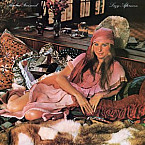
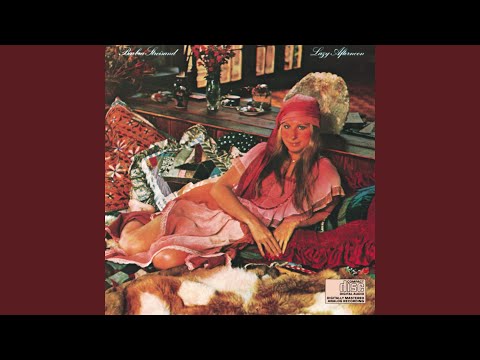
Album: Lazy Afternoon (1975)
Play Video

Songfacts®:

  • Barbra Streisand grew up without knowing her father, who died of complications related to an epileptic seizure when she was barely a year old. In this sentimental ballad from her 17th studio album, she sings about a father who gives her love and guidance, leaving behind wise words to carry her through her life.
  • This was written by Rupert Holmes, who was an up-and-coming songwriter that Streisand contacted after enjoying his debut album, Widescreen. She asked for permission to record songs from it, and even invited Holmes and his producer Jeffrey Lesser to produce Lazy Afternoon, an album mainly focused on pop standards. During their first meeting, Streisand confessed her feelings about growing up without her father and Holmes wrote "My Father's Song" for her.

    "I remember... writing this song and trying to put in it everything that a daughter might want to hear her father say to her. Basically, this predated that slogan 'unconditional love," Holmes told Barbra Archives founder Matt Howe in a 2017 interview.

    "I was just trying to say what would it be like if you grew up and your father basically said to you - and this would go for a son as well as a daughter - look, you may be a marine biologist, or you may work at a checkout counter, or maybe you'll be a political activist for a cause I'm not in favor of, maybe you'll be some kind of religious cleric. And you know what, if that's what you're destined to be, I embrace that and I support you. I feel like Barbra had to supply that for herself as she grew up."
  • The album's lead single, this peaked at #11 on the Adult Contemporary chart. It was her ninth Top 20 hit on the tally.
  • Lazy Afternoon was a return to form for Streisand, who strayed into reggae ("Guava Jelly") and rock ("Life On Mars?") on her previous studio album, ButterFly (1974), which was produced by her then-boyfriend Jon Peters. The endeavor proved unsuccessful, with most critics blaming the inexperienced Peters for its shortcomings. Not long after, he found his wheelhouse in film, producing the hit 1976 remake of A Star Is Born, starring Streisand and Kris Kristofferson.
  • While it fared better critically, this album performed about the same commercially as ButterFly, earning a Gold certification for 500,000 copies sold in the US and going to #12 on the albums chart (ButterFly peaked at #13).
  • Holmes also wrote the songs "Queen Bee" and "Everything" for the A Star Is Born soundtrack, which was a huge hit, dominating the US albums chart for six weeks and also going to #1 in the UK. His association with Streisand launched his career and he became an in-demand producer and composer for the likes of Lynsey de Paul, Barry Manilow, and Dionne Warwick. He also had his own chart-topping hit in 1979 with "Escape (The Piña Colada Song)."

Comments

Be the first to comment...

Editor's Picks

John Waite

John WaiteSongwriter Interviews

"Missing You" was a spontaneous outpouring of emotion triggered by a phone call. John tells that story and explains what MTV meant to his career.

Charlie Daniels

Charlie DanielsSongwriter Interviews

Charlie discusses the songs that made him a Southern Rock icon, and settles the Devil vs. Johnny argument once and for all.

Barry Dean ("Pontoon," "Diamond Rings And Old Barstools")

Barry Dean ("Pontoon," "Diamond Rings And Old Barstools")Songwriter Interviews

A top country songwriter, Barry talks about writing hits for Little Big Town, Tim McGraw and Jason Aldean.

Director Nick Morris ("The Final Countdown")

Director Nick Morris ("The Final Countdown")Song Writing

Nick made some of the biggest videos on MTV, including "The Final Countdown," "Heaven" and "Don't Know What You Got (Till It's Gone)."

John Kay of Steppenwolf

John Kay of SteppenwolfSongwriter Interviews

Steppenwolf frontman John Kay talks about "Magic Carpet Ride," "Born To Be Wild," and what he values more than awards and accolades.

Supertramp founder Roger Hodgson

Supertramp founder Roger HodgsonSongwriter Interviews

Roger tells the stories behind some of his biggest hits, including "Give a Little Bit," "Take the Long Way Home" and "The Logical Song."