
Shake Your Rump

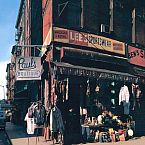
Album: Paul's Boutique (1989)
Play Video

Songfacts®:

  • Beastie Boys enter the booty songs genre with "Shake Your Rump," which is built on a melange of samples, mostly bits of bass-heavy funk. The opening drum break comes from a 1974 song called "Funky Snakefoot" by Alphonse Mouzon; the "That's The Joint" line is from a song that influenced Beastie Boys' style: "That's the Joint" by Funky 4 + 1. The lyrics are very playful, with the group trading lines about themselves and their cultural landmarks, like the TV shows The Flintstones ("Like Fred Flintstone, driving around with bald feet") and The Brady Bunch ("I'm like Sam the butcher bringing Alice the meat").
  • Beastie Boys struck gold with their first album, Licensed to Ill, in 1986. Actually, that doesn't do it justice - the album went 10x Platinum, selling over 10 million copies. But soon after, they had a falling out with their label, Def Jam, whose co-owner Rick Rubin was also their producer. They left Def Jam, took some time off, and signed with Capitol, which released their second album, Paul's Boutique, with "Shake Your Rump" on the tracklist. By the time the album was released, Capitol had changed management, and the new brass wasn't as excited about the Beastie Boys - the group claims the label was more enamored with Donny Osmond and steered their promotion budget to him.

    It was a rough start and it hampered album sales, but Paul's Boutique aged well, marking an era when sampling was a free-for-all and the Beastie Boys were finding new ways to exploit it. Their relationship with Capitol got a lot better; they stayed on the label for the rest of their run.
  • Group member Adam Yauch (MCA) directed most of the group's videos, including this one, a low-budget production shot mostly with a fisheye lens. It was typical of their DIY-style videos from their early era that went over well on MTV.
  • The Dust Brothers produced this and all the other tracks from the album along with their friend Matt Dike, whose house had a studio where they made the demos. The Beastie Boys met them when they moved from New York to Los Angeles and loved what they had to offer. By switching producers after their first album, they kept their sound fresh. The Dust Brothers went on to produce Beck's 1996 Odelay album.
  • Yes, that is the sound of bong water at the 2-minute mark. The Beastie Boys wasted a lot of time recording the album at The Record Plant, a very expensive studio in Los Angeles where the Eagles made Hotel California. They thought it would be hilarious to record an actual bong hit there and insert it into a song, so they did.
  • "Shake Your Rump" wasn't released as a single, but it was one of the most popular live songs for the group, who included it in most of their setlists.
  • The voice that says, "Is your name Michael Diamond?" is a messenger who came to the studio to deliver a cash advance.

Comments: 1

  • Moosehead from Scincrebible. this entire album has no skippable songs. each is a classic. get me a fleetwood!
see more comments

Editor's Picks

Facebook, Bromance and Email - The First Songs To Use New Words

Facebook, Bromance and Email - The First Songs To Use New WordsSong Writing

Where words like "email," "thirsty," "Twitter" and "gangsta" first showed up in songs, and which songs popularized them.

Stand By Me: The Perfect Song-Movie Combination

Stand By Me: The Perfect Song-Movie CombinationSong Writing

In 1986, a Stephen King novella was made into a movie, with a classic song serving as title, soundtrack and tone.

Adele

AdeleFact or Fiction

Despite her reticent personality, Adele's life and music are filled with intrigue. See if you can spot the true tales.

Ian Anderson: "The delight in making music is that you don't have a formula"

Ian Anderson: "The delight in making music is that you don't have a formula"Songwriter Interviews

Ian talks about his 3 or 4 blatant attempts to write a pop song, and also the ones he most connected with, including "Locomotive Breath."

John Lee Hooker

John Lee HookerSongwriter Interviews

Into the vaults for Bruce Pollock's 1984 conversation with the esteemed bluesman. Hooker talks about transforming a Tony Bennett classic and why you don't have to be sad and lonely to write the blues.

Al Jourgensen of Ministry

Al Jourgensen of MinistrySongwriter Interviews

In the name of song explanation, Al talks about scoring heroin for William Burroughs, and that's not even the most shocking story in this one.