Until The Night

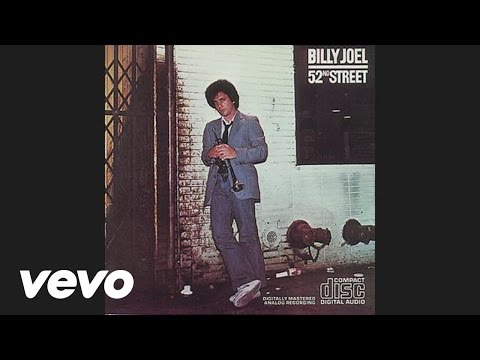
Album: 52nd Street (1978)
Charted: 50
Play Video

Songfacts®:

  • Five years before Billy Joel's affection for '60s doo-wop and soul music culminated in the concept album An Innocent Man, his old-school influences were on display in the slow-building ballad "Until The Night." As the singer yearns to find refuge in his lover's arms after a long day, the music soars with his growing anticipation. He's joined by his own multi-tracked baritone-tenor vocals, mimicking the contrasting harmonies of The Righteous Brothers, and layered instrumentation reminiscent of Phil Spector's classic productions, including swelling strings, acoustic guitars, Latin-flavored castanets, and a blasting sax solo from Joel regular Richie Cannata.
  • Although this wasn't released as a single in the US, it was the album's second single in the UK, where it peaked at #50.
  • Bill Medley of The Righteous Brothers recorded this for his 1980 album, Sweet Thunder.
  • In 2016, Joel readily admitted to SiriusXM that he poaches other artists' styles. "I'm not a stylist - not a big fan of my own voice, never have been. I'm a songwriter," he clarified, "which means I can imagine any voice doing something that I write."

    On this song, he was conjuring the voices from The Righteous Brothers' 1964 hit "You've Lost That Lovin' Feelin'." He explained: "I was actually trying to do Bill Medley and Bobby Hatfield's voice, the bass voice and the tenor voice, and combine them into this big, gigantic chorus. It's almost Wagnerian - it's just this big, operatic chorus that just beats you over the head."
  • Like Joel's previous album, The Stranger, 52nd Street was produced by Phil Ramone. In his 2007 book, Making Records: The Scenes Behind The Music, Ramone said he noticed Joel's quirk of mimicking other singers' voices within their first few sessions together. Instead of singing his own songs, he would always warm up by doing impersonations of other artists.

    "It was odd: Here I was trying to get Billy Joel to sound like Billy Joel, while he was trying to sound like anyone but. I was curious, and it took two albums before I had the nerve to ask, 'When are you going to just come in and sing like Billy Joel?'" Ramone recalled.

    "What I learned was that singing in different styles not only helped Billy warm up before a concert or session; it helped him break through his shyness and fear, too."

Comments

Be the first to comment...

Editor's Picks

Angelo Moore of Fishbone

Angelo Moore of FishboneSongwriter Interviews

Fishbone has always enjoyed much more acclaim than popularity - Angelo might know why.

Alan Merrill of The Arrows

Alan Merrill of The ArrowsSongwriter Interviews

In her days with The Runaways, Joan Jett saw The Arrows perform "I Love Rock And Roll," which Alan Merrill co-wrote - that story and much more from this glam rock pioneer.

Rob Thomas of Matchbox Twenty

Rob Thomas of Matchbox TwentySongwriter Interviews

Rob Thomas on his Social Distance Sessions, co-starring with a camel, and his friendship with Carlos Santana.

Rufus Wainwright

Rufus WainwrightSongwriter Interviews

Rufus Wainwright on "Hallelujah," his album Unfollow The Rules, and getting into his "lyric trance" on 12-hour walks.

Classic Metal

Classic MetalFact or Fiction

Ozzy, Guns N' Roses, Judas Priest and even Michael Bolton show up in this Classic Metal quiz.

Ian Anderson: "The delight in making music is that you don't have a formula"

Ian Anderson: "The delight in making music is that you don't have a formula"Songwriter Interviews

Ian talks about his 3 or 4 blatant attempts to write a pop song, and also the ones he most connected with, including "Locomotive Breath."