Dark Was The Night, Cold Was The Ground

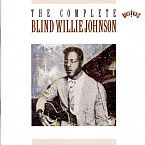
Album: The Complete Blind Willie Johnson (1927)
Play Video

Songfacts®:

  • This song of wordless sorrow is embedded in the marrow of American history. It's also floating through outer space (literally).

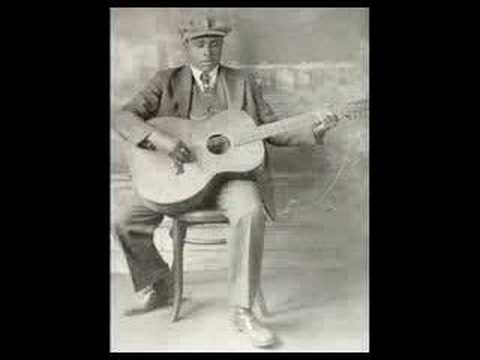
    Unlike some other "blind" bluesmen, Blind Willie Johnson actually was blind in the literal sense - his mother threw lye in his face when he was seven years old, lashing out against his father's infidelities. Johnson was blind from that day forward, but he kept strong to his conviction that he was meant to be a preacher and to sing gospel blues, vocations he'd already decided upon.

    Later, Johnson made money by busking on the streets of Marlin, Texas. His remarkable talent may have never been preserved if not for Columbia Records setting out across the nation with mobile field units to record American folk and blues musicians.

    Johnson was paid $25-$30 for each song between 1927 and 1930. One of those was "Dark Was The Night, Cold Was The Ground," which is considered his masterpiece.
  • "Dark Was The Night" borrows its structure from "Gethsemane," an English hymn from the 18th century. Gethsemane was the garden where Jesus prayed on the eve of his Crucifixion, and the song tells that story with lyrics:

    Dark was the night, and cold the ground
    On which the Lord was laid
    His sweat like drops of blood ran down
    In agony he prayed


    "Gethsemane" was eventually printed in American hymn books in the 1800s. That's probably how Johnson found it. A popular method of congregational singing at the time was called "unison moaning," which had the pastor and each member of the congregation performing a hymn with wordless vocal sounds.

    Historians assume Johnson was using this method when he performed "Dark Was The Night, Cold Was The Ground" with no discernable lyrics. The song is a series of hums, moans, and pained cries transcending language. Whether Johnson was aiming for it or whether he was simply practicing a type of "unison moaning," the result is an immortal piece of art that speaks across all times and peoples. Musician and producer Ry Cooder called the song "the most transcendent piece in all American music."
  • In addition to the sorrowful vocals, the song's power also comes from Johnson's innovative guitar style. He played bottleneck slide guitar in open D tuning on the recording. Reportedly, he used a knife for the bottleneck. Jack White called this song "the greatest example of slide guitar ever recorded."
  • Johnson's music saw a rebirth in the 1960s, largely thanks to blues guitarist Reverend Gary Davis. Davis gave copies of Johnson's records to folks like Peter, Paul & Mary, Buffy Sainte-Marie, and The Staple Singers.
  • In 1977, this song was one of 27 included on the Voyager Golden Record, which was launched into space as a representation of Earth life. Science writer Timothy Ferris, who selected the songs, explained: "Johnson's song concerns a situation he faced many times: nightfall with no place to sleep. Since humans appeared on Earth, the shroud of night has yet to fall without touching a man or woman in the same plight."

    The song was also added to the National Recording Registry in 2010 for being "culturally, historically, or aesthetically significant."
  • In his song "Georgia Lee," Tom Waits opens the lyric with the title of this song:

    Cold was the night and hard was the ground
    They found her in a small grove of trees

Comments: 1

  • Lba Live from UgandaWillie say something about george stinny juniour
see more comments

Editor's Picks

Director Mark Pellington ("Jeremy," "Best Of You")

Director Mark Pellington ("Jeremy," "Best Of You")Song Writing

Director Mark Pellington on Pearl Jam's "Jeremy," and music videos he made for U2, Jon Bon Jovi and Imagine Dragons.

Emmylou Harris

Emmylou HarrisSongwriter Interviews

She thinks of herself as a "song interpreter," but back in the '80s another country star convinced Emmylou to take a crack at songwriting.

Neal Smith - "I'm Eighteen"

Neal Smith - "I'm Eighteen"They're Playing My Song

With the band in danger of being dropped from their label, Alice Cooper drummer Neal Smith co-wrote the song that started their trek from horror show curiosity to the Rock and Roll Hall of Fame.

The Punk Photography of Chris Stein

The Punk Photography of Chris SteinSong Writing

Chris Stein of Blondie shares photos and stories from his book about the New York City punk scene.

Martyn Ware of Heaven 17

Martyn Ware of Heaven 17Songwriter Interviews

Martyn talks about producing Tina Turner, some Heaven 17 hits, and his work with the British Electric Foundation.

Ian Astbury of The Cult

Ian Astbury of The CultSongwriter Interviews

The Cult frontman tells who the "Fire Woman" is, and talks about performing with the new version of The Doors.