Ballad of Hollis Brown

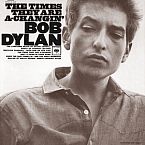
Album: The Times They Are A-Changin' (1964)
Play Video

Songfacts®:

  • This song was based on an old English folk song named "Pretty Polly" that made its way into the Appalachian Mountains and became a folk standard in the United States as well. The connections between "Pretty Polly" and "Hollis Brown" are not merely musical but also thematic. "Pretty Polly" is about a young woman murdered in a forest and buried; Dylan took that dark narrative to a new level in "Hollis Brown." In the newer song, the protagonist becomes a struggling farmer in South Dakota trying to survive with his wife and five children. Brown eventually snaps from despair and kills his family and then himself.

    Brown is not presented in a negative light in the song, though, and we're led to pity the man rather than despise him. He seems driven mad not so much by his own physical suffering but by watching the suffering of his family.

    Dylan achieves this empathic effect by writing the song in second person, which means he's addressing Brown as "you." This places us, the listeners, in Hollis Brown's persona.
  • The song has some of Dylan's darkest, most evocative lyrics.

    The rats have got your flour
    Bad blood it got your mare
    The rats have got your flour
    Bad blood it got your mare
    If there's anyone that knows
    Is there anyone who cares?


    While singing these lines, his voice seems possessed with tormented restraint, just as we imagine Brown must feel watching his family suffer in this way. By the end, we're left with a haunting, understated conclusion that finally delivers us the cold distance from the subject that's been denied for most of the song.

    There's seven people dead
    On a South Dakota farm


    Perhaps even more haunting in its strangeness, though, are the lines following the image of the dead—the final lines of the song, which go:

    Somewhere in the distance
    There's seven new people born


    Is this a reference to a reincarnation? A sign of hope? A declaration of the bleak hopelessness of the continual cycle of human suffering? There's no way to know. It's another example of Dylan's genius in always leaving an air of mystery if all his songs, forcing us to wonder.
  • At the end of the song, Dylan repeats the number seven:

    There's seven breezes a-blowin'
    All around the cabin door
    There's seven breezes a-blowin'
    All around the cabin door
    Seven shots ring out
    Like the ocean's pounding roar

    There's seven people dead
    On a South Dakota farm
    There's seven people dead
    On a South Dakota farm
    Somewhere in the distance
    There's seven new people born


    Some have suggested this could be a reference to the seven deadly sins of the Bible. It could also hark to the old myth that you get seven years of bad luck for breaking a mirror.
  • Dylan recorded the song on August 6 and 7, 1963, in Studio A at Columbia Recording Studios, New York. He played the song live for the first time on September 22, 1962, at Carnegie Hall. In all, Dylan played it live more than 200 times.
  • On July 13, 1985, Dylan played this in his finale at Live Aid alongside Keith Richards and Ron Wood of the Rolling Stones.
  • The band Hollis Brown out of Queens, New York, took their name from this song.
  • The Neville Brothers recorded "Ballad Of Hollis Brown" for their Yellow Moon album in 1989. Dylan, at the suggestion of U2's Bono, attended some of the recording sessions and was so impressed by the work of producer Daniel Lanois on this song that he asked to work with him. Lanois ended up producing Dylan's 1989 album Oh Mercy, which is widely regarded as Dylan's triumphant return to form following a series of disappointments.

Comments

Be the first to comment...

Editor's Picks

Gary Brooker of Procol Harum

Gary Brooker of Procol HarumSongwriter Interviews

The lead singer and pianist for Procol Harum, Gary talks about finding the musical ideas to match the words.

Andy McClusky of OMD

Andy McClusky of OMDSongwriter Interviews

Known in America for the hit "If You Leave," OMD is a huge influence on modern electronic music.

Waiting For The Break of Day: Three Classic Songs About All-Nighters

Waiting For The Break of Day: Three Classic Songs About All-NightersSong Writing

These Three famous songs actually describe how they were written - late into the evening.

Donald Fagen

Donald FagenSongwriter Interviews

Fagen talks about how the Steely Dan songwriting strategy has changed over the years, and explains why you don't hear many covers of their songs.

Graham Nash

Graham NashSongwriter Interviews

Graham Nash tells the stories behind some of his famous songs and photos, and is asked about "yacht rock" for the first time.

Michael Sweet of Stryper

Michael Sweet of StryperSongwriter Interviews

Find out how God and glam metal go together from the Stryper frontman.