The lyrics to "I Threw It All Away" lack the complex imagery and sophisticated religious and literary allusions of Dylan's prior work, but in many ways the song is more profound than any of those. With a higher level of self-awareness and humility, it stabs at a deep truth Dylan arrived at after 14 months healing broken vertebrae incurred from a motorcycle accident.
Up to this point, Dylan's breakup songs were generally angry and full of accusation, not unlike the "finger-pointing" (Dylan's term) songs he'd been using to needle and condemn politicians on his early albums. The songs always saw Dylan playing the victim. A condemnatory victim rather than a weak or whining one, but a victim nonetheless.
With this song, Dylan seems to have realized two things: He was also responsible for his previous failed relationships, and love is one of the most precious gifts in the human experience. It's something to be cherished. That's all this song is saying. It just has Dylan reflecting on his past without any kind of surrealist sidestepping or rhetorical cushioning. He had love, and he'd mistreated it and thrown it all away.
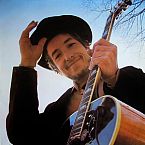
Some people have tried to place the subject of this song as Dylan's artistic muse, but that just doesn't seem to add up in the context of his life at that point. Dylan was making straightforward music at a time when he'd found a measure of happiness after stepping away from the cyclone of fame for a while. All pretense to esotericism and occulted revelation was dropped for the Nashville Skyline album, though of course Dylan's obsessive fans and media followers continued to press for deeper implications (whether positive or negative) to everything the man did. Looking back at all now, it really seems Dylan just wanted to enjoy life and make simple, heartfelt music.
As one would expect, fans have projected various women into the role of the one Dylan is singing about here. Candidates include the actress Edie Sedgwick (an interesting one because there's little indication Dylan took that brief relationship too seriously or seriously at all), folk queen Joan Baez, or early Dylan love Suze Rotolo (subject of many of those aforementioned condemnatory Dylan breakup tunes). But, at the end of the day, the song is so general and universal that no one person could ever be isolated from the lyrics. It's just Dylan's reflection on a young life full of ruining good relationships.
As with the entirety of the album, Dylan's voice is unrecognizable from the nasally style he'd become known for. This was more ammo for the crowd who smeared Nashville Skyline as "sell out" stuff. In hindsight, many consider it some of Dylan's sweetest, most honest singing.
Nice Cave called "I Threw It All Away" his favorite Dylan song and said it was the one song he'd wished he'd written.
Dylan released this as the first single off the album. The B-side was "Drifter's Escape," which he'd recorded for his prior studio album, John Wesley Harding, in 1967. In addition to its #85 US ranking, the single cracked #30 in UK and #29 in France.
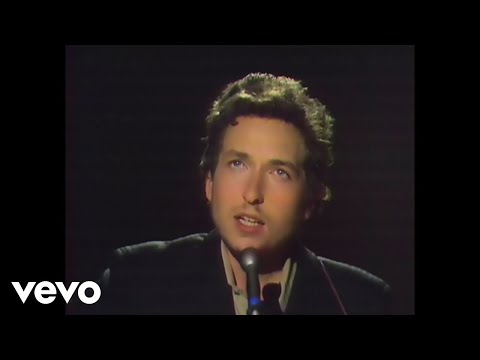
Dylan first performed the song live on the Johnny Cash Show on May 1, 1969 (the episode was broadcast on June 7). It's a song that pops up in his setlists from time to time - he's played it in concert roughly 50 times.
A performance with The Band from the 1969 Isle of Wight Festival is included on the 2013 The Bootleg Series Vol. 10: Another Self Portrait (1968-1971) collection.
A May 16, 1976 performance is on 1976 live album Hard Rain.
In November 1968, George Harrison of The Beatles visited Bob Dylan's house in Woodstock, New York. The visit eventually produced Harrison's "
I'd Have You Anytime." As the two were first warming to each other and working themselves out of self-doubt stemming from downturns in their lives, Dylan sang an early version of "I Threw It All Away." Harrison recounted that Dylan seemed nervous and that he was aware that most people would consider his new work lightweight compared to the politically and spiritually charged surrealism that had made him iconic, but Harrison loved the song from the start. He was already internally breaking away from The Beatles and appreciated seeing Dylan's courage to go his own way and sing about what mattered to him.