Nashville Skyline Rag

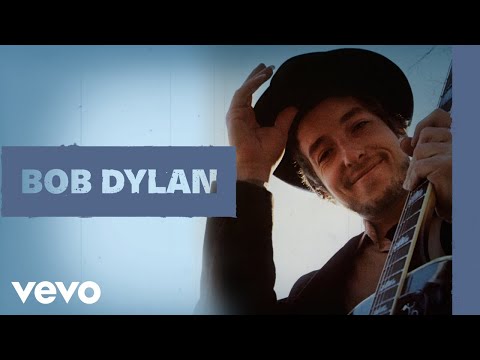
Album: Nashville Skyline (1969)
Play Video

Songfacts®:

  • The second song on Nashville Skyline, "Nashville Skyline Rag" comes across as a statement intended to make sure the audience understands that they are about to hear an honest-to-God country album, something completely unexpected from Bob Dylan at that time. It's true ragtime.

    The song starts with Dylan on harmonica (and possibly acoustic guitar) and then has the other band members come in, one by one, on their respective instruments.
  • Charlie Daniels played guitar on this tack, and Pete Drake played pedal steel guitar. Norman Blake was on the dobro.
  • This earned a Grammy nomination for Best Country Music Instrumental. Dylan denied any award-winning ambitions, saying he simply recorded it for fun.
  • The ragtime genre rose out of African-American musical culture in the 1880s. The earliest chronicled ragtime song is "La Pas Ma La" by Ernest Hogan in 1895.
  • Nashville is both the setting for this song and where Dylan recorded it. He put it down in Columbia Recording Studios in Nashville on February 17, 1969.

    Nashville is the capital city of the country music genre, filled with a rich musical history and with some of the best country musicians in the world.
  • "Nashville Skyline Rag" grew out of "Suze (The Cough Song)," a tune Dylan recorded in 1963 for The Times They Are a-Changin' (though it didn't make the final track listing and wasn't released until 1991 on The Bootleg Series Volumes 1-3). "Suze" is very short because Dylan broke into a coughing fit part-way through recording, but the guitar is unmistakably the same as "Nashville Skyline Rag."
  • Nashville Skyline was met with a heated rebuke from many hardcore Dylan fans who followed him because of his progressive protest songs. Dylan had already been angering this contingent for years as he'd moved to electric music and lyrics that were more personal, less political (at least in any obvious sense), and more surreal. But in the eyes of those fans, Dylan had at least kept close to some semblance of revolutionary roots by creating music that defied all genres, boxes, and expectations.

    Nashville Skyline was seen as a bridge too far because it not only employs old-fashioned country music but has simple, life-affirming, and happy lyrics. That might seem strange to some today, but Dylan arose as a moral figurehead from the chaotic '60s and was seen as more than just an entertainer. He was supposed to remain forever a spokesman for the era's counterculture (though he never asked for this honor), which had been built upon a foundation of unrelenting criticism of America's moral failings and general rage against the machine. In the eyes of the hippies, country music was part of conservative, Republican America, which was in their eyes irredeemably racist - Leftist enemy #1. As Dylan-obsessive and political fanatic A.J. Weberman described it, the album was a "sell-out to pig culture."

    But Dylan made Nashville Skyline out of simple happiness and contentment. For 14 months before recording the album he spent most of his days in his Woodstock (the town, not the festival), New York home, enjoying life and playing music with friends at his leisure. He was finally able to enjoy the fruits of his labor.
  • While some critics were outraged to a level that would be comical to most of us today, others suggested that Dylan was clowning around with Nashville Skyline, and that it was all a big joke. The backing musicians that worked with Dylan, however, make it clear it was no joke.

    Charlie Daniels played guitar on the track. While he was still nine years from "Devil Went Down to Georgia," he was already a respected session musician.

    Pete Drake contributed pedal steel guitar. He was one of Nashville's all-time great session musicians. The Country Music Hall of Fame inducted him in 2021, 33 years after his 1988 passing. He also left his mark on rock and pop, playing on All Things Must Pass (George Harrison's masterpiece) and producing Beaucoups of Blues, Ringo Starr's second solo studio album.

    Norman Blake, who played guitar on this track, recorded and toured with Johnny Cash (and if that ain't country he'll kiss your ass, as David Allen Coe would say), Kris Kristofferson, and Joan Baez (he played on her cover of "The Night They Drove Old Dixie Down").

    Drummer Kenneth Buttrey was called "one of the most influential musicians in Nashville history" by Country Music Television. Outside of country, he also worked with Neil Young and Elvis Presley.

    As a solo musician, bassist Charlie McCoy would rack up 13 singles that charted on the Country chart. Through his career he played with Elvis Presley, Waylon Jennings, Loretta Lynn, Johnny Cash, and Chet Atkins.

Comments

Be the first to comment...

Editor's Picks

Andrew Farriss of INXS

Andrew Farriss of INXSSongwriter Interviews

Andrew Farriss on writing with Michael Hutchence, the stories behind "Mystify" and other INXS hits, and his country-flavored debut solo album.
Jethro Tull

Jethro TullFact or Fiction

Stage urinals, flute devices, and the real Aqualung in this Fact or Fiction.
Songs in Famous Movie Scenes: Tarantino Edition

Songs in Famous Movie Scenes: Tarantino EditionMusic Quiz

Whether he's splitting ears or burning Nazis, Quentin Tarantino uses memorable music in his films. See if you can match the song to the scene.
Mike Rutherford (Genesis, Mike + The Mechanics)

Mike Rutherford (Genesis, Mike + The Mechanics)Songwriter Interviews

Mike Rutherford talks about the "Silent Running" storyline and "Land Of Confusion" in the age of Trump.
Donald Fagen

Donald FagenSongwriter Interviews

Fagen talks about how the Steely Dan songwriting strategy has changed over the years, and explains why you don't hear many covers of their songs.

Soul Train Stories with Stephen McMillian

Soul Train Stories with Stephen McMillianSong Writing

A Soul Train dancer takes us through a day on the show, and explains what you had to do to get camera time.