Rambling, Gambling Willie

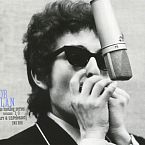
Album: The Bootleg Series Volumes 1-3 (Rare & Unreleased) 1961-1991 (1991)
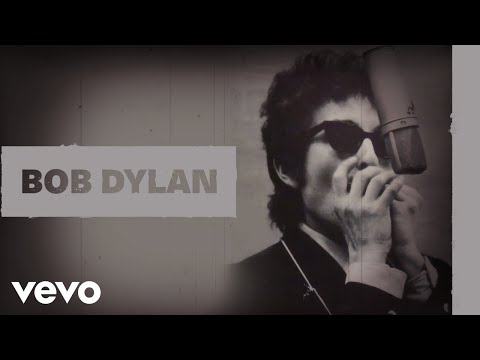
Play Video

Songfacts®:

  • "Rambling, Gambling Willie" is about a fictional gambler named Will O'Conley who had 27 children, no wives, and a "heart of gold" (he took good care of every one of those kids). The song comes across as the kind of tall tale that was commonly heard in early America, where a character's exploits (such as Paul Bunyan) were exaggerated to absurd and hilarious effect. Willie tears through the song, seemingly indestructible, winning every game and every wife, until the very end when he's shot in the head by a man whose money he won.
  • The Willie O'Conley character was inspired by Willie Brennan as Brennan is presented in "Brennan On The Moor," an Irish ballad from sometime in the early to middle 1800s. Brennan was a real person, a highway robber who was executed by hanging in the early 1800s (the exact year is debated).

    Dylan heard the "Brennan On The Moor" performed by the Clancy Brothers.
  • "Rambling, Gambling Willie" was released in 1991, but it's actually one of Dylan's earliest original songs. He wrote it in 1961 and recorded the first demo (for Duchess Music Corporation) in January 1962.

    He recorded the song again on April 24, 1962, for Columbia Records and his second album, The Freewheelin' Bob Dylan. This second version enjoyed the production work of John Hammond, who's in the Rock and Roll Hall of Fame and helped launch such stars as Pete Seeger, Bruce Springsteen, Aretha Franklin, Leonard Cohen, and, of course, Bob Dylan.

    Dylan laid down four takes of the song, with the fourth being the one kept for the album. The song did make it onto the first pressing, but was then switched out for "Bob Dylan's Dream," which is what wound up on the final published product.
  • So all you roving' gamblers, wherever you might be
    The moral of the story is very plain to see
    Make your money while you can, before you have to stop
    For when you pull that dead man's hand, your gambling days are up


    The term "dead man's hand" has been in play since at least the late 19th century. Today the term is usually associated with the Old West folk hero (a real person) named Wild Bill Hickok. On August 2, 1876, an otherwise forgotten man named Jack McCall shot Hickok in the back of the head during a poker game. Legend has it that Hickok was holding aces and eights, just as Willie was when he got shot down ("When Willie's cards fell on the floor they were aces backed with eights").

Comments

Be the first to comment...

Editor's Picks

Jon Foreman of Switchfoot

Jon Foreman of SwitchfootSongwriter Interviews

Switchfoot's frontman and main songwriter on what inspires the songs and how he got the freedom to say exactly what he means.

Adele

AdeleFact or Fiction

Despite her reticent personality, Adele's life and music are filled with intrigue. See if you can spot the true tales.

Lori McKenna

Lori McKennaSongwriter Interviews

Lori's songs have been recorded by Faith Hill and Sara Evans. She's performed on the CMAs and on Oprah. She also has five kids.

Donnie Iris (Ah! Leah!, The Rapper)

Donnie Iris (Ah! Leah!, The Rapper)Songwriter Interviews

Before "Rap" was a form of music, it was something guys did to pick up girls in nightclubs. Donnie talks about "The Rapper" and reveals the identity of Leah.

Dave Edmunds

Dave EdmundsSongwriter Interviews

A renowned guitarist and rock revivalist, Dave took "I Hear You Knocking" to the top of the UK charts and was the first to record Elvis Costello's "Girls Talk."

Andy McClusky of OMD

Andy McClusky of OMDSongwriter Interviews

Known in America for the hit "If You Leave," OMD is a huge influence on modern electronic music.