Buddy Guy is synonymous with Chicago blues, but he's from rural Lettsworth, Louisiana, where he grew up working the land in a family of sharecroppers. He moved to Chicago in 1957 when he was 21.
Guy was heralded in the world of blues but little known outside that genre until the '90s, when some of his famous admirers appeared on his albums and talked him up. In that decade, he released a string of Grammy-winning albums with contributions from Mark Knopfler, Eric Clapton, Jeff Beck, Bonnie Raitt, Travis Tritt and Jonny Lang. Clapton and B.B. King inducted him into the Rock and Roll Hall of Fame in 2005.
His family didn't get electricity until Buddy was 12, but when they did, one of their first appliances was a record player. Fortunately for Buddy, his dad loved blues music and got some 78 RPM records his son listened to over and over. One in particular had a huge impact on Buddy: "
Boogie Chillen" by John Lee Hooker.
His parents weren't educated past third grade, but they wanted Buddy to attend high school, so they had him move in with his sister in Baton Rouge when he was 15 - there was no high school in their town of Lettsworth. He never finished high school; Buddy moved back home when his mother had a stroke, and when the whole family moved to Baton Rouge, Buddy started working at a beer factory, which he hated - at least farming was outside. He took jobs at a gas station and as a maintenance worker at LSU before heading to Chicago to pursue music.
Guy was on the verge of giving up his dream when he ran out of money after moving to Chicago. His fortune changed when he was invited to join Otis Rush on stage at the 708 Club, where he landed a regular gig and came to the attention of Muddy Waters, who became a mentor.
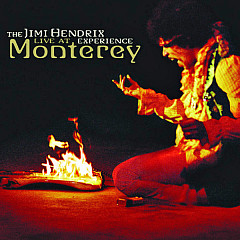
In his early years, Buddy Guy was known for his wild stage antics, playing his guitar very theatrically and suggestively in a style Jimi Hendrix would later emulate. One of his tricks, which he learned from watching Guitar Slim, was to start playing offstage and then emerge, sometimes from the audience.
In the '60s, he was a mainstay at Chess Records, releasing his own material and also playing guitar on recordings by other artists on the label, including Howlin' Wolf and Muddy Waters. But before signing with Chess, he recorded two singles for a subsidiary of Cobra Records, a Chess rival. That label went under in 1959 and according to Guy, he never earned a penny from his work there.
He opened his own blues club, Buddy Guy's Legends, in Chicago in 1989. Many big names have played there, including B.B. King, The Rolling Stones, Eric Clapton and David Bowie. Guy could often be spotted by the bar and is known for being very kind to patrons who recognize him. The club was located at 754 South Wabash Avenue until 2010, when it moved into more spacious digs down the road at 700 South Wabash.
Along with Eric Clapton, Robert Cray and Jimmie Vaughan, Buddy Guy played with Stevie Ray Vaughan at a concert in Wisconsin on August 27, 1990. After the show, Guy and Clapton shared a helicopter to Chicago, but Stevie Ray got in a different helicopter that crashed. Buddy found out when he got a frantic call from his daughter who thought he was in the crash.
Buddy Guy inspired the character Sammie Moore (played by Miles Caton) in the 2025 movie Sinners, and he appears in the film, playing an older version of Moore. Like Guy, the character is raised on a farm in the South and travels to Chicago, where he becomes a famous bluesman and opens his own bar. There are some artistic liberties though: Guy was never attacked by vampires (as far as we know).