Stevens wrote this about searching for peace and happiness in a crazy world. There was some speculation that much of the song was a message to Patti D'Arbanville, an actress he had been dating who inspired his song "
Lady D'Arbanville." Stevens cleared this up when he spoke about the song on
The Chris Isaak Hour in 2009, explaining that it was about his own journey into the wild world. Said Stevens: "I was trying to relate to my life. I was at the point where it was beginning to happen and I was myself going into the world. I'd done my career before, and I was sort of warning myself to be careful this time around, because it was happening. It was not me writing about somebody specific, although other people may have informed the song, but it was more about me. It's talking about losing touch with home and reality - home especially."
Jimmy Cliff was the first to record "Wild World," taking it to #8 in the UK three months before Stevens released his version. Cliff explained to Mojo magazine July 2012 how Stevens not only gave him the song, but produced his cover. "I felt an affinity with Cat Stevens," he said. "They tried to market him as a rock act and like me, he was more than that and one day I went to the publisher and he played me this demo of 'Wild World' and he told me that Steve [Cat's real name] had written it but he didn't like it. I loved it right away so he called up Steve and put me on the phone to him. Steve asked what my key was, I said and he started playing guitar down the phone, He said we have to record it together so he went in and did the track and I went in the following day, helped put on the backing voices with Doris Troy and then it was time to put my voice on and Steve directed me to sing the high notes. He was a really good producer and it was a big hit."
Cliff's version wasn't released in America so it wouldn't compete with Stevens' release.
Stevens wrote this during a very productive time after recovering from tuberculosis, a disease abetted by his smoking and fast living following a string of UK hits in 1967 when he was just 18. The near-death experience pushed him to examine his life and think hard about how to spend his days and how to prepare for the afterlife. Like George Harrison, he turned away from his Christian upbringing and looked into Eastern religion, which is reflected in his songs around this time. Stevens eventually found his calling in Islam after his brother gave him a copy of the Koran. He embraced the faith in 1977, changing his name to Yusuf Islam.
"Wild World" was Stevens' first hit in America, where he quickly fell in with the singer-songwriter movement. By this time, he was already very popular in his native UK (he was born and raised in London) and had three albums in his back catalog.
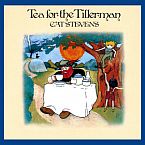
Tea For The Tillerman, which contains "Wild World," ended up selling 3 million copies in the US as many fans sought out his earlier work. In 1971 his previous album,
Mona Bone Jakon, charted in America, as did a compilation release of his first two albums,
Matthew & Son/New Masters. He kept the momentum going with
Teaser And The Firecat, released later that year with the hits "
Moonshadow" and "
Peace Train."
In an interview with Mojo magazine June 2009, the comment was made that lyrically this song has "an uninhibited simplicity." Stevens responded: "It was one of those chord sequences that's very common in Spanish music. I turned it around and came up with that theme - which is a recurring theme in my work - which is to do with leaving, the sadness of leaving, and the anticipation of what lies beyond. There is a criticism sometimes of my music, that it's kind of naïve, but then again that's exactly why people like it. It goes back to the pure childish approach of seeing things almost for the first time. A kid can say things like, 'Why is a cow?' You shouldn't put those words together! But if you do, then it makes you stop and think."
Former Yardbird Paul Samwell-Smith, who came on board for the Mona Bone Jakon album, was Stevens' producer. When Tea For The Tillerman was re-issued in 2008, he wrote in the liner notes: "Steve's guitar was an Ovation, and I used the electric pickup signal on the left of the stereo and the acoustic microphone signal on the right, which gave it a very present and immediate sound."
Samwell-Smith also noted that you can hear some rattling on the track that was caused by John Ryan's double bass, which was "held together with band-aids and duct tape."
This was released as a single only in the US. Stevens' European label, Island Records, wanted to encourage fans to buy the albums rather than the 45s.
Maxi Priest recorded this in 1988, taking it to #5 in the UK. This meant the song was a Top 10 hit in Stevens' native land for two different artists (Priest and Jimmy Cliff), but not for him. In America, four different versions hit the chart:
1971 - Cat Stevens' original, #11
1971 - The Gentrys, #97
1989 - Maxi Priest, #25
1993 - Mr. Big, #27
Maxi Priest was well known in his native UK but hadn't released any songs in America when his label, Virgin Records, had him cover "Wild World" with the producers Sly & Robbie to break into the market. Maxi didn't like it, but went along with the plan.
"All the way from England on the plane to Jamaica to record with Sly & Robbie, I didn't want to do it," he
told Songfacts. "It wasn't until Sly & Robbie started to play the track that I could see a vision, and with their motivation the rest is history."
"You have to have an open mind to learn from other people," he added. "You have to allow others to bring their experience and wisdom – to at least be heard. Take time to listen, look for the positives and put aside the negatives. So this experience with 'Wild World' has taught me to keep an open mind. Maybe I should just go around hating all the songs and they will become hits, who knows."
The song did indeed break him in America, and in 1990 he had a #1 hit there with "
Close To You."
This was one of the songs that convinced Stevens, now known as Yusuf Islam, to release a boxed set of his songs in 2001. He stopped making secular music in 1978, but came to realize that people find strength and inspiration in the songs he recorded as Cat Stevens.
In 2020, Yusuf Islam released
Tea for the Tillerman², with new versions of the original songs. On "Wild World" he did
a completely different arrangement, with piano and accordion in the mix. "I imagine it as part of
Casablanca, where Humphrey Bogart is in that bar," he told
Entertainment Weekly. "It's got a '40s tilt to it."
Yusuf Islam's 2020 version of "Wild World" resembles a Tom Waits take on Paris jazz. He told Mojo magazine: "I got this little Yamaha Clavinova (digital piano). You can press a button and suddenly you've got ragtime. I started singing the lyrics to Wild World against this ragtime tune and it just sounded so great. I'm a bit of a fan of Tom Waits, so I thought, here's a little kind of nod towards that direction."