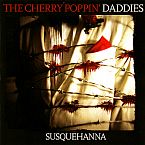
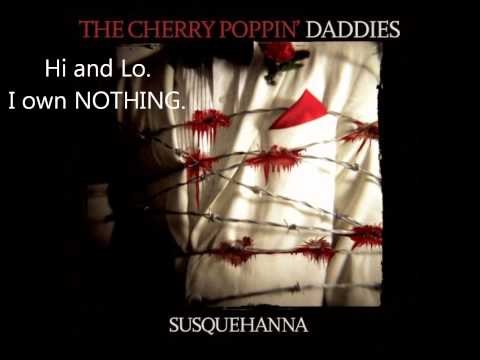
Album: Susquehanna (2008)
Play Video

Songfacts®:

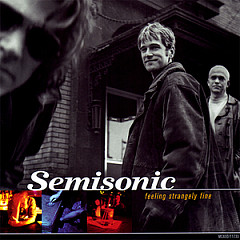
  • This is the third track on the Susquehanna album. In the narrative thread of this concept album, this is the point where, according to lead singer Steve Perry's notes: "In his moment of despair, he thinks back to a time earlier in his life when he had a troubled best friend, who used to call on him for comfort. Now he misses that friendship; now neither of them really speak to each other anymore."
    In our Songfacts interview, Perry relates: "We are interested in Godard, modernism, etc. 'Susquehanna,' our last studio album, was an attempt to make an album that worked in the same way Pierrot le Fou does. Songs are a means to an end. Genres reflect off each other." (Check out the full Steve Perry interview)
  • While PopMatters webzine criticized the whole of the Cherry Poppin' Daddies' album, it singled out "Hi and Lo" as being "absolutely extraordinary." This might have to do with the fact that the songs on the Susquehanna album are staggered greatly in style and genre, and "Hi and Lo" has some amount of current mainstream sound.
  • Do you like your music with some geeky thoughts behind it? Steve Perry, in his song-by-song description for this album, talks about the mathematical basis for his music theory: "In the studio, we have always talked about the necessity of a big special musical twist that needs to happen at what we call the Fibonacci moment. It's similar and connected mathematically to the Golden Ratio of classical art where two quantities are in golden ratio if the ratio of the sum of the quantities to the larger one equals the ratio of the larger one to the smaller. This leads to the most pleasurable, balanced effect within the song itself. So at the time right around that 1.6 out of 2, our Fibonacci moment twist is what is called for."

    For those mystified by the above paragraph, the Fibonacci sequence starts out '1, 1, 2, 3, 5, 8, 13, 21..." You get the next number by adding the last two numbers. As you get higher in this infinite series, you come closer to expressing the golden ratio, where the ratio of the sum of the quantities to the larger quantity is equal to (=) the ratio of the larger quantity to the smaller one (a+b is to a as a is to b). The Golden Ratio pops up in many artworks starting with the Renaissance painter Leonardo da Vinci, and in architecture such as the Egyptian pyramids. Meanwhile the Fibonacci sequence appears in nature in places like the ridges of a pine cone or the arrangement of leaves on a stem.

Comments

Be the first to comment...

Editor's Picks

Donny Osmond

Donny OsmondSongwriter Interviews

Donny Osmond talks about his biggest hits, his Vegas show, and the fan who taught him to take "Puppy Love" seriously.

Mike Love of The Beach Boys

Mike Love of The Beach BoysSongwriter Interviews

The lead singer/lyricist of The Beach Boys talks about coming up with the words for "Good Vibrations," "Fun, Fun, Fun," "Kokomo" and other classic songs.

Emilio Castillo from Tower of Power

Emilio Castillo from Tower of PowerSongwriter Interviews

Emilio talks about what it's like to write and perform with the Tower of Power horns, and why every struggling band should have a friend like Huey Lewis.

How "A Rolling Stone Gathers No Moss" Became Rock's Top Proverb

How "A Rolling Stone Gathers No Moss" Became Rock's Top ProverbSong Writing

How a country weeper and a blues number made "rolling stone" the most popular phrase in rock.

Bill Withers

Bill WithersSongwriter Interviews

Soul music legend Bill Withers on how life experience and the company you keep leads to classic songs like "Lean On Me."

Lou Gramm - "Waiting For A Girl Like You"

Lou Gramm - "Waiting For A Girl Like You"They're Playing My Song

Gramm co-wrote this gorgeous ballad and delivered an inspired vocal, but the song was the beginning of the end of his time with Foreigner.