Street Player

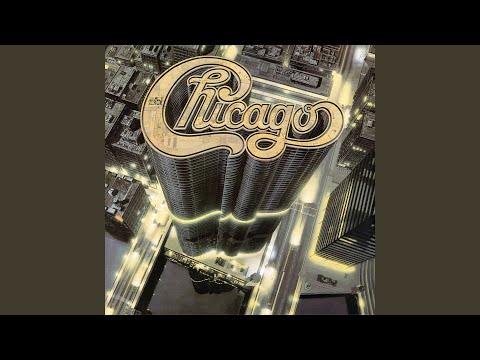
Album: Chicago 13 (1979)
Play Video

Songfacts®:

  • In this song, Chicago singer Peter Cetera tells tales of life on the city streets, hanging out on corners and in billiard halls as he stands tall among the gangsters and thieves.

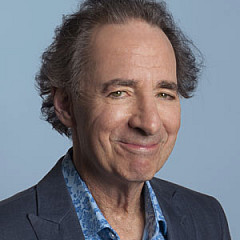
    There's some dissonance in hearing Cetera sing about being a tough guy. With his high tenor and boyish looks, he was much more suited for love songs, and those were his bailiwick ("Glory Of Love," "You're the Inspiration"). But "Street Player" isn't his story, and he didn't write the song. It was written by the group's drummer, Danny Seraphine, and by David "Hawk" Wolinski, who played synthesizer on the track.

    Seraphine did live the thug life and even wrote a book about it called Street Player: My Chicago Story. He dropped out of school and ran with street gangs in Chicago; the mobster Tony "The Ant" Spilotro, inspiration for the lead character in the movie Casino, was an associate. As recounted in this song, music led him out of this path.
  • With grooves galore and a killer vocal by Peter Cetera, it's surprising that "Street Player" was never a hit, but Chicago was on the downswing at the time, struggling to assimilate into the disco era. The song was released as the second single (following "Must Have Been Crazy") from their album Chicago 13, and it didn't chart. The album was produced by Phil Ramone, who was working on Billy Joel's 52nd Street around the same time.

    Chicago's next album, Chicago XIV, fared even worse, but when disco abated they came back stronger than ever with a new sound crafted by producer David Foster that leaned heavily on Cetera's vocals and downplayed their famous horn section. Danny Seraphine was often replaced by a drum machine. Hits from this time include "Hard to Say I'm Sorry" and "If She Would Have Been Faithful...," which are some of Chicago's best-known songs. But those looking for a choice deep cut from and oft-forgotten era of the band will find one in "Street Player."
  • Chicago's eight members weren't enough for this song. Along with Hawk Wolinski's synthesizer, they brought in Airto Moreira on percussion and Maynard Ferguson on trumpet.
  • In 1995, an outfit called The Bucketheads reworked "Street Player" into a club banger called "The Bomb! (These Sounds Fall Into My Mind)," using the main horn riff and some percussion elements to create a driving dance beat. The only vocals in the song are a sample of Cetera singing the line "street sounds swirling through my mind," which apparently was misheard as "these sounds fall into my mind."

    The Bucketheads is producer Kenny "Dope" Gonzalez, know for his house music project Masters At Work. Considering the musical textures available in "Street Player," it's surprising that no one sampled it until 1995.

    "The Bomb!" became a popular sample itself, appearing in ESPN's the "The Jock Jam" (1997), Pitbull's "I Know You Want Me (Calle Ocho)" (2010)," Deep Down" by Alok, and several other other popular tracks. These songs all list Danny Seraphine and Hawk Wolinski as writers because they composed the original source material in "Street Player."

Comments

Be the first to comment...

Editor's Picks

Intentionally Atrocious

Intentionally AtrociousSong Writing

A selection of songs made to be terrible - some clearly achieved that goal.

00s Music Quiz 1

00s Music Quiz 1Music Quiz

Do you know the girl singer on Eminem's "Stan"? If so, this quiz is for you.

The Untold Story Of Fiona Apple's Extraordinary Machine

The Untold Story Of Fiona Apple's Extraordinary MachineSong Writing

Fiona's highly-anticipated third album almost didn't make it. Here's how it finally came together after two years and a leak.

Graham Bonnet (Alcatrazz, Rainbow)

Graham Bonnet (Alcatrazz, Rainbow)Songwriter Interviews

Yngwie Malmsteen and Steve Vai were two of Graham's co-writers for some '80s rock classics.

Grunge Bands Quiz

Grunge Bands QuizMusic Quiz

If the name Citizen Dick means anything to you, there's a chance you'll get some of these right.

John Waite

John WaiteSongwriter Interviews

"Missing You" was a spontaneous outpouring of emotion triggered by a phone call. John tells that story and explains what MTV meant to his career.