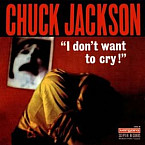
I Don't Want To Cry

Album: I Don't Want To Cry (1961)
Charted: 36
Play Video

Songfacts®:

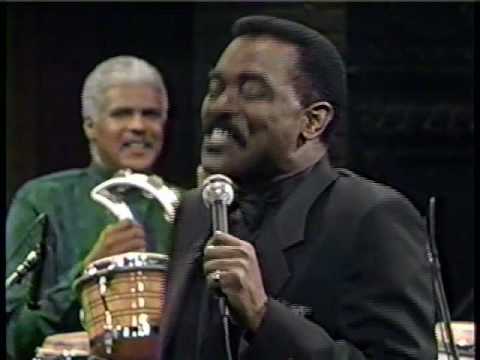
  • "I Don't Want To Cry" was the first hit for Chuck Jackson, a very soulful singer who grew up in North Carolina and sang gospel before joining a group called Del Vikings in 1957. He left the group to go solo and got a label deal after touring as Jackie Wilson's opening act.

    The song is a tale of a guy who wronged his woman, and now he's a penitent puddle begging for a second chance. Many of Jackson's songs dealt with heartbreak or other tribulations of love.
  • Jackson wrote this song with Luther Dixon, known for his work with The Shirelles. "He'd come around with his guitar and we'd talk about one thing or another and Luther could just make up a song from that," Jackson told the Los Angeles Reader. "That's how 'I Don't Want to Cry' was written. He started talkin' to me, askin' me about getting' my heart broken and I told him a story. At the end of it, I said, 'I don't want to cry anymore.'"
  • "I Don't Want To Cry" was a hit in 1961, an interesting year in R&B. Motown was just getting started, but soul music was everywhere, with songs like Ray Charles' "Hit The Road Jack" and Gary U.S. Bonds' "Quarter To Three" topping the pop chart. These songs often had peppy arrangements even if the subject matter was bleak. That was the case with "I Don't Want To Cry," a very radio-friendly heartbreak song propelled by piano and strings. Over the next few years, Motown figured out how to mass produced these kind of songs and dominated the charts.
  • Chuck Jackson was signed to an imprint of Scepter Records called Wand (Scepter's group The Shirelles had a #1 hit in 1961 with "Will You Love Me Tomorrow"), run by Florence Greenberg. It was good fit; Jackson developed a following and was a regular on the charts. His biggest hit came in 1962 with "Any Day Now (My Wild Beautiful Bird)."

    The grass looked greener over at Motown, though, and Jackson left Wand for that label in 1967, a move he came to regret. According to Jackson, Motown put most of their might into artist that had been there a while, like Marvin Gaye, and he was frozen out. Jackson's Motown output was of little consequence, but his Wand recordings stand up as some of the greatest from that era.

Comments

Be the first to comment...

Editor's Picks

Richard Marx

Richard MarxSongwriter Interviews

Richard explains how Joe Walsh kickstarted his career, and why he chose Hazard, Nebraska for a hit.

Dino Cazares of Fear Factory

Dino Cazares of Fear FactorySongwriter Interviews

The guitarist/songwriter explains how he came up with his signature sound, and deconstructs some classic Fear Factory songs.

Mac Powell of Third Day

Mac Powell of Third DaySongwriter Interviews

The Third Day frontman talks about some of the classic songs he wrote with the band, and what changed for his solo country album.

The Untold Story Of Fiona Apple's Extraordinary Machine

The Untold Story Of Fiona Apple's Extraordinary MachineSong Writing

Fiona's highly-anticipated third album almost didn't make it. Here's how it finally came together after two years and a leak.

Dan Reed

Dan ReedSongwriter Interviews

Dan cracked the Top 40 with "Ritual," then went to India and spent 2 hours with the Dalai Lama.

Kelly Keagy of Night Ranger

Kelly Keagy of Night RangerSongwriter Interviews

Kelly Keagy of Night Ranger tells the "Sister Christian" story and explains why he started sweating when he saw it in Boogie Nights.