Old-Fashioned Garden

Album: Hitchy-Koo Of 1919 (1919)
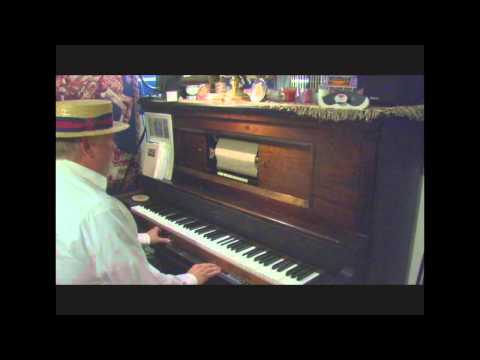
Play Video

Songfacts®:

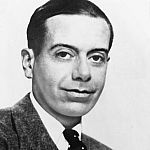
  • Although he had been writing songs since he was a boy and had published his first as early as October 1902, it was not until 1919 that Cole Porter had his first hit, "Old-Fashioned Garden." This came about when he was asked to write a song for Hitchy-Koo Of 1919 by Raymond Hitchcock and his backers for the show. The girls were wearing flower costumes that had been ordered, but never used, by Ziegfeld for his Follies.

    According to his biographer George Eells, many years later Porter said this song - which he described not entirely accurately as "one of the first songs I wrote" - was criticized in England "because I had the wrong flowers growing together. Since that time I have been extremely careful. I took a course in anatomy before I wrote the lyrics for the doctor song... for Gertrude Lawrence," adding that he had studied "all manner of insect and animal life" before he started on "Let's Do It."

    Not everyone was impressed. Musicologist Sigmund Spaeth said both this song and "Yes, We Have No Bananas" were derived from "The Quilting Party," described here as an early melody.

    Whether or not this is true, "Old-Fashioned Garden" (or "An Old-Fashioned Garden") would go on to sell over a 100,000 copies of the sheet music. It has been claimed that Cole wrote it near the Front in WWI, but this is not correct.
  • In the show, the song was sung by Lillian Kemble Cooper and ensemble. Its first performance was August 28, 1919 at Nixon's Apollo Theatre in Atlantic City, with a follow-up in Boston before transferring to the Liberty Theatre in New York City.
  • According to the British Library catalogue, the sheet music for "Old Fashioned Garden" (without the hyphen) was published initially in the score for the show (listed as Hitchy-Koo 1919. 1. Vocal selections. Vocal score) by T.B. Harms of New York and Francis, Day & Hunter of London. In 1931, an arrangement by William Stickles (Duet or two-part song) was published by Chappell-Harms of New York, and Chappell of London and Sydney. >>
    Suggestion credit:
    Alexander Baron - London, England, for all above

Comments

Be the first to comment...

Editor's Picks

Donnie Iris (Ah! Leah!, The Rapper)

Donnie Iris (Ah! Leah!, The Rapper)Songwriter Interviews

Before "Rap" was a form of music, it was something guys did to pick up girls in nightclubs. Donnie talks about "The Rapper" and reveals the identity of Leah.

David Bowie Leads the Society for Prevention of Cruelty to Long-Haired Men

David Bowie Leads the Society for Prevention of Cruelty to Long-Haired MenSong Writing

Bowie's "activist" days of 1964 led to Ziggy Stardust.

Bob Daisley

Bob DaisleySongwriter Interviews

Bob was the bass player and lyricist for the first two Ozzy Osbourne albums. Here's how he wrote songs like "Crazy Train" and "Mr. Crowley" with Ozzy and Randy Rhoads.

La La Brooks of The Crystals

La La Brooks of The CrystalsSong Writing

The lead singer on "Da Doo Ron Ron" and "Then He Kissed Me," La La explains how and why Phil Spector replaced The Crystals with Darlene Love on "He's A Rebel."

Randy Houser

Randy HouserSongwriter Interviews

The "How Country Feels" singer talks Skynyrd and songwriting.

Laura Nyro

Laura NyroSongwriting Legends

Laura Nyro talks about her complex, emotionally rich songwriting and how she supports women's culture through her art.