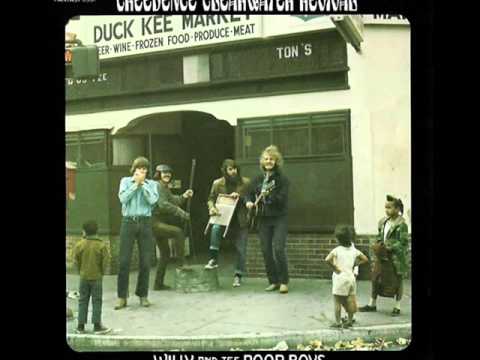
Album: Willy and the Poor Boys (1969)
Play Video

Songfacts®:

  • "Effigy," written by Creedence Clearwater Revival frontman John Fogerty, is the last track on the Willy and the Poor Boys album. This was the fourth studio album released and the third platinum album for CCR, riding the peak of their popularity in 1969.

    This song is a good example of the "roots rock" style that CCR helped to pioneer. While Bob Dylan is largely credited with starting the roots movement in 1966, only a handful of bands followed that lead, while the rest turned to folk, blues, or psychedelia. CCR fits into the niche within the country-influenced roots rock genre in between The Byrds, Tom Petty, Lynyrd Skynyrd, the Eagles, and of course The Flying Burrito Brothers. By sticking to the basics while everybody else was jumping on the experimentation bandwagon, they could be progressive and anachronistic at the same time.

    Another thing that set CCR apart was the tight cohesion of the band members. While other groups swapped members between each other like so many kids playing Red Rover, CCR remained their own little island of Fogerty, Fogerty, Clifford, and Cook, with the only change being when Tom Fogerty split in 1971, after which they were down to a trio. Furthermore, they had considerable influence for a band that was only releasing albums together five years!
  • CCR drummer Doug Clifford said that this is a political song through and through. "It's pointing the finger at the Nixon administration when they were crumbling," he explained in Bad Moon Rising: The Unofficial History of Creedence Clearwater Revival. "The dark period, if you will."
  • An effigy is a model of an actual person that is made for the purpose of being destroyed as an act of protest or expression of anger.
  • The "palace lawn" is referring to the lawn of the White House. In Fortunate Son: My Life, My Music, Fogerty affirms Nixon as the inspiration for his song, calling the former president "a schmuck." The specific event that triggered Fogerty to write the song happened October 15, 1969, when millions of people marched around the world to protest the Vietnam War. Nixon completely dismissed the event. As Fogerty remembers it, the former president said, "Nothing you do here today will have any affect on me. I'm going back inside to watch the football game." That dismissive attitude enraged Fogerty at the time and, judging from the writing in Fortunate Son, enrages him still.

Comments: 1

  • Elmer Babbitt from Main StreetAnd as bad as Milhouse was, we now have an occupant in the White House who is perhaps just as insane and who, most certainly, is way more stupid.
see more comments

Editor's Picks

Trans Soul Rebels: Songs About Transgenderism

Trans Soul Rebels: Songs About TransgenderismSong Writing

A history of songs dealing with transgender issues, featuring Pink Floyd, David Bowie, Morrissey and Green Day.

Melanie

MelanieSongwriter Interviews

The singer-songwriter Melanie talks about her spiritual awakening at Woodstock, "Brand New Key," and why songwriting is an art, not a craft.

90210 to Buffy to Glee: How Songs Transformed TV

90210 to Buffy to Glee: How Songs Transformed TVSong Writing

Shows like Dawson's Creek, Grey's Anatomy and Buffy the Vampire Slayer changed the way songs were heard on TV, and produced some hits in the process.

Robert DeLeo of Stone Temple Pilots

Robert DeLeo of Stone Temple PilotsSongwriter Interviews

Stone Temple Pilots bass player Robert DeLeo names the songs that have most connected with fans and tells the stories behind tracks from their Tiny Music album.

Matthew Wilder - "Break My Stride"

Matthew Wilder - "Break My Stride"They're Playing My Song

Wilder's hit "Break My Stride" had an unlikely inspiration: a famous record mogul who rejected it.

David Sancious

David SanciousSongwriter Interviews

Keyboard great David Sancious talks about his work with Sting, Seal, Springsteen, Clapton and Aretha, and explains what quantum physics has to do with making music.